[HBM] Demand for HBM3E Reignites as the Memory Supercycle Still Has Room to Run

Authored On
Modified
Memory-wide “supercycle” reaffirmed
China’s shifting HBM roadmap emerges as the biggest variable
Excess-demand market opens, with early signs of price distortion
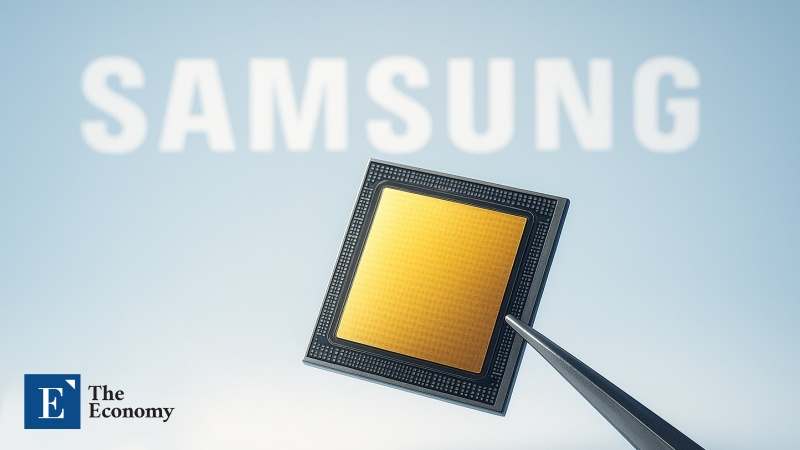
Signs of change are emerging around pricing for high-bandwidth memory (HBM)3E in the global memory semiconductor market. Even as the industry enters a next-generation transition phase, prices for existing products are moving in directions that diverge from expectations, prompting a range of interpretations within the market. Analysts point to a combination of factors, including expanding investment in artificial intelligence infrastructure, shifting demand patterns among major customers, production capacity constraints, and evolving pricing structures.
Predictions of an “HBM3E fade” miss the mark
According to industry sources on the 24th, multiple memory chipmakers including Samsung Electronics and SK hynix have recently raised HBM3E supply prices by around 20 percent. The move follows a sharp increase in orders from Nvidia and other companies designing their own AI accelerators, running counter to the typical pattern in which prices for an outgoing generation fall ahead of the launch of a successor. The market has effectively reconfirmed that HBM3E continues to function as a core profit driver, challenging the prevailing view that the segment had already entered a transition phase.
The price increase reflects not merely short-term supply-demand imbalances but a deeper shift in demand structure. Global big tech firms such as Nvidia, Google, and Amazon, all of which design their own chips, simultaneously revised up order volumes for AI accelerators scheduled for launch next year, pushing HBM3E demand well beyond initial forecasts. One memory industry executive noted that HBM3E had long been viewed internally as a “transitional product,” but is now increasingly seen as fulfilling the role of a de facto flagship product until HBM4 enters full-scale mass production.
A key trigger behind the renewed demand for HBM3E has been the resumption of exports of Nvidia’s H200 accelerator to China. Each H200 chip incorporates six HBM3E stacks. Reuters reported that Nvidia plans to fulfill initial orders using existing inventory before shipping up to 10,000 chip modules, while also briefing Chinese customers on plans to expand production capacity to accept new orders from the second quarter of next year. Against this backdrop, earlier expectations that the “HBM3E effect” would end this year have begun to lose traction.
On the supply side, preparations for the transition to HBM4 have paradoxically become a factor driving up HBM3E prices. Memory manufacturers are concentrating resources on expanding HBM4 capacity, which is expected to become the market’s mainstay product from next year onward, leaving limited capacity for other products. As a result, HBM3E supply has tightened even as demand has increased, creating an unusual price premium. KB Securities projects that next year’s HBM revenue mix will be roughly 55 percent HBM4 and 45 percent HBM3E, while estimating that HBM4 will not begin meaningfully absorbing HBM3E demand until after the third quarter of next year.
This dynamic has the potential to improve profitability across the broader memory industry. As HBM demand surges alongside rising prices for conventional DRAM, earnings forecasts for Samsung Electronics and SK hynix have been revised upward. According to FnGuide estimates, Samsung Electronics’ projected operating profit for next year has been raised from $52.9 billion to $58.9 billion, while SK hynix’s estimate has increased from $49.2 billion to $52.5 billion over the same period. This is why HBM3E is increasingly viewed as the starting point for a renewed confirmation of the memory supercycle.
China closes in on process, yield, and packaging
China’s aggressive technological catch-up has emerged as a key risk factor. Industry expectations had initially placed China’s entry into HBM3 mass production in 2026 and HBM3E in 2027, but recent observations suggest that these timelines are being pulled forward significantly. ChangXin Memory Technologies (CXMT), for instance, has already delivered HBM3 samples to major customers ahead of its original year-end target and has begun accelerating preparations for HBM3E mass production. Given that SK hynix began mass-producing HBM3E in the first quarter of 2024 and Samsung Electronics in the third quarter, the technological gap between South Korea and China now appears to be just over two years.
CXMT’s advance extends beyond simple roadmap adjustments. Since the late 2010s, the company has recruited a large number of engineers from Samsung Electronics and SK hynix, while aggressively securing downstream DRAM process technologies through global equipment suppliers such as Applied Materials, Lam Research, and Tokyo Electron. As a result, CXMT has already expanded into mainstream DRAM products including DDR5 and low-power DDR5X. Counterpoint Research estimates that CXMT’s share of global DRAM shipments will rise from about 7 percent this year to 10 percent by 2027.
Support from the Chinese government has further bolstered CXMT’s technological push. In May 2024, China’s “Big Fund III” invested $2 billion in the company, which CXMT has used to expand HBM investment and strengthen packaging capabilities. The establishment of a dedicated HBM packaging subsidiary in Shanghai reflects this strategy. The Financial Times has also reported that Chinese Vice Premier He Lifeng directly requested a relaxation of HBM export controls during trade negotiations with the United States, underscoring the strategic importance of advanced HBM supply to China’s broader high-tech ambitions.
Huawei, too, revealed at an internal event earlier this year that it plans to integrate self-developed HBM into future iterations of its Ascend AI chips. While acknowledging that U.S. sanctions have left its single-chip performance trailing Nvidia’s, Huawei emphasized its focus on boosting system-level performance through large-scale investment in interconnect technologies. As HBM increasingly emerges as a bottleneck in AI chip performance, self-sufficiency in HBM has become an urgent priority for China.
Significant hurdles remain, however. HBM competitiveness hinges not only on advanced lithography but also on yield management and packaging expertise. In particular, through-silicon vias (TSVs) and high-precision bonding processes required to vertically stack multiple dies are technologically demanding. U.S. semiconductor export controls have also constrained China’s access to thermal compression bonders used in HBM production, complicating near-term catch-up efforts. Even so, China is reportedly exploring alternative paths, including sourcing TSV-related equipment from Japanese suppliers and indirect imports via third countries.

Near-term profits look solid, but durability is uncertain
Market attention is increasingly shifting from technology gaps to pricing dynamics. As AI infrastructure investment has driven a sharp rise in server-grade DDR5 prices, the price gap between DDR5 and premium HBM3E has narrowed rapidly. TrendForce projects that the price differential, previously around four to five times, could shrink to just one to two times by the end of 2026. As a result, discussions around HBM3E pricing peaks are being reframed less in terms of “technology premium” and more through the lens of relative pricing.
The surge in conventional DRAM prices has also influenced production strategies. As DDR5 profitability improves, some memory makers are allocating more capacity to DDR5 production. TrendForce notes that this shift could further constrain HBM3E supply. In effect, rising DDR5 prices are simultaneously narrowing the HBM price premium and exacerbating HBM supply shortages.
Within memory manufacturers, internal pricing benchmarks are also evolving. There is growing consensus that if HBM fails to maintain a certain multiple over DDR5 pricing, its economic viability weakens. Since HBM production involves higher wafer input costs, insufficient price premiums could undermine profitability. This has led to discussions around renegotiating HBM contract prices or implementing additional hikes. With demand forecasts for GPUs and custom AI accelerators trending upward, major customers may find it difficult to significantly cut HBM3E order volumes, strengthening suppliers’ bargaining positions.
Still, it remains unclear how long the current phase of excess demand and price distortion will last. Should AI infrastructure investment cool more quickly than expected, the recent surge in server DDR5 prices could enter a correction phase. Conversely, if DDR5 contract prices remain elevated and customer demand for HBM3E holds steady, the market may continue absorbing higher costs despite reluctance. Ultimately, the timing of any demand slowdown is likely to become the decisive factor shaping future price levels, with the possibility of contract renegotiations or further price increases firmly on the table.
Similar Post