“Won’t hand China a semiconductor edge”: U.S. revokes VEU for TSMC, Samsung, SK hynix, but impact expected to be limited

Aoife Brennan is a contributing writer for The Economy, with a focus on education, youth, and societal change. Based in Limerick, she holds a degree in political communication from Queen’s University Belfast. Aoife’s work draws connections between cultural narratives and public discourse in Europe and Asia.
Authored On
Modified
U.S. revokes VEU status for TSMC, Samsung Electronics, and SK hynix China fabs
Restrictions imposed on equipment imports and process upgrades in China, aimed at preventing technology leakage
TSMC assures supply chain stability, while Korean firms slow China operations and expand domestic investment
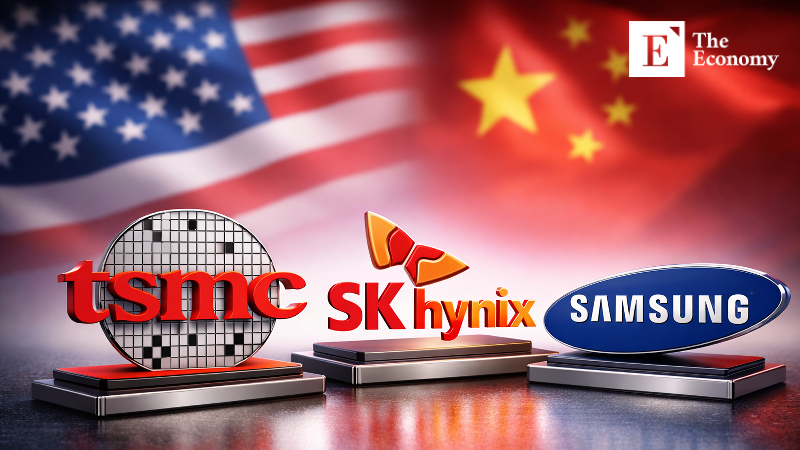
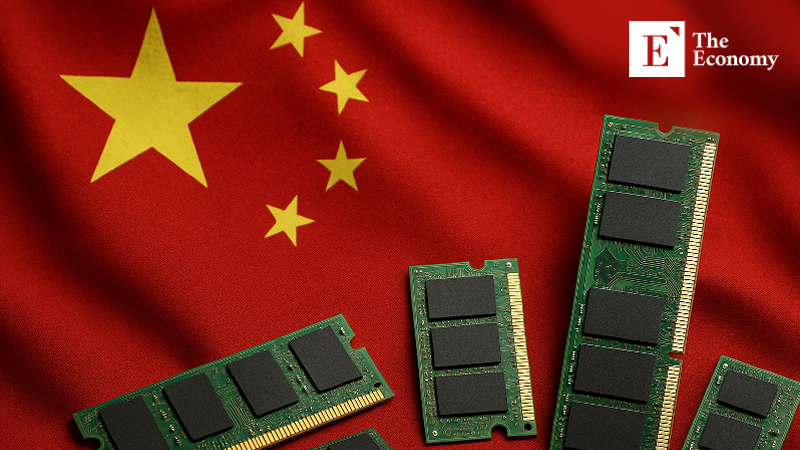
The U.S. government has withdrawn expedited export licenses for China-based fabs operated by Taiwan’s TSMC, the world’s largest foundry, and South Korea’s key memory chipmakers Samsung Electronics and SK hynix. The move requires case-by-case approval for exports of U.S.-made semiconductor equipment to those facilities, effectively curbing equipment deliveries and process upgrades in China. Even so, industry observers say the impact on the global semiconductor supply chain is likely to be limited.
Major chipmakers face curbs on equipment procurement for China fabs
According to reports from Techovedas and TrendForce on December 26 (local time), the U.S. Bureau of Industry and Security (BIS) will revoke the Validated End-User (VEU) status of TSMC’s Nanjing fab and the China-based fabs of Samsung Electronics and SK hynix effective December 31, and will require individual approvals for every shipment of U.S.-made equipment. The measure, which had been signaled in August and September, will be fully enforced from the end of this year. VEU is a form of blanket authorization granted to companies pre-approved by the U.S. Commerce Department. For semiconductor production sites in China that are covered under the VEU program, certain items controlled under the Export Administration Regulations (EAR) can be exported without case-by-case licenses.
When the U.S. government significantly tightened restrictions on semiconductor equipment exports to China by revising the EAR in October 2022, TSMC, Samsung Electronics, and SK hynix—then on the VEU list—were granted a one-year carve-out. In October 2023, the duration and scope of the VEU coverage were expanded, allowing the companies to import, without individual licenses, virtually all controlled items needed to develop and manufacture NAND flash and DRAM, except for certain technologies. But once the new measure takes effect, the three companies will no longer be able to supply EAR-controlled items to their China fabs as they did before. In addition, because BIS has indicated it has no intention of granting export licenses for capacity expansion or technology upgrades at those China sites, the companies are expected to face significant hurdles in further advancing their process technologies there.
BIS said the purpose of the decision is to close loopholes from the Biden administration era that allowed some foreign companies to export semiconductor equipment and technology to China without export licenses. It stressed that no U.S.-owned semiconductor manufacturing facility has ever enjoyed such preferential treatment, and that after today’s decision, foreign-owned semiconductor fabs will no longer be able to do so either. In other words, BIS argues that the revocation of VEU status for the three chipmakers is intended to ensure parity with U.S. companies.
‘Technology leakage’ behind semiconductor self-sufficiency
Some in the market argue that Washington’s export restrictions reflect concerns over technology leakage. Given repeated cases of advanced technologies flowing into China across industries, the view is that the U.S. has moved preemptively to erect barriers to protect its companies’ competitiveness and curb China’s technological rise. Within the semiconductor industry, there have long been claims that China’s push for chip self-sufficiency rests in part on illicit technology transfers. Most recently, a group accused of illegally leaking core technologies from a Korean chipmaker to China’s ChangXin Memory Technologies (CXMT) was indicted en masse.
On December 23, the Seoul Central District Prosecutors’ Office said it had indicted 10 individuals, including CXMT’s head of development, on charges of violating the Industrial Technology Protection Act for leaking national core technologies overseas and breaching the Unfair Competition Prevention Act. According to prosecutors, during CXMT’s early days, first-phase development leaders and investment managers unlawfully obtained process information containing national core technologies while recruiting a former Samsung Electronics researcher. The researcher was found to have copied hundreds of process steps by hand from Samsung’s DRAM manufacturing documents and leaked them. The acquired materials were used by CXMT’s first development team in its initial work and then passed on intact to the second development team.
During full-scale DRAM mass-production development, the second team conducted reverse engineering analyses of Samsung products to verify the accuracy of the leaked data. Investigators also identified attempts to erase traces of the leak by removing or altering Samsung’s internal terminology contained in the materials. Based on search-and-seizure operations and digital forensic analysis, prosecutors said the match rate between CXMT’s development documents and Samsung’s leaked materials rose from about 56.7% at an early stage to more than 98% in the final phase.
The investigation also uncovered additional leaks of national core technologies from SK hynix. Prosecutors said CXMT illegally obtained key DRAM process technologies from SK hynix through a Korean supplier that had provided semiconductor equipment to the company. They stated that CXMT combined core process technologies from both Samsung Electronics and SK hynix, leading to its success in mass-producing 10-nanometer-class DRAM in 2023—the first in China and the fourth globally. This achievement sharply elevated the technological level of China’s semiconductor industry.
Prosecutors view the damage to Korea’s industry as substantial. By leveraging the leaked technologies to achieve mass production, the Chinese company directly affected the market share and revenues of Samsung Electronics and SK hynix. Based on changes in global DRAM market share, prosecutors estimate that Samsung’s lost revenue amounted to about $3.8 billion as of 2024. Considering the semiconductor industry’s weight in Korea’s overall exports, the long-term damage to the national economy is projected to reach at least tens of billions of dollars.
How chipmakers are responding to tighter regulations
Regardless of the rationale, the impact of Washington’s revocation of VEU status on the industry is expected to be limited. TSMC, for one, has signaled that it will continue operating its China business much as before despite U.S. pressure. On December 24 (local time), DigiTimes reported that Roger Luo, head of TSMC’s China and Nanjing operations, said at the “ICCAD 2025” conference that U.S. export controls pose no risk of supply chain disruption. Luo said the company is applying for approvals for raw materials and equipment on an item-by-item basis under the current compliance framework and working closely with suppliers to resolve issues. While acknowledging that approval procedures have become far more stringent than in the past, he stressed that they remain manageable and that production and supply chain operations at the Nanjing fab are running normally.
SK hynix, meanwhile, is moving to manage risk by slowing the pace of investment in China. According to filings with Korea’s Financial Supervisory Service, the company earlier this month revised the capital contribution period for its wholly owned DRAM production subsidiary in Wuxi, Jiangsu province—from June 2022–December 2025 to June 2022–December 2030. With the total investment amount unchanged at about $1.8 billion, this effectively reduces the average annual contribution from roughly $520 million to about $220 million.
There are also signs of a shift toward expanding domestic investment. Samsung Electronics decided last month to move ahead with structural construction for Line 5 of Phase 2 at its Pyeongtaek campus, reflecting expectations of growing memory demand driven by the AI boom. The project is expected to require between $38 billion and $46 billion, with operations slated to begin in 2028. SK hynix has likewise pledged to invest about $460 billion in stages in the Yongin semiconductor cluster now under development. CEO Kwak Noh-jung recently said the size of the fabs planned for the Yongin cluster has been increased by 1.5 times compared with the original plan.
Aoife Brennan is a contributing writer for The Economy, with a focus on education, youth, and societal change. Based in Limerick, she holds a degree in political communication from Queen’s University Belfast. Aoife’s work draws connections between cultural narratives and public discourse in Europe and Asia.
Similar Post