China Expands Sweeping Supply-Chain Controls Through Foreign Trade Law Revision, Rekindling Fears of Resource Weaponization

Authored On
Modified
Revision Passed at Final NPC Standing Committee Session of the Year
Enhanced Capacity to Engage in Trade Disputes With the U.S., Japan, and the EU
Supply-Chain Anxiety Spreads Beyond Rare Earths to Intermediate and Consumer Goods
China has revised its Foreign Trade Law, significantly expanding the scope of trade policy controls and response mechanisms. While the move is framed as an effort to establish a sustainable trade foundation and upgrade the country’s trade structure, analysts say it clearly strengthens the government’s authority to manage and intervene in key resources and strategic goods, underscoring Beijing’s intent to leverage global supply chains as strategic instruments in diplomatic and trade disputes. Given past precedents in which resource controls—particularly rare earths—have already been deployed, the latest revision is expected to have far-reaching implications for the global trade order.
Passage of Revised Foreign Trade Law to Build a Trade Powerhouse
According to Reuters on the 29th (local time), the Standing Committee of the 14th National People’s Congress passed the draft amendment to the Foreign Trade Law at its 19th session held on the 27th. The revised law will take effect on March 1, 2026. First submitted to the Standing Committee in September and revised after one round of deliberation, the amendment reportedly incorporates measures to implement the policy direction of high-level external opening and trade upgrading announced at the Fourth Plenum of the 20th Central Committee of the Chinese Communist Party, along with provisions to establish systems for cultivating talent in foreign trade aligned with those objectives.
Key elements of the revision include provisions to promote the construction of a strong trading nation, safeguard the international economic and trade order, encourage international trade in services, and strengthen the functions and service capabilities of trade promotion platforms. Notably, the amendment introduces clauses allowing China to ban trade with individuals or organizations deemed to infringe on its sovereignty, expanding the government’s authority and policy tools in managing foreign trade. In response, the NPC Standing Committee stated that the revision “lays the groundwork not only for trade stability but also for the sustainable development of high-quality trade over the long term.”
Provisions aimed at invigorating foreign trade have also been reinforced. Newly added language specifies that foreign trade should contribute to China’s economic and social development and support its emergence as a powerful trading nation. The amendment further stipulates the development of cross-border financial service systems, the promotion of international mutual recognition of digital certificates and electronic signatures, and the establishment of certification and labeling systems for green trade products. In particular, improvements in cross-border payment and settlement services are expected to enhance Chinese companies’ risk management capabilities related to exchange-rate volatility, payment delays, and transaction uncertainty in the global trading environment.
Foreign media have characterized the amendment as a core measure required for China to meet the standards of the Comprehensive and Progressive Agreement for Trans-Pacific Partnership (CPTPP). China formally applied to join the CPTPP in September 2021, a process that requires unanimous consent from all member states and remains under negotiation. Reuters noted that “the CPTPP was created in part to counter China’s expanding influence,” adding that “through this revision, China is seeking to demonstrate to CPTPP members that, as a manufacturing powerhouse, it merits a seat at the negotiating table while also working to reduce these countries’ dependence on the United States.”
China’s Use of Rare Earths as Strategic Weapons in Political and Diplomatic Disputes
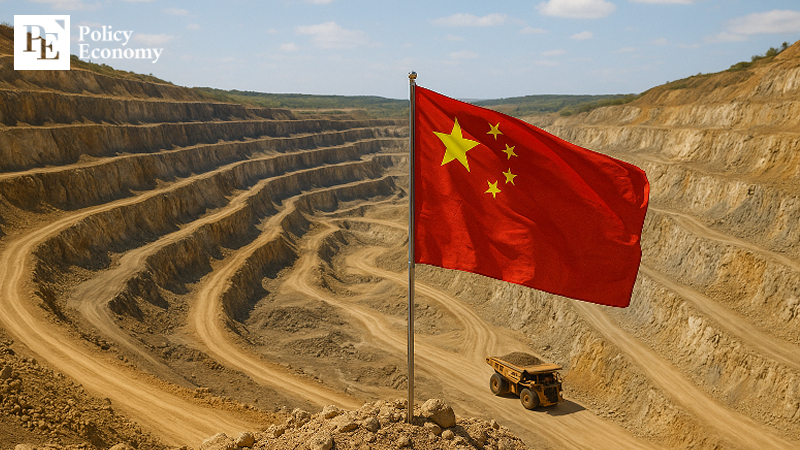
The international community expects the revision to pave the way for China to further tighten export restrictions on a broad range of items, including critical and strategic minerals. Since its enactment in 1994, the Foreign Trade Law has been amended multiple times, serving as an institutional mechanism to reinforce China’s standing and influence within global supply chains. A revision adopted in 2022, amid the intensification of U.S. export controls on China, expanded authorities’ powers to retaliate against trade partners seeking to curb Chinese exports and introduced a negative list system restricting the market entry of specific foreign firms.
China has already used rare earths as strategic leverage not only in trade but also in political and diplomatic contexts. The most recent example involves delays in granting export licenses for rare earths to Japanese companies. This followed heightened bilateral tensions after Japanese Prime Minister Sanae Takaichi suggested the possibility of Japan’s military involvement in a Taiwan contingency. The two countries had previously clashed over rare earths in 2010 during a dispute over the sovereignty of the Senkaku Islands (known as Diaoyu in China). At that time, after Japan detained a Chinese fishing boat captain, China restricted rare earth exports in retaliation, and the standoff eased only after Japan released the captain.
In April this year, China also deployed rare earths as a strategic countermeasure against the United States. When the administration of U.S. President Donald Trump escalated trade pressure by imposing steep reciprocal tariffs on China, Beijing retaliated by restricting exports of seven rare earth elements and magnet products containing them. President Trump promptly held a phone call with Chinese President Xi Jinping, and the United States moved to pursue a second round of high-level bilateral talks to contain the fallout. Subsequently, in accordance with agreements reached at a U.S.–China leaders’ meeting held at Gimhae Airport on October 30, China decided to suspend its rare earth controls on exports to the United States for one year, until November 10 of next year.
China has also confronted the European Union. In October, Beijing expanded its extraterritorial export restrictions by adding rare earths such as samarium and dysprosium to the list of controlled items. The measures require export licenses from Chinese authorities even for products manufactured overseas if they contain as little as 0.1% Chinese-origin rare earths or rely on Chinese refining and processing technologies. Following the announcement, French President Emmanuel Macron warned that “if EU member states do not feel tangible improvements in trade imbalances, we will have no choice but to consider new tariffs on Chinese products,” signaling a hardline stance.
Expanding Influence in Emerging Markets Amid Geopolitical Tensions
The fundamental issue is the persistently high level of global dependence on China across supply chains. Just as rare earth controls alone triggered significant disruption, similar shocks could recur across intermediate and capital goods sectors, including so-called non-strategic resources such as aluminum and magnesium. China effectively dominates global magnesium supply, accounting for approximately 87% of production, and remains a key manufacturing power in aluminum. After the COVID-19 pandemic, China’s adjustments to raw material production and exports in response to shifting global demand repeatedly led to sharp, short-term price spikes in magnesium and aluminum markets, exposing the fragility of supply chains.
More recently, amid geopolitical tensions and tariff pressures, China has redirected its trade focus toward emerging markets. As labor-intensive assembly processes relocate to neighboring countries, China has become the indispensable supplier of parts, materials, and machinery underpinning export growth across Southeast Asia. Electronics produced in Vietnam and Malaysia incorporate Chinese circuit boards and batteries, while solar modules depend on Chinese wafers and equipment. Apparel factories operated by global brands in Bangladesh rely on Chinese fabrics and yarns. In the automotive and electric vehicle sectors, Chinese companies are supplying components and establishing local plants, spreading Chinese standards in batteries, motors, and software.
A reverse flow is also taking shape. In resource-rich Indonesia, nickel is refined locally and exported to China, where Chinese-backed smelters use it to supply stainless steel and battery components. This has created a circular structure centered on China, encompassing raw material production, intermediate processing, and final manufacturing. The arrangement has benefited all sides. China has preserved high value-added manufacturing while absorbing excess capacity and avoiding tariffs through third-country transshipment. Southeast Asian nations have expanded employment and domestic markets with access to inexpensive materials, machinery, and Chinese capital, while consumers worldwide have gained access to cheaper products.
Similar Post