Intel Scraps Poland Plant, Leaving Questions Where Its Growth Strategy Stalled

Authored On
Modified
“No plant without customers” principle formally reaffirmed
Intel’s earnings and technological competitiveness weaken in tandem
Astronomical investment burden and a blocked exit path
Intel has withdrawn from its planned large-scale semiconductor plant investment in Poland, triggering a sweeping revision of its strategy to penetrate the European market. Once touted as one of Europe’s largest semiconductor projects, the plan was ultimately shelved after failing to withstand rapidly shifting market conditions and Intel’s mounting financial strain. While the global semiconductor industry continues to post strong growth, Intel appears to have entered a phase in which cost control and selective investment take precedence over expansion.
Retreat Driven by Market Shifts
According to Polish outlet XYZ (xyz.pl) on the 29th (local time), Intel has abruptly canceled its planned semiconductor back-end manufacturing facility—focused on packaging and testing—in Poland, an investment valued at approximately $4.9 billion. The report noted that although Intel had drawn widespread attention in 2023 by positioning the Poland facility as Europe’s largest semiconductor project, it ultimately failed to overcome practical hurdles such as an AI-centric market shift and the need to shore up financial stability. The outlet added that the designated site had already secured permits and completed infrastructure development, leaving open the possibility that it could be repurposed as a European base for other semiconductor manufacturers.
The withdrawal is widely seen as the culmination of a trajectory that had been apparent for several months. In an internal message to employees last July, Intel CEO Lip-Bu Tan acknowledged that the company had “executed excessive investment too early, without sufficient demand,” reaffirming the principle that factory expansion must be anchored in confirmed customer needs. Subsequently, projects in Poland and Germany were classified as on hold for at least two years, before the Poland plan was formally scrapped on the 27th. Taken together with Intel’s decision to consolidate some assembly lines in Malaysia and Vietnam and to slow construction at its Ohio facility in the United States, the European pullback is interpreted as part of a company-wide capital expenditure control strategy.
Industry analysts point to a structural shift in the semiconductor market as a key backdrop. The industry’s center of gravity has moved from central processing units to graphics processing units, and further toward AI-specific chips. Intel’s historical growth was built on PC and data center CPUs, but the rise of generative AI has redirected data center investment toward GPUs led by Nvidia and other dedicated AI accelerators. As cloud service providers pivot toward GPU-centric architectures to handle AI workloads, the rationale for large-scale back-end investments premised on rising CPU demand has weakened significantly.
Despite Intel’s exit, industry sentiment remains skeptical that the resulting void in Poland will be quickly filled by foundry players such as Samsung Electronics or TSMC. While Poland is viewed as relatively cost-competitive within Europe in terms of labor and land, analysts note that semiconductor manufacturing decisions hinge on far more than cost alone. For foundries operating advanced processes and high-volume production, factors such as process maturity, equipment supply chains, access to skilled labor, and integration with existing manufacturing networks outweigh geographic proximity to end customers. One industry source said that while back-end or niche processes may be viable, Poland is unlikely to emerge rapidly as a core hub for global foundries.
Weak Signs of Recovery Despite U.S. Government Support
Intel’s retreat from Europe is increasingly interpreted as evidence that the company has little room left to pursue expansion and is prioritizing survival instead. The firm has been grappling with the aftereffects of an aggressive capacity expansion strategy launched years earlier, a strain now evident in its financials. In the second quarter, Intel posted revenue of $12.9 billion, slightly above market expectations of $11.9 billion, but reported a net loss of $2.9 billion—widening from a $1.6 billion loss a year earlier. Even as revenue held up, the company struggled to absorb its cost structure.
Reflecting these pressures, Standard & Poor’s downgraded Intel’s credit rating to BBB, the lowest investment-grade tier, late last year, while Fitch followed suit in August, assigning a BBB rating with a negative outlook. Concerns have also mounted over Intel’s eroding technological competitiveness. Since 2017, the company has failed to deliver notable breakthroughs in leading-edge processes, while investment focus has shifted rapidly toward Nvidia-led GPUs, most of which are manufactured by TSMC. Intel is attempting to reverse momentum through mass production of its 18A process and development of the 14A node, but full-scale 14A production is not expected before 2027 at the earliest, leaving its viability uncertain. Intel itself has disclosed in filings with the U.S. Securities and Exchange Commission that it may halt development of 14A and subsequent nodes if it fails to secure meaningful external customers.
As a result, pessimism dominates assessments of Intel’s recovery prospects. Former Intel CEO Craig Barrett has stated bluntly that restoring competitiveness would require as much as $40 billion in additional investment. Shortly thereafter, Intel moved to bolster liquidity by selling a 51 percent stake in its Altera programmable chip unit for $3.5 billion and divesting approximately $1.0 billion worth of shares in autonomous driving subsidiary Mobileye. SoftBank has also agreed to purchase $2.0 billion in newly issued Intel shares, but industry consensus holds that these measures are insufficient to close the long-term technology gap in the near term.
The stakes extend beyond Intel as a single company. The U.S. government views Intel as a cornerstone of the advanced semiconductor supply chain. In a report released earlier this year, U.S. officials warned that the overwhelming concentration of leading-edge chip production in a single region outside the United States poses risks to both supply chain resilience and national security. The government subsequently committed $8.9 billion in support to Intel in exchange for a 9.9 percent equity stake, an unprecedented arrangement. Nvidia has also joined what has been dubbed an “Intel rescue” effort by announcing a $5.0 billion investment. Intel now finds itself navigating a narrow path between expansion and contraction, private capital and government backing.
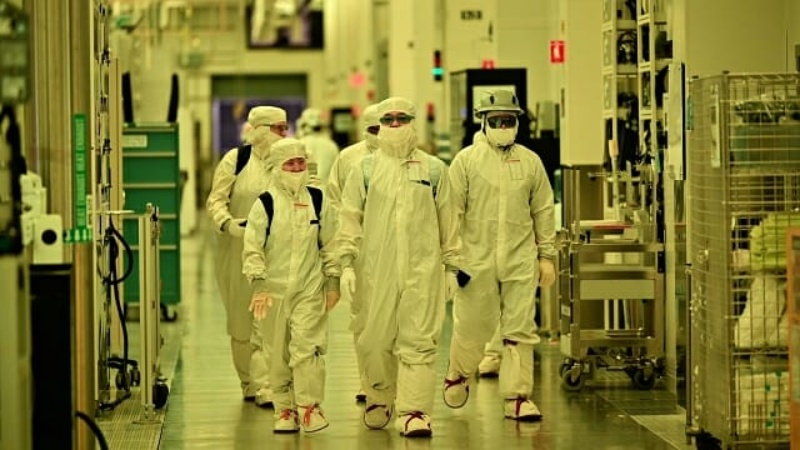
Difficulty Securing Demand Clouds Investment Recovery
Against this backdrop, Intel’s external funding strategy is increasingly showing its limits. As semiconductor fab costs have surged exponentially, Intel has concluded that internal cash flow alone cannot sustain expansion, prompting it to pursue diverse external financing since 2020. A prominent example is the August 2022 joint investment agreement with Brookfield Asset Management for Intel’s Arizona fabs. Under the deal, Brookfield invested roughly half of the $30 billion project to acquire a 49 percent stake, with Intel retaining 51 percent. CFO David Zinsner described the arrangement as “a new collaboration model for the industry,” emphasizing reduced capital strain.
Yet while such structures spread capital burdens, they have not translated into a recovery in long-term profitability or competitiveness. Intel’s cumulative investment in Arizona illustrates the scale of financial pressure. Since 1979, the company has invested more than $50 billion in the state, with an additional $32 billion spent on the recently operational Fab 52 and the adjacent Fab 62. With vast sums already committed, the need to simultaneously expand capacity and develop next-generation nodes imposes a financial load that is difficult to sustain without continued external funding.
Prospects for recovering these investments remain uncertain. Intel pressed ahead with foundry investments before securing a stable base of external customers and has since seen its dominance in the CPU market erode, sharply weakening its cash-generating capacity. The foundry business’s heavy reliance on internal transactions has further constrained profitability. Investment commitments continued to grow, but the demand foundation required to support them failed to materialize. As a result, industry observers argue that a comprehensive overhaul of Intel’s growth strategy is unavoidable. In an industry where process transitions and capital investment are continuous and cannot simply be paused, greater dependence on external capital ultimately narrows, rather than expands, strategic options.
Similar Post