Rare Earths Are Not About Minerals but Processing, as China’s Hidden Competitive Edge Shapes the Market

Authored On
Modified
China holds dual dominance over reserves and processing technology
Downstream industries such as basic chemicals cultivated over decades
Stricter environmental rules raise barriers to entry

Competition over rare earths—key resources for advanced industries worldwide—appears to have moved beyond a contest over reserves and into a new phase. China has secured firm control over the global supply chain not only through abundant resource holdings but also by accumulating decades of expertise in refining and separation processes that follow mining. Operational know-how built up in petrochemicals and related sectors has been applied to rare earth refining, maximizing industrial synergies. By contrast, major economies such as the United States and Europe continue to struggle with supply chain restructuring amid the practical constraints of environmental regulation and high costs.
From Resource Holder to Process Dominator
According to mining and industrial media outlet Discovery Alert on the 30th (local time), the global rare earth market is increasingly strained by extreme imbalances in reserves and hidden bottlenecks in refining processes. The choke point in the supply chain lies not in the minerals themselves but in the chemistry required to separate and refine them, a factor that underpins China’s position as the world’s largest rare earth supplier. The outlet noted that supply chains for the specialized chemicals needed to separate rare earth elements are already under China’s control, adding that this forms the basis of its ability to exert influence over global markets.
In practice, the difficulty of rare earth production rises sharply after mining. Because the 17 rare earth elements share highly similar chemical properties, separation and purification require advanced precision chemistry. The most common method, solvent extraction, can involve at least 200 stages to isolate a desired element. This process depends on steady supplies of chemical agents such as ammonium chloride and oxalic acid; without reliable access to these reagents, refining capacity is effectively neutralized. In this structure, process technology and reagent supply translate directly into market power.
China has consolidated its dominance on multiple fronts. According to U.S. Geological Survey data, China held about 44 million tons of the world’s 91.9 million tons of rare earth reserves in 2023, roughly 48 percent of the total. Its advantage extends far beyond reserves. China supplies about 85 percent of global exports of ammonium chloride used in rare earth refining and holds overwhelming control of the oxalic acid market, a key precipitation agent. By commanding both reserves and processing, China has positioned itself to control the entire supply chain from raw ore to finished products.
This competitive edge was built over a long period. After studying rare earth mining and refining operations in the United States in the 1960s, China rapidly expanded domestic producers on the back of low electricity costs and relatively lax environmental regulation. In the 2000s, Beijing consolidated dozens of fragmented firms into a “Big Six,” and later into a system centered on China Northern Rare Earth and China Rare Earth Group, creating a framework capable of managing supply and prices. This evolution transformed China from a simple resource holder into a process-dominant power, effectively placing a dual constraint on the global rare earth supply chain.
The Paradox of Petrochemical Overcapacity
Another foundation of China’s rare earth refining strength lies in the downstream petrochemical industries it has cultivated for decades. Between 2020 and 2022, China shifted to the center of global petrochemicals through aggressive capacity expansion. During that period, China accounted for 56 percent of global ethylene capacity additions and 78 percent of propylene. In production facilities for synthetic resins used in items such as plastic bags, artificial leather, and auto parts, China’s share reached as high as 85 percent, reflecting a policy push toward full ethylene self-sufficiency by 2025.
The downside of this expansion is oversupply. Last year, China’s ethylene production capacity reached 54 million tons, exceeding demand by about 9 million tons. This year, capacity is set to rise further to 55 million tons, while expected demand is projected at around 48 million tons. The result has been declining profitability across the sector. Although operating revenue in China’s petrochemical industry reached approximately 2.36 trillion dollars, up 46.9 percent from 2020, global utilization rates fell below 80 percent and profit margins dropped to record lows.
Paradoxically, this excess capacity has reinforced China’s competitive position in rare earth refining. High-purity separation, continuous-process automation, and cost-reduction expertise developed in petrochemicals closely align with the technical requirements of rare earth processing. Solvent extraction, in particular, demands precise control of repetitive, long-duration chemical reactions—capabilities difficult to achieve without experience operating large-scale petrochemical plants. Industry observers note that China’s ability to supply the chemicals and equipment required for rare earth refining also stems from the broad industrial support base created by its petrochemical sector.
A Triple Challenge of Technology, Environment, and Social Consensus
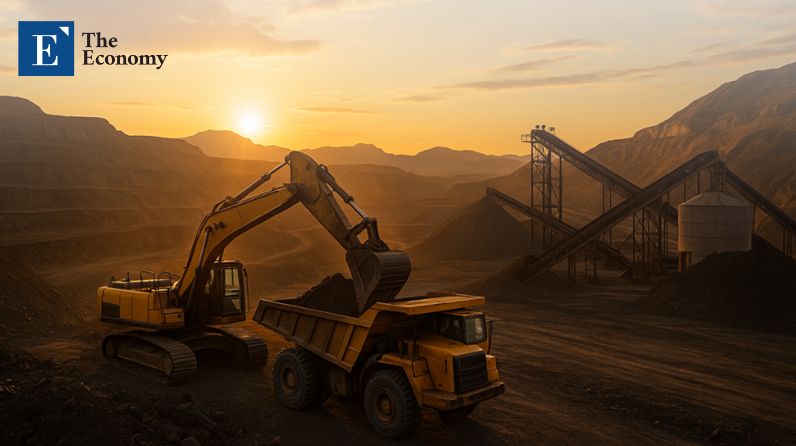
Against this backdrop, the core of rare earth decoupling strategies pursued by the United States, Australia, and Europe is shifting toward refining and processing capabilities. The U.S. case is illustrative. Despite being commercially viable, the Mountain Pass mine in California—the country’s largest rare earth deposit—has long depended entirely on China for separation and refining. In response, the U.S. government has classified rare earth refining and permanent magnet production as critical defense supply chain elements, backing private-sector investment in processing technology and facilities. The policy shift reflects recognition that securing mines alone does not confer supply chain leadership.
Australia’s experience underscores the same point. Lynas Rare Earths mines rare earths at Mount Weld but ships the material to its processing plant in Kuantan, Malaysia, to produce oxides for global markets, having been unable to secure refining facilities domestically due to environmental approvals and local opposition. This geographic split between mining and refining highlights both the difficulty of building a China-free supply chain and the extent to which environmental regulation and community acceptance in host countries directly affect supply stability.
Europe faces similar constraints. The European Union has designated rare earths as strategic raw materials and is pushing for supply diversification, but strict environmental rules and wastewater and radioactive byproduct standards have slowed progress. Mining projects announced in Sweden and Norway must still overcome the high barriers of refining and separation before reaching commercialization. As a result, Europe is pursuing an interim strategy of securing stable supplies of rare earths refined outside China rather than rapidly building domestic processing capacity.
Ultimately, the challenge confronting these economies converges on how to internalize refining and processing capabilities rather than merely securing underground resources. Strengthening process capacity is widely seen as unavoidable, yet it comes with environmental risks, local opposition, and high cost structures that are difficult to sidestep. While the direction of decoupling from China has become clearer, execution will require prolonged timelines and complex coordination, leaving the strategy firmly in a testing phase.
Similar Post