Trump’s ‘Donroe Doctrine’ After Ousting Maduro: A Crossroads Between Expanding U.S. Dominance and Growing China–Russia Leverage

Siobhán Delaney is a Dublin-based writer for The Economy, focusing on culture, education, and international affairs. With a background in media and communication from University College Dublin, she contributes to cross-regional coverage and translation-based commentary. Her work emphasizes clarity and balance, especially in contexts shaped by cultural difference and policy translation.
Authored On
Modified
Removal of anti-U.S. regimes in Latin America under the banner of ‘Donroeism’
Strategic containment of China and Russia, with an eye on oil control
Post-Maduro strategy favors pressure over direct governance
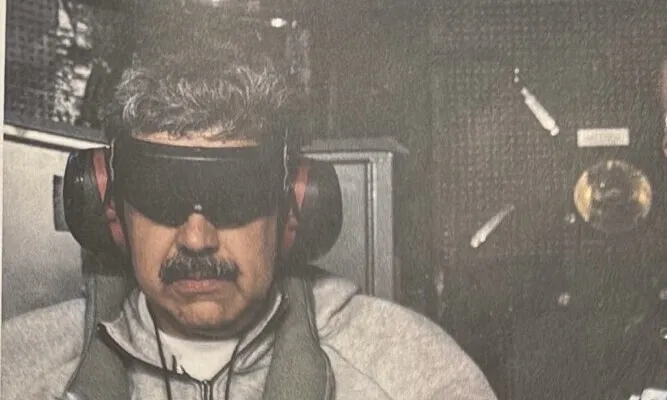
U.S. President Donald Trump has formally proclaimed the so-called “Donroe Doctrine” after capturing Venezuelan President Nicolás Maduro and effectively initiating regime change. By breaking the long-standing international law principle of non-intervention in sovereign domestic affairs, Washington has moved militarily to remove an anti-U.S. government in its traditional sphere of influence, Latin America. The action is widely interpreted as a strategic maneuver aimed at curbing Chinese and Russian influence across the region. Whether this unprecedented move will catalyze the spread of pro-U.S. governments throughout Latin America or ignite a new wave of anti-American resistance remains a central question.
‘Venezuela-Style Decapitation Strike’
According to Reuters and other foreign media on the 4th (local time), President Trump announced at 4:21 a.m. on the 3rd via his social media platform Truth Social that “U.S. forces successfully carried out a large-scale airstrike against President Maduro,” adding that “Nicolás Maduro and his wife were captured and transferred out of Venezuela.” The operation amounted to a so-called “decapitation strike,” eliminating an adversary’s supreme leadership in a single blow on foreign soil. Trump stated that the operation was conducted “jointly with U.S. law enforcement authorities.”
The operation, codenamed “Operation Absolute Resolve,” unfolded with lightning speed. After Trump issued the launch order at 10:46 p.m. on the 2nd, more than 150 aircraft were dispatched from 20 ground and naval bases across the Western Hemisphere to neutralize Venezuela’s air defenses. Helicopters carrying elite special forces, including Delta Force units, arrived at Maduro’s safe house at 1:01 a.m. on the 3rd, extracted the presidential couple from their bedroom, and departed Venezuelan airspace by 3:29 a.m. The capture took as little as three hours, with the entire operation completed in under five. Maduro, who had been indicted by the U.S. Department of Justice in 2020 on charges of drug trafficking and money laundering, along with his wife Cilia Flores, was immediately transferred to New York and is expected to appear in court later this week.
In the months leading up to the attack, the Trump administration had accused the Maduro regime of facilitating narcotics flows into the United States and had repeatedly struck small vessels operating in international waters near Venezuela since September. While Washington claimed these were anti-drug cartel operations, at least 115 people were killed across 35 airstrikes disclosed to date, prompting accusations of international law violations for extrajudicial killings of civilians. The administration also seized oil tankers to choke off Venezuela’s crude exports and publicly warned of imminent military action on Venezuelan soil, applying multifaceted pressure directly targeting Maduro himself.
U.S. Signals Policy Intervention Through Pressure, Not Direct Rule
With the collapse of the 13-year-old Maduro regime, Venezuela is expected to fall under U.S. control for the foreseeable future. On the 3rd, President Trump stated, “We cannot take the risk of letting someone who does not have the interests of the Venezuelan people in mind seize control of the country,” adding, “We are there now and will remain until an appropriate transition takes place.”
However, these remarks diverged from subsequent comments by Secretary of State Marco Rubio. According to The New York Times, Rubio said on the 4th that the United States had no plans to establish a military occupation authority like the one set up in Baghdad after the Iraq War. Instead, Washington would pressure the Venezuelan government apparatus still operated by Maduro’s inner circle to induce policy change. In an interview on NBC’s Meet the Press, Rubio said that the United States intended to “run policies, not the country,” emphasizing that Washington wants Venezuela to move in a “certain direction.” A White House official later clarified that Rubio was explaining what Trump meant by “run,” denying any contradiction between their statements.
U.S. efforts to block Venezuelan oil exports are set to continue. Rubio told CBS News that tankers on the U.S. sanctions list would remain blocked until Venezuela opens its state-run oil industry to foreign investors and accepts broader reforms. “This will remain in place, and it is an enormous source of pressure,” he said, adding that the measures would continue until changes emerge that lead to “a better future for the Venezuelan people,” alongside advancing U.S. national interests. Trump went further, openly stating that U.S. oil companies would rebuild Venezuela’s oil infrastructure and claim the profits. “Major American oil companies will go in, invest tens of billions of dollars, fix the broken infrastructure, and generate profits,” he said, making clear that the plan represents an expanded Western Hemisphere version of “America First.”
Still, whether Maduro’s removal marks the definitive end of Venezuela’s 27-year anti-U.S. political trajectory remains uncertain. Although Trump has said the United States will temporarily operate Venezuela, Vice President Delcy Rodríguez, who has assumed power, has dismissed the possibility of cooperation with Washington. Christopher Sabatini, senior fellow for Latin America at Chatham House, observed that “this is neither regime change nor a democratic transition; it is the decapitation of the Maduro regime.” He added that Venezuela’s opposition remains far from the center of power and that the outcome will hinge on how long Trump sustains an operation ostensibly aimed at supporting democracy versus pursuing internal elite turnover.
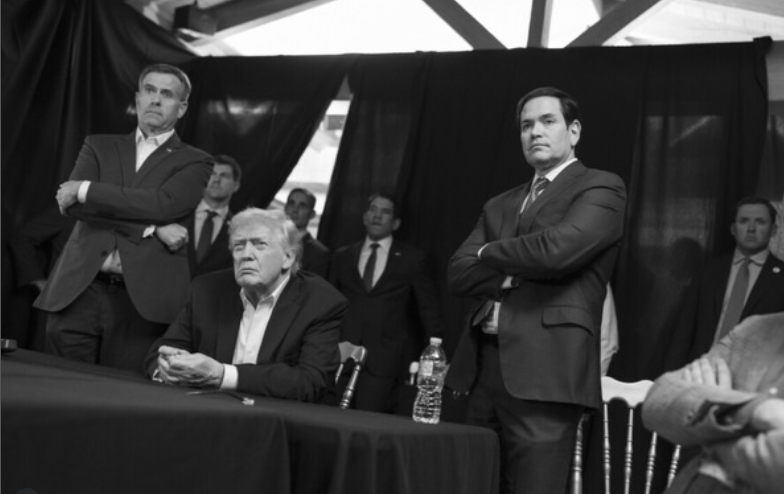
‘Donroe Doctrine’ Signals Intensified China–Russia Containment and a Reordering of South America
The overnight operation to oust Maduro is widely viewed as the opening salvo of Trump’s “Donroe Doctrine” becoming reality. It marks the first tangible military manifestation of the second Trump administration’s stated priority of restoring U.S. hegemony in the Western Hemisphere. The term “Donroe” fuses “Donald” with the Monroe Doctrine—the 1823 declaration by President James Monroe asserting U.S. non-interference in European affairs in exchange for barring European involvement in the Americas.
Trump himself underscored this lineage at a post-operation press conference, stating, “The origins of this operation trace back to the Monroe Doctrine. We have gone beyond it, and people now call it Donroe.” He added that after decades of neglect by prior administrations, “U.S. dominance in the Western Hemisphere will never again be questioned.” The message is widely interpreted as a warning that Washington will no longer tolerate expanding influence by extra-hemispheric powers such as China and Russia in Latin America.
Speculation has intensified that the operation also carried a direct warning to Beijing, as it occurred shortly after Maduro met a delegation of Chinese special envoys at the Miraflores Palace on the 2nd. While Trump and Chinese President Xi Jinping announced a truce in the U.S.–China trade war following their “Busan meeting” last October, Washington appears determined not to acquiesce to China’s Latin American expansion. Diplomatic sources note that China purchases 84% of Venezuela’s oil exports, and bilateral ties were elevated to an “all-weather strategic partnership” after Maduro’s visit to Beijing in September 2023. Analysts view Maduro’s removal as a preemptive move to block this trajectory.
The strategy also aims to sever pathways for Russian and Chinese influence to deepen in South America through the spread of pro-U.S. sentiment. The United States has for years strengthened diplomatic backing and political protection for friendly governments. Combined with the integration of U.S. stablecoins, financial system linkages, and labor and resource supply chains, South America could increasingly function as a critical peripheral node in a U.S.-led bloc economy—expanding the reach of the dollar order while countering China- and Russia-centric alternative financial architectures.
For more than a decade, Maduro’s most reliable backers were China and Russia. Between 2007 and 2016, China lent Venezuela over $62 billion, becoming its largest creditor, with an estimated outstanding balance of $10–15 billion still remaining. Russia likewise extended credit through its state-owned oil company Rosneft and other channels, providing loans tied to oil collateral and arms purchases. These arrangements relied on “oil-for-loan” repayment structures rather than cash. Should a pro-U.S. transitional government backed by the Trump administration take hold, these contracts could be rendered immediately vulnerable. Washington is likely to classify such obligations as “odious debt,” incurred by an autocratic regime without public consent, and either repudiate repayment outright or force renegotiation while excluding China and Russia from the table.
Siobhán Delaney is a Dublin-based writer for The Economy, focusing on culture, education, and international affairs. With a background in media and communication from University College Dublin, she contributes to cross-regional coverage and translation-based commentary. Her work emphasizes clarity and balance, especially in contexts shaped by cultural difference and policy translation.
Similar Post
















