Korean shipbuilding M&A stalls despite boom, capex surge and Japan’s catch-up add pressure

As one of the youngest members of the team, Tyler Hansbrough is a rising star in financial journalism. His fresh perspective and analytical approach bring a modern edge to business reporting. Whether he’s covering stock market trends or dissecting corporate earnings, his sharp insights resonate with the new generation of investors.
Authored On
Modified
Korean Shipbuilding assets pile up in M&A market, but deals move slowly
MASGA hopes and the supercycle inflate valuations, raising acquisition burden
Capex pressure, Japan’s catch-up and other risks remain piled up
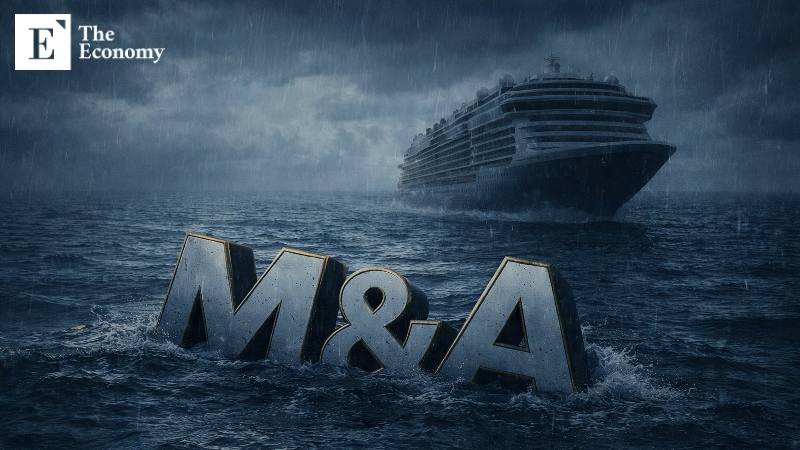
Korean Shipbuilding and ship-equipment assets ara struggling to clear in the M&A market. With positive catalysts such as the MASGA project piling up and boosting expectations for the sector, valuations have surged amid a sustained upcycle. Added burdens—including large-scale capex requirements and Japan’s push to catch up in shipbuilding—are also making potential acquisitions harder for investors to take on.
Shipbuilding assets struggle to find buyers
According to the shipbuilding industry on the 6th, a number of Korean shipbuilding and marine-equipment assets currently on the M&A market are failing to attract buyers. Hyundai Hims, which was put up for sale last July, is a case in point. Despite seller J&N PE trimming its stake through block deals, no preferred bidder has been selected so far. Several strategic investors (SIs) and financial investors (FIs) showed interest, betting on synergies from a recovery in the shipbuilding cycle, but sharply higher valuations reportedly prevented any meaningful progress in talks.
STX Engine has also been hampered by its surging share price. United Asset Management Company (UAMCO) initially considered a full sale of its controlling stake, but adjusted its exit strategy as valuations climbed, opting instead for multiple block deals to recover part of its investment. While this reduced the burden for potential buyers, the market continues to view STX Engine’s valuation as excessive, leaving the pool of suitors largely unchanged.
K Shipbuilding, which was put up for sale last July, is also facing debate over its price tag. The UAMCO–KHI consortium, which is leading the sale, is reportedly seeking a valuation of around 1 trillion won. The figure is based on the price-to-book ratio applied to Daehan Shipbuilding, a similarly sized peer that recently went public. During its IPO, Daehan Shipbuilding used a peer group that included HD Hyundai Heavy Industries, Samsung Heavy Industries, Hanwha Ocean, and HD Hyundai Mipo, applying their average multiple of 4.58 times to derive its valuation. Applying the same metric would put K Shipbuilding’s value at roughly 1.2 trillion won. However, even during Daehan Shipbuilding’s listing, critics argued that comparing mid-sized shipbuilders with major players was inappropriate, leaving open the question of whether the market will accept such a valuation.
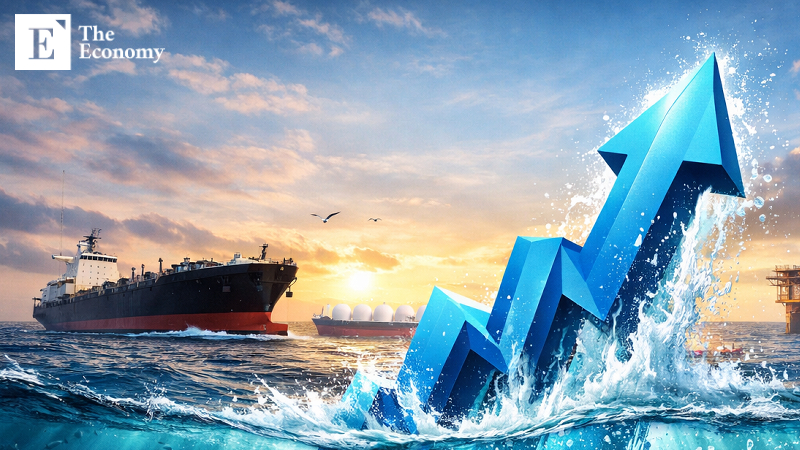
Shipbuilding boom continues
The string of valuation jumps reflects rising expectations for shipbuilding, driven by news of the MASGA project. MASGA is a package that adds “Shipbuilding” to “MAGA,” the signature political slogan of U.S. President Donald Trump, and includes large-scale on-the-ground U.S. investment by Korean private shipbuilders along with loans and guarantees to support it. The industry is seen as gaining a chance to secure a stable base of long-term orders and expand its global influence. Still, uncertainty remains because the investment fund’s detailed structure and execution plan have not been clearly laid out.
The ongoing IPO push by HD Hyundai subsidiaries is also viewed as reinforcing the trend. HD Hyundai Marine Solution listed on May 8, 2024 and closed its first day at about $119. This was 96.52% above its IPO price of about $61. Based on the close, its market cap was about $5.3 billion. As of 12:30 p.m. on January 6, the stock was still holding up at about $142. Early last month, HD Hyundai Robotics sent requests for proposals to major domestic and global securities firms to pick underwriters for a listing. In its most recent investment round, the company’s valuation was about $1.3 billion.
The upcycle itself is another factor lifting expectations. Even as global ship orders fell last year, Korean yards expanded their order backlogs by focusing on high value-added vessels such as LNG carriers. HD Korea Shipbuilding & Offshore Engineering won orders for 127 ships worth $17.58 billion, reaching 97.4% of its annual target of $18.05 billion. Samsung Heavy Industries won 39 ships worth $6.9 billion, hitting 70% of its $9.8 billion target. Hanwha Ocean won 51 ships worth $9.83 billion, surpassing its previous year’s $8.98 billion.
Experts say this supercycle is likely to last longer than the 2007–2010 cycle. With fewer domestic competitors outside the big three, the three shipbuilders have captured a large share of new global orders, enabling more selective contracting centered on high value-added vessels. Securing a stable workforce has also normalized production, reduced catch-up costs, and improved shipbuilding capacity. Defense is also seen as a driver for a prolonged cycle, as major shipbuilders that long grew around commercial ships and offshore plants are now moving into the special-purpose naval market in the United States and elsewhere to build a new growth base.
Rising barriers to acquisitions
The concern is that if shipbuilders blindly scale up on the back of favorable market conditions, acquisition demand could instead weaken. A higher purchase price, combined with additional capex required after closing, can push the buyer’s burden too far. Korean shipbuilders are already leaning into capacity expansion. HD Korea Shipbuilding & Offshore Engineering plans to invest about $693 million in new and acquired facilities, while Hanwha Ocean poured about $513 million into facilities in the fourth quarter alone last year. Hanwha Ocean is pursuing the introduction of a floating dock and a 6,500-ton ultra-large offshore crane, and Samsung Heavy Industries set this year’s investment budget at about $315 million.
Japan’s catch-up effort is another variable. According to a report by Nikkei on December 26, the Japanese government has drawn up a three-phase “shipbuilding revival roadmap,” aiming to roughly double shipbuilding output by 2035 versus 2024. Japan plans to use about $800 million, secured through a supplementary budget last year, to support the introduction of welding robots and similar equipment in 2026–2028, then expand facilities such as docks in 2029–2031. It would then support investment in long-lead equipment such as large cranes in 2032–2034.
Japan’s shipbuilding industry, once among the world’s best, suffered two major downturns, including after the first oil shock in 1974 and after the 1985 Plaza Accord, amid a loss of price competitiveness from yen strength and an overcapacity problem. Japanese yards later fell behind overseas rivals due to aging workforces and delayed responses to environmental regulations, and Japan now ranks third globally behind China and Korea. The newly proposed support plan for equipment investment is effectively Japan’s first full-scale bid in decades.
As one of the youngest members of the team, Tyler Hansbrough is a rising star in financial journalism. His fresh perspective and analytical approach bring a modern edge to business reporting. Whether he’s covering stock market trends or dissecting corporate earnings, his sharp insights resonate with the new generation of investors.
Similar Post