“Targeting OpenAI and Apple” Google–Samsung’s Gemini alliance solidifies, shaking up the AI power balance

Authored On
Modified
From smartphones to refrigerators, Google–Samsung AI alliance expands across the board
Google aggressively widens user touchpoints, Samsung fires a warning shot at Apple
Gemini’s market influence surges, shaking OpenAI ChatGPT’s throne
Google and Samsung Electronics have joined forces as competition for AI leadership intensifies. Their partnership, long centered on smartphones, is now deepening across a broad range of areas including smart glasses, smartwatches, and home appliances. Through this strategy, Google is moving to sharply expand the market reach of its Gemini AI model, closing in fast on OpenAI’s ChatGPT, the current market leader.
Samsung–Google smartphone partnership set to deepen
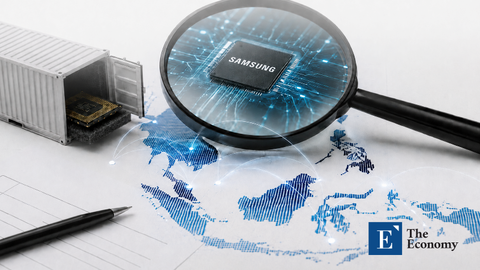
According to the press including The Information and Reuters on January 5 (local time), Roh Tae-moon, president of Samsung Electronics and head of the DX division, said at a media briefing held at the Wynn Hotel in Las Vegas that “AI will be embedded in all Galaxy smartphones, premium TVs of 4K or higher, and other Wi-Fi–connected home appliances.” He added that “including 400 million new products to be launched this year and upgrades to existing devices, AI features will be applied to up to 800 million Samsung devices within the year.” As of last year, Samsung smartphones and tablets equipped with AI functions totaled about 400 million units, and the company plans to roughly double that figure this year.
This is a meaningful tailwind for Google, which is competing with OpenAI and others for AI leadership. Google has steadily expanded its market presence through Samsung Galaxy devices. The two companies are understood to have struck a deal under which Google pays Samsung to preinstall its generative AI model Gemini, while also sharing a portion of AI-related advertising revenue. One industry source said Google appears to be prioritizing long-term data accumulation and expansion of user touchpoints over short-term profits in its AI business, adding that interaction data generated by hundreds of millions of users across Samsung devices provides the foundation for further improving Gemini’s performance.
Samsung is also expected to secure substantial cumulative revenue from the rollout across up to 800 million devices. While the exact amount Google pays Samsung has not been disclosed, industry watchers believe significant sums are already changing hands between the two companies when advertising and platform revenue sharing are taken into account. Some see Samsung’s move as a warning shot aimed at Apple, which is seeking to improve Siri through in-house AI development. Apple has announced plans to launch a Siri integrated with generative AI, but delayed the rollout citing technical shortcomings. Commercialization could come as early as this year, though the timing remains unclear and its technological competitiveness unproven.
Collaboration strategy stands out across markets
The partnership between the two companies is not limited to smartphones. Google is currently developing smart glasses powered by Gemini, with Samsung Electronics participating as a hardware partner alongside eyewear brand Gentle Monster and U.S. eyewear company Warby Parker. Google has officially confirmed the collaboration with these companies in interviews. Backed by a strong lineup of partners, Google is taking on the smart-glasses market already dominated by Meta.
In July last year, Gemini was added to the Galaxy Watch 8 for the first time in the series. Samsung later rolled out Gemini updates to some earlier models as well, including the Galaxy Watch 7 and other devices released before the Galaxy Watch 8. Users of Gemini-enabled smartwatches can easily launch Gemini via touch or voice commands and link it with Galaxy smartphones to perform tasks more seamlessly.
Next month, Samsung is set to unveil a new model of its Bespoke AI Refrigerator featuring Gemini. Samsung said it combined Gemini with its “AI Vision” feature, which recognizes ingredients through an internal camera, to improve food recognition performance. Previously, automatically recognizable items were limited to 37 fresh-food categories and 50 processed or packaged items when food was placed into or taken out of the fridge, but the introduction of Gemini has significantly expanded the range. The new model also includes a function that recognizes handwritten labels on food containers and automatically adds them to a grocery list, as well as an “AI Food Manager” that covers the entire food experience—from ingredient recognition and management to recipe recommendations and grocery shopping.

Could the AI market be headed for a shake-up
Through this partnership-driven strategy, Google is improving consumer access and rapidly narrowing the gap with OpenAI’s ChatGPT. Data released by mobile app analytics firm Sensor Tower show that Gemini’s global monthly active users (MAU) rose by about 30% between August and November last year. Over the same period, ChatGPT’s user base grew by just 6%, making Gemini’s growth particularly notable. ChatGPT still leads the market, accounting for about 50% of global downloads and 55% of MAU, but its growth momentum is gradually slowing. The diverging growth trajectories underscore that Gemini’s chase is now in earnest.
The same pattern appears in download growth and usage time. As of November 2025, ChatGPT’s year-on-year download growth stood at 85%, below the AI app industry average of 110%. Engagement metrics tell a similar story. ChatGPT’s daily usage time increased by just 6% over the same period and was actually down 10% compared with July. By contrast, Gemini’s daily usage time in November reached 11 minutes, up 120% from March.
Gemini’s performance is also improving markedly. Google’s Gemini 3 Pro, unveiled in November, topped the overall rankings on the LM Arena leaderboard—where users directly evaluate and rank AI models—beating GPT-5.2. It also took first place across multiple categories including text, vision, text-to-image generation, image editing, and search. GPT-5.2 was a model OpenAI rushed out ahead of schedule after declaring a “code red” in response to Gemini’s advance. The move is increasingly seen as a high-stakes counterattack that failed to deliver the intended impact.
Similar Post