[Raw Materials] “Oil Falls, Metals Rise” Copper Prices Sustained by AI Data Centers and Power Grid Demand, Heralding the ‘Super Copper Era’

Authored On
Modified
New Record High Reached Again Just Six Sessions After Surpassing $12,000
AI Data Centers and Power Grid Demand Underpin Prices
Big Tech–Driven Demand Remains Resilient Despite Rising Prices, Rally Expected to Continue
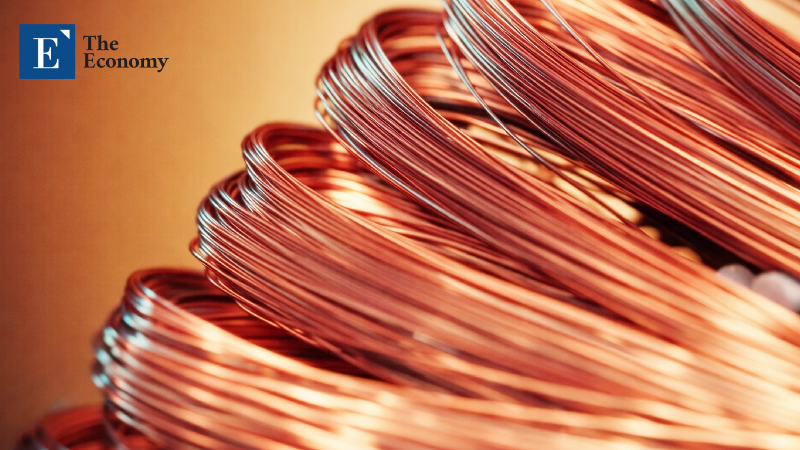
Copper prices have hit another all-time high following a 40% surge last year. The rally is being attributed to a sharp rise in demand driven by power grid expansion linked to the artificial intelligence boom, compounded by preemptive stockpiling amid concerns over potential U.S. tariffs. With global supply constraints colliding with explosive demand, the market appears to have effectively entered a ‘super cycle.’
Copper Prices Surge Relentlessly, Breaking Through $13,000 per Ton
According to Bloomberg on the 6th (local time), spot copper on the London Metal Exchange surged 4.2% to $13,033 per metric ton as of 10:20 a.m. This marked a rapid advance to the $13,000 level just six trading days after copper first crossed $12,000 for the first time in history. Prices have climbed roughly 20% since mid-November last year, tracing a steep upward trajectory. Copper posted a 44% gain last year, the largest annual increase since 2009.
Unlike gold or silver, copper is widely regarded as a metal more closely tied to real economic activity than to investor sentiment. Its extensive use across power grid construction, industrial machinery, construction, and manufacturing means rising demand often signals economic expansion. This characteristic has earned copper the nickname “Dr. Copper.” Historically, copper has accurately foreshadowed economic slowdowns by declining ahead of major downturns such as the Great Depression of the 1920s and the 2008 global financial crisis.
The drivers behind the current rally are multifaceted. First, surging demand from AI and electric vehicles has sharply increased the need for power cables, which are predominantly made of copper. Depending on the product, copper typically accounts for 60–90% of the production cost of electrical wiring. AI data centers in particular require massive volumes of copper. The Financial Times reported that AI data centers require 27–33 tons of copper per megawatt—roughly twice the amount used in conventional data centers. Newly built hyperscale AI data centers typically range from 500 to 1,000 megawatts, implying copper requirements of approximately 13,500 to 33,000 tons per facility. A single data center currently being constructed by Microsoft in Chicago alone consumes 2,177 tons of copper—enough to produce about 80 replicas of the Statue of Liberty, which weighs 27 tons.
Demand Remains Strong While Supply Is Constrained
Tariff threats from the administration of U.S. President Donald Trump have also stimulated demand. Trump signaled potential import tariffs on copper in the first half of last year, triggering stockpiling within the United States. Although refined copper was exempted from tariffs in late July last year, easing inventory accumulation, renewed discussions of tariff reviews have recently resurfaced. As a result, U.S. copper prices have once again begun trading at a premium to LME prices, reviving related transactions. According to Reuters, U.S. copper imports surged last month to their highest level since July last year. Copper inventories at COMEX warehouses stood at 499,841 short tons as of the 2nd, a 400% increase compared with April last year.
The global rearmament trend is further boosting copper demand. Robert Friedland, co-founder of global mining and exploration company Ivanhoe Mines, told the Financial Times that “a significant portion of copper demand is hidden,” noting that military-sector demand is rarely disclosed. Data from the Stockholm International Peace Research Institute show that global defense spending jumped from $2.48 trillion in 2023 to $2.72 trillion in 2024. Annual increases had previously hovered around $100 billion, but defense spending rose by $270.7 billion in 2024 alone. The Korea International Trade Association analyzed in June last year that prolonged geopolitical tensions are driving major countries to accelerate advanced technology adoption and weapons modernization. In line with this trend, the U.S. Congress approved a defense budget of $900.6 billion for fiscal year 2026 on December 18 last year, representing a 2.34% increase from the previous year.
While demand continues to rise, supply is failing to keep pace. Production disruptions at major mines that once delivered substantial output have had a significant impact. The Cobre Panamá mine, which accounted for roughly 1.5% of global copper supply and produced more than 350,000 tons annually, was completely shut down at the end of 2023 following environmental controversies and mass protests, wiping out supply overnight. Australia’s Mount Isa mine has decided to close its underground operations and processing facilities as prolonged mining has sharply reduced ore grades, driving up costs. Major mines in Chile are also transitioning to underground extraction as surface deposits are depleted, but technical challenges and delays have curtailed output. Indonesia’s Grasberg mine, the world’s second largest, has likewise suffered repeated operational disruptions, leading to downward revisions in future supply projections.
At the same time, new sources of supply are effectively nonexistent. Even if investment begins immediately, it takes an average of 15.7 years from discovery to production, making near-term resolution of supply shortages structurally difficult. Markets expect the supply-demand imbalance to persist, supported by robust demand conditions driven by AI-related data center construction and power grid expansion. Goldman Sachs recently noted in a report that “orders from major demand centers such as China remain firm even at peak price levels amid constrained supply,” projecting the current bull market to continue.
Oil Slides as Metals Enter a ‘Super Rally’
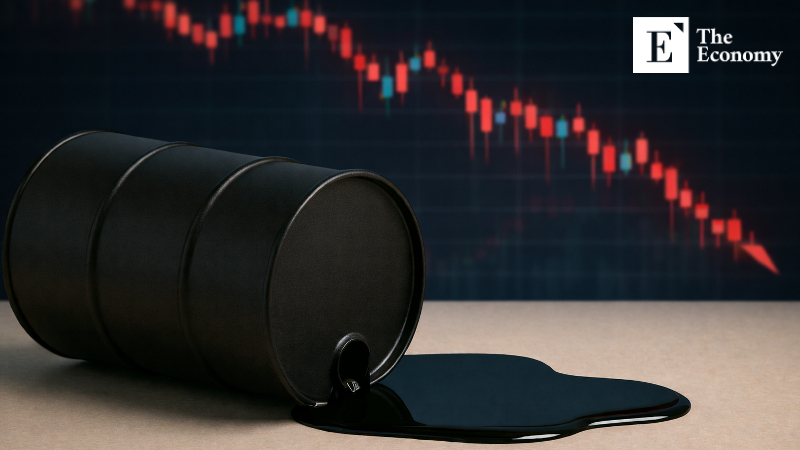
Experts view the copper rally as signaling a broader shift in the commodity market order. Metals such as copper, gold, silver, and aluminum are posting synchronized gains, while crude oil prices are losing momentum. On the 6th, February WTI crude futures on the New York Mercantile Exchange fell 2.04% to $57.13 per barrel. March Brent crude futures on the London exchange declined 1.72% to $60.70 per barrel. After starting last year in the $70 range and briefly surpassing $80, WTI has since reversed course and fallen nearly 20%. Although tensions between Iran and Israel triggered a temporary rebound last June, the move proved insufficient to alter the broader trend. Brent crude has likewise fallen roughly 17% over the past year, sliding from around $75 to $61.94 per barrel.
The decline in oil prices reflects growing concerns over a looming supply glut driven by increased output from the Organization of the Petroleum Exporting Countries and its allies. Eight countries—including Saudi Arabia, Russia, Iraq, the United Arab Emirates, Kuwait, Kazakhstan, Algeria, and Oman—shifted to production increases starting in April last year after implementing two rounds of voluntary cuts in 2023, fully restoring 2.2 million barrels per day of curtailed output by September. An additional 1.65 million barrels per day in cuts has also been gradually unwound, with monthly increases of 137,000 barrels per day from October through December last year.
Signs of oversupply are already emerging. According to oil intelligence firm Vortexa, the number of tankers waiting at ports for at least seven days jumped 15% last week alone, pushing the volume of so-called “floating oil” to its highest level since 2020. U.S. crude inventories are also rising. The Energy Information Administration reported that U.S. crude stockpiles increased by 405,000 barrels last month, sharply diverging from Reuters’ forecast of a 2.4 million-barrel decline.
Major institutions expect oversupply conditions to persist into next year, extending downward pressure on prices. In its monthly report released last month, the International Energy Agency projected that global oil supply next year will exceed demand by 3.84 million barrels per day—slightly lower than its November forecast but still nearly 4% of global demand. Bloomberg data show that major global investment banks, including Bank of America, Citigroup, Goldman Sachs, JPMorgan Chase, and Morgan Stanley, estimate an average Brent crude price of $59 per barrel this year. Given oil’s sensitivity to global economic conditions, comparable to assets such as gold and copper, the recent slump in crude prices stands out. As power-based industries and digital infrastructure increasingly anchor global growth, metals are emerging as the key indicators of a new economic order.
Similar Post