U.S. Power Grid Overhaul Accelerates as Korean Firms Step Up Market Push Following $74 Million Daehan Cable Order

Oliver Griffin is a policy and tech reporter at The Economy, focusing on the intersection of artificial intelligence, government regulation, and macroeconomic strategy. Based in Dublin, Oliver has reported extensively on European Union policy shifts and their ripple effects across global markets. Prior to joining The Economy, he covered technology policy for an international think tank, producing research cited by major institutions, including the OECD and IMF. Oliver studied political economy at Trinity College Dublin and later completed a master’s in data journalism at Columbia University. His reporting blends field interviews with rigorous statistical analysis, offering readers a nuanced understanding of how policy decisions shape industries and everyday lives. Beyond his newsroom work, Oliver contributes op-eds on ethics in AI and has been a guest commentator on BBC World and CNBC Europe.
Authored On
Modified
Daehan Cable Secures $74 Million Turnkey Project in California, Demonstrating Technical Credibility
U.S. Speeds Up Infrastructure Rebuild With Accelerated Permitting and $10.4 Billion in Support Amid AI-Driven Power Demand Surge
Regulatory Easing Fuels Smart Money Inflows, With LS Group and Other Korean Firms Expanding Local Investment
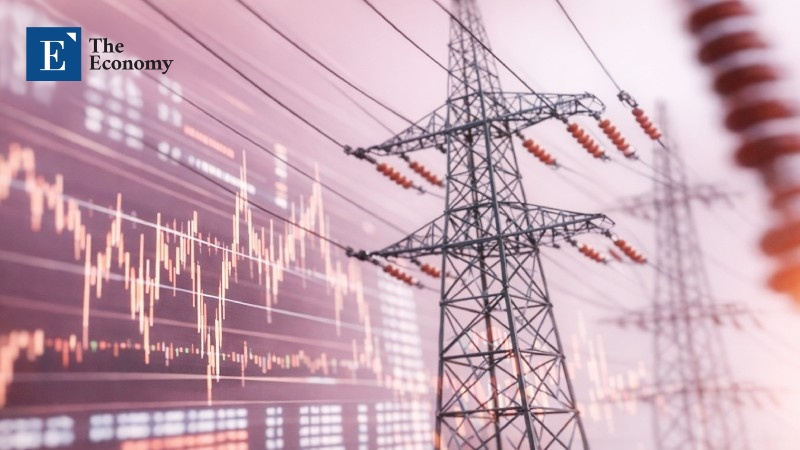
The U.S. power infrastructure market is undergoing its most dramatic upheaval since the 1970s. As aging facilities reach the end of their operational lives while explosive electricity demand driven by artificial intelligence data centers accelerates, the challenge has evolved beyond routine maintenance into an urgent, system-wide overhaul. With the U.S. government slashing permitting timelines and injecting $10.4 billion in funding in an unprecedented push to modernize the grid, Korean companies are emerging as key solution providers. Firms such as Daehan Cable and LS Group are leveraging integrated manufacturing capabilities and construction expertise to transform the crisis gripping the U.S. power grid into a strategic opportunity.
Korea Targets the U.S. Power Grid Market
On the 7th, Daehan Cable announced that its U.S. subsidiary, T.E.USA, had secured a $74 million contract to build a new 230-kilovolt transmission line in the Riverside area of Southern California. The deal offers a clear snapshot of the sweeping “grid reconstruction” wave spreading across the United States. The contract was awarded under a full turnkey structure covering design, manufacturing, installation, connection, testing, and commissioning. Given the high level of engineering and project management required, the award signals that U.S. clients are increasingly seeking partners capable of delivering comprehensive technical solutions rather than simple material supply.
The project is a core infrastructure initiative aimed at meeting surging electricity demand in the Riverside region while ensuring supply stability during natural disasters and other emergencies. Daehan Cable was selected as the final contractor after outperforming global competitors, backed by its track record in executing high-difficulty projects, including 500-kilovolt HVAC systems, 320-kilovolt HVDC transmission, and large-scale urban grid replacement works across the United States. The company said it has gained early momentum this year following a $2.5 billion order backlog last year and plans to expand its footprint nationwide through its U.S. subsidiaries and branches as American infrastructure investment accelerates.
The advance of Korean firms is tightly linked to the structural crisis facing the U.S. power grid. A large portion of American transmission and distribution facilities built in the 1960s and 1970s have exceeded their service lives, resulting in frequent outages and growing bottlenecks, driving replacement demand sharply higher. The American Society of Civil Engineers estimates that the United States will require $9.1 trillion in infrastructure investment between 2024 and 2033. As Washington moves to streamline grid interconnection rules and eliminate permitting bottlenecks in response to data center–driven power demand, Korea—armed with both manufacturing scale and advanced engineering—has emerged as a critical partner.
Opportunities are expanding beyond cable manufacturing into grid operation and construction. Korea Electric Power Corp., which holds world-class disaster recovery and grid operation expertise, has recently partnered with major U.S. transmission and distribution contractor Burns & McDonnell to jointly pursue new projects, including 765-kilovolt transmission lines. As power grids evolve from domestic utilities into strategic industries intersecting energy transition and industrial security, Korean companies are rapidly strengthening their U.S. market positions by combining manufacturing prowess with operational know-how.
U.S. Accelerates Permitting and Deploys $10.4 Billion as AI Power Demand Surges
Korean companies’ focus on the U.S. market is underpinned by acute grid congestion triggered by AI data centers and the U.S. government’s aggressive push for speed. Deloitte warns that electricity demand from U.S. AI data centers will surge more than thirtyfold over the next decade, rising from roughly 4 gigawatts today to 123 gigawatts by 2035. Public institutions echo this alarm. A Lawrence Berkeley National Laboratory report prepared at the request of Congress projects that data centers’ share of U.S. electricity consumption will climb from 4.4% in 2023 to as much as 12.0% by 2028, equivalent to an average load of 74 to 132 gigawatts. This far exceeds the capacity of a single nuclear or gas power plant. With hyperscalers building 5-gigawatt mega-campuses, grid stress has moved from theory to reality.
In response, Washington has moved decisively to strip away regulatory drag. Last October, Energy Secretary Chris Wright sent a letter to the Federal Energy Regulatory Commission urging rapid reform of grid interconnection rules for large loads exceeding 20 megawatts, including data centers. Speed was the central theme. Wright asked regulators to assess whether projects with curtailment capabilities or on-site generation could complete interconnection reviews within 60 days, setting a firm deadline of April 30 this year for final measures. He framed the initiative as an “energy–industry integration strategy” designed to secure AI competitiveness while supporting manufacturing reshoring by eliminating chronic interconnection bottlenecks.
Massive funding is being deployed alongside regulatory reform. The Department of Energy is rolling out the $10.5 billion Grid Resilience and Innovation Partnerships program to strengthen grid flexibility. Through its first two funding rounds, $7.6 billion has already been allocated, with data center load response explicitly cited as a justification in the second round. To reduce long-term uncertainty, FERC has also issued Order No. 1920, mandating that transmission planning be conducted on scenario-based horizons of at least 20 years.
Even so, markets remain cautious. Many analysts argue that deregulation alone will not resolve the true bottleneck, which lies in the physical supply chain for essential equipment such as transformers and turbines. Warnings are mounting. The National Infrastructure Advisory Council has cautioned that lead times for large power transformers could stretch from 80 weeks to as long as 210 weeks. Reuters reports that demand for generator step-up transformers jumped 274% between 2019 and 2025, pushing average lead times to 143 weeks by the second quarter of 2025. Raymond James analyst Pavel Molchanov has stressed that the core issue is equipment supply capacity rather than paperwork, describing current policy moves as the opening chapter of a long-term infrastructure competition.

Base Power and LS Group Investments Converge on the U.S. Grid
As regulatory barriers fall, smart money has moved swiftly. With physical supply shortages unresolved, power grids and distributed energy systems have emerged as next-generation investment targets. In Austin, Texas, energy startup Base Power recently raised $1 billion in a Series C round, securing a valuation of $3 billion. Its rapid growth stems from pairing eased market entry with virtual power plant technology. By slashing upfront battery installation costs from several thousand dollars to a subscription-based range of $695 to $995, the company has deployed 100 megawatt-hours of batteries in just two years, achieving average monthly growth of 30%. Its VPP platform, which aggregates distributed batteries to sell power back to the grid, has proven its value as a grid-stabilization solution in Texas following the state’s devastating 2021 blackout. CEO Zach Dell said the company will focus its newly raised capital on vertically integrating hardware production, calling this the ideal moment to reinvent the power system.
Korean conglomerates are aligning with this momentum. LS Group has committed a cumulative $11.1 billion to U.S. power infrastructure, positioning America as the core arena for its shift “from power to solutions,” a strategy emphasized by Chairman Koo Ja-eun. Anticipating a doubling of U.S. transmission investment by 2035, LS has reorganized its portfolio around two pillars: subsea cables and battery energy storage systems. Progress is already visible. LS Cable subsidiary LS Greenlink is building North America’s first large-scale subsea cable plant in Chesapeake, Virginia, with an investment of $680 million, targeting completion in 2027.
LS Electric, meanwhile, has partnered with Samsung C&T on a 500-megawatt BESS project and secured a $98 million contract for AI data center power solutions. As a result, North America’s share of LS Electric’s revenue has surged from 3% in 2020 to 31% in the first half of this year. A company official said the United States represents the world’s largest power infrastructure market and confirmed plans to invest an additional $3 billion across subsea cables, power equipment, and communications businesses.
Oliver Griffin is a policy and tech reporter at The Economy, focusing on the intersection of artificial intelligence, government regulation, and macroeconomic strategy. Based in Dublin, Oliver has reported extensively on European Union policy shifts and their ripple effects across global markets. Prior to joining The Economy, he covered technology policy for an international think tank, producing research cited by major institutions, including the OECD and IMF. Oliver studied political economy at Trinity College Dublin and later completed a master’s in data journalism at Columbia University. His reporting blends field interviews with rigorous statistical analysis, offering readers a nuanced understanding of how policy decisions shape industries and everyday lives. Beyond his newsroom work, Oliver contributes op-eds on ethics in AI and has been a guest commentator on BBC World and CNBC Europe.
Similar Post