Shadow of “Domestic Steel Protection” Policy, India Busts 28 Steelmakers for Price-Fixing

Authored On
Modified
Investigation into antitrust violations over collusion on steel sales prices
Years-long price manipulation uncovered through WhatsApp messages
Protectionist public procurement framework seen as structurally incentivizing collusion
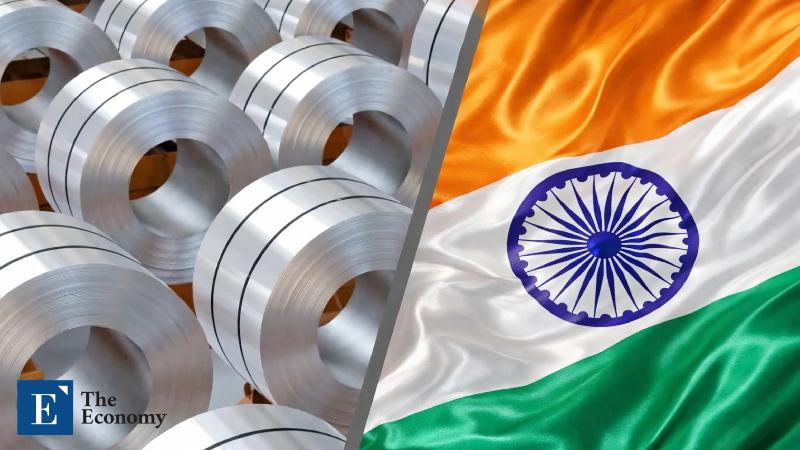
India’s competition authority has found 28 major steel producers and 56 top executives, including chief executive officers, guilty of alleged price-fixing. The case stems from suspicions that, under the protection of preferential domestic procurement rules tied to the government’s “Make in India” initiative, steelmakers systematically colluded on prices and restricted supply to extract undue profits. As a protection-oriented market structure centered on government procurement entrenched price distortions, industry insiders and observers say the probe could become a turning point in restoring fair competition in India’s steel market.
Tata, JSW, SAIL Included, 56 Executives Held Accountable
On January 7 (local time), Reuters reported, citing a confidential order, that the Competition Commission of India (CCI) confirmed evidence that Tata Steel, JSW Steel, state-owned Steel Authority of India Limited (SAIL), and 25 other companies colluded on steel sales prices. The CCI order identified 56 senior executives as responsible, including JSW Steel Vice Chairman and Managing Director Sajjan Jindal, Tata Steel CEO T.V. Narendran, and four former chairmen of SAIL. The findings were contained in a CCI order dated October 6 last year, which remained undisclosed at the time because CCI rules require details of cartel-related cases to remain confidential until proceedings are concluded. This marks the first public disclosure.
The investigation began in 2021 after the Coimbatore Corporation Contractors Welfare Association filed a complaint alleging that nine steelmakers collectively restricted supply and raised prices. The complaint asserted that prices were lifted by 55% over a six-month period, with supply constraints artificially shifting the burden onto construction firms and consumers. According to the order reviewed by Reuters, the CCI conducted raids on several smaller steelmakers during the probe, which ultimately expanded to cover up to 31 companies, industry associations, and dozens of executives.
After the public prosecutor deemed the matter an antitrust case, the presiding judge instructed the CCI to take appropriate action. Under Indian law, the CCI can impose penalties of up to three times the profit earned in each year of violation or 10% of turnover, whichever is higher, and can also fine individual executives. Accordingly, the CCI demanded audited financial statements from the steelmakers covering eight fiscal years through 2023. Regulators typically require such detailed data when calculating potential fines.
In the order, the CCI stated that “the conduct of the parties violated India’s antitrust law” and that “specific individuals are also liable.” This is regarded as a critical intermediate step in cartel cases. A final determination will follow a review by senior CCI officials, during which companies and executives will be given opportunities to submit objections or opinions. Given the scale of the investigation, the process could take several months, after which the CCI will issue and publish its final ruling. While JSW Steel and SAIL have denied the allegations, an internal CCI document prepared in July last year indicated that Indian authorities uncovered WhatsApp messages exchanged among regional industry groups of steel product manufacturers. The messages reportedly show involvement in fixing prices or curbing production.
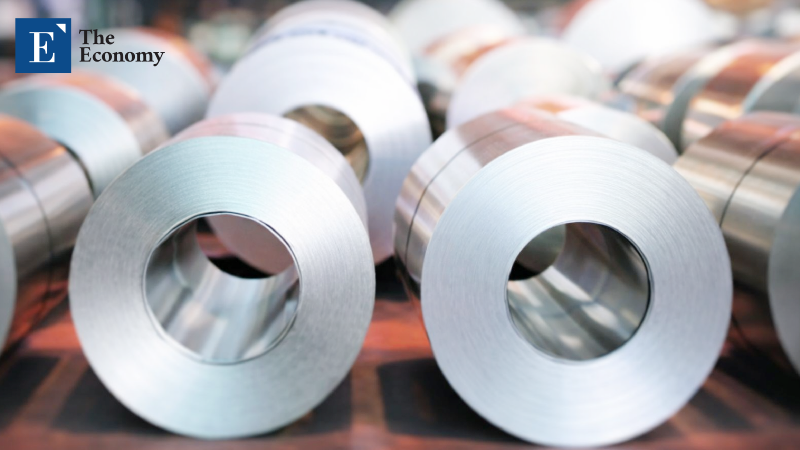
World’s Second-Largest Steel Producer, India Mandates Use of Domestic Steel in Government Projects
At the core of the steelmakers’ ability to collude lies the Indian government’s policy mandating preferential procurement of domestically produced steel. The government introduced rules requiring public procurement to prioritize Indian-made steel products. The framework designates domestically produced steel as the preferred choice in government contracts and sharply raises entry barriers for foreign products.
According to India’s Ministry of Steel, all central government ministries, agencies, and public projects are required to use domestically produced steel when procuring steel valued above approximately $6,000. In tenders for steel procurement valued at $240 million or less, bids from foreign companies are prohibited.
The policy further stipulates that requiring foreign certifications or unreasonable technical specifications in steel procurement will be treated as discriminatory against domestic suppliers. Under the principle of reciprocity, foreign governments or institutions that do not allow Indian companies to participate in their procurement processes are barred from bidding in Indian government tenders. Exceptions apply only to specific steel products not produced domestically or when local suppliers cannot meet required volumes.
India’s push to protect its steel industry reflects rising imports of foreign steel products, particularly from China, despite steel being a strategic sector. Prime Minister Narendra Modi launched the Make in India initiative with the goal of turning India into a global manufacturing hub, a drive that triggered a surge in steel demand. Although India is the world’s second-largest steel producer after China, massive domestic demand has fueled a sharp increase in imports of low-priced Chinese steel.
According to World Steel Association data, India’s steel demand is projected to grow by about 8% annually, driven by expanding infrastructure investment and a manufacturing boom in sectors such as automobiles. In response, the Indian government has announced a vision to expand crude steel production capacity from the current 180 million tons to 300 million tons by 2030 and further to 500 million tons by 2047. Public and private steelmakers are simultaneously pushing ahead with aggressive capacity expansion projects.
POSCO Pursues Joint Steel Mill Venture with JSW Steel
Korean steelmakers, also struggling against the influx of low-priced Chinese steel, have turned their attention to India. POSCO Group, South Korea’s largest steelmaker, is at the forefront. In August last year, POSCO signed a non-binding heads of agreement with JSW Steel—one of the companies implicated in the price-fixing case—to jointly build a steel mill with an annual crude steel capacity of 6 million tons. The agreement followed a memorandum of understanding signed in October 2024 to construct an integrated steel plant in India, further detailing areas of cooperation.
An integrated steel mill encompasses the entire production chain, from blast furnaces that smelt iron ore into molten iron to downstream facilities that produce steel plates and bars. POSCO expects that, if land acquisition and environmental impact assessments proceed smoothly, the plant could be completed by 2031. The partners have identified Odisha state as the leading candidate for the project site and plan to finalize the location through a joint feasibility study. Odisha is regarded as highly competitive in raw material sourcing due to its abundant coal and iron ore reserves.
POSCO views the joint venture with JSW Group as a cornerstone of its “steel competitiveness rebuilding” strategy under Chairman Chang In-hwa’s leadership. The group already operates a 1.8 million-ton cold-rolled and galvanized steel plant in Maharashtra and maintains steel processing facilities in New Delhi, Gujarat, Tamil Nadu, and Andhra Pradesh. Within the steel industry, attention is now focused on how the ongoing cartel investigation may affect the progress of the POSCO–JSW joint venture.
Similar Post