[Fed Watch] Clash Between Myron’s Call for a “Big Cut” and Hawkish Caution, Uncertainty Mounts Amid Diverging Outlooks

Authored On
Modified
Trump Ally Myron Calls for More Than a 100-Basis-Point Rate Cut This Year
Fed Officials Lean Toward Caution, Weighing Inflation and Labor Market Conditions
Concerns Mount That President Trump’s Political Pressure Could Amplify Uncertainty
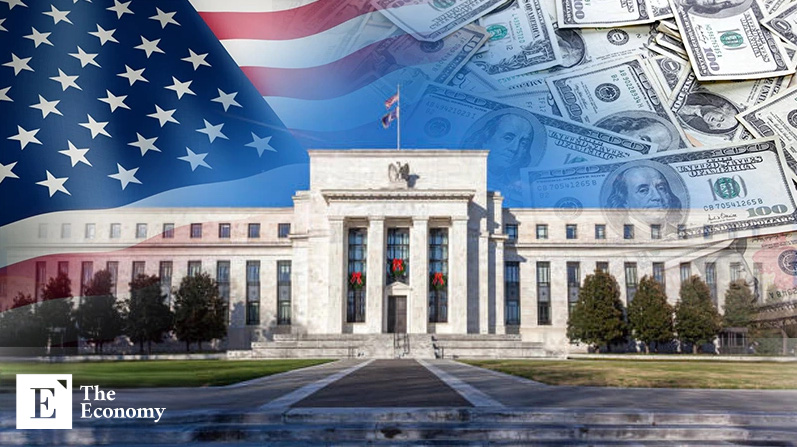
Stephen Myron, a former economic adviser to U.S. President Donald Trump, has argued that aggressive interest-rate cuts are necessary this year, while the prevailing view within the Federal Reserve and among many experts leans toward caution, citing concerns over renewed inflation and potential policy imbalance. The labor market has yet to show clear signs of entering a pronounced downturn, and policy variables such as tariffs and immigration measures could reintroduce medium- to long-term inflationary pressures. In particular, a premature pivot toward easing risks stoking inflation expectations and undermining the credibility of monetary policy, a concern frequently highlighted by policymakers.
Myron Reiterates “Big Cut” Argument Raised at Three Meetings Last Year
On the 6th (local time), Myron said in an appearance on Fox Business Network that “the Federal Reserve’s current monetary stance is clearly restrictive and is constraining economic growth,” adding that “there is ample room to cut the benchmark rate by more than 100 basis points this year.” He assessed that “underlying inflation is already around the Fed’s 2% target” and projected that “the U.S. economy will maintain solid growth this year.” He added, however, that this outlook would not hold if the Fed fails to lower interest rates.
Myron, widely regarded as one of President Trump’s key economic strategists, was appointed to the Fed’s Board of Governors in September last year after serving as chair of the White House Council of Economic Advisers following the launch of the administration’s second term. A prominent dove, he has consistently and publicly advocated a 50-basis-point rate cut, earning a reputation in markets as a symbol of President Trump’s growing influence over the central bank. His term runs through January 31, the remainder of former Governor Adriana Kugler’s term following her early resignation, and some observers have begun to speculate about the possibility of reappointment.
At its final Federal Open Market Committee (FOMC) meeting of 2025 last month, the Fed cut the benchmark rate by 25 basis points, marking the third consecutive rate reduction following moves in September and October. Throughout this process, Myron maintained his stance that more aggressive easing was warranted, repeatedly dissenting in favor of a “big cut” rather than a 25-basis-point move. He argued that excessive caution during an economic slowdown could leave policy responses lagging behind unfolding conditions.
Hawkish Voices Warn: Tariff Policy Could Rekindle Inflation
Nevertheless, Myron’s calls for aggressive rate cuts stand somewhat apart from the broader tone within the Fed. Neil Kashkari, president of the Federal Reserve Bank of Minneapolis and a leading hawk, said in an interview with CNBC on the 5th that “with rates approaching a neutral level, the scope for further cuts may be limited.” He noted that “the Fed is at a crossroads in deciding whether to focus more on a softening labor market or persistently elevated inflation,” adding that “after reviewing additional data, policymakers could move in either direction from a neutral stance if necessary.”
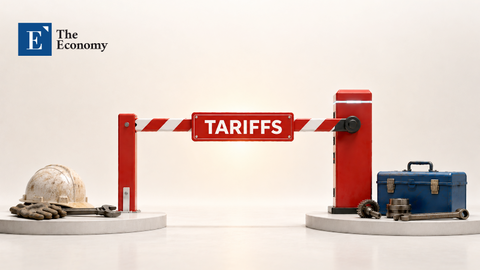
Kashkari issued a pointed warning on inflation risks. “Inflation remains too high,” he said, adding that “the question I wrestle with most is how restrictive current monetary policy really is.” He continued, “Over the past few years, we expected the economy to slow, but it has shown far greater resilience than anticipated, which could signal that monetary policy is not exerting sufficient downward pressure.” Holding voting rights on this year’s FOMC, Kashkari has recently reiterated his opposition to rate cuts, citing concerns that President Trump’s tariff policies could reignite inflationary pressures.
Thomas Barkin, president of the Richmond Fed, who does not hold a vote this year but participates in meetings and deliberations, also reinforced the cautious stance. Speaking at a Chamber of Commerce event in North Carolina on the 6th, Barkin said, “The policy rate appears to have reached a neutral level,” and stressed that “a careful approach to future monetary policy is warranted.” He added, “No one wants to see the labor market deteriorate further as employment softens, and no one wants inflation expectations to become entrenched after nearly five years of above-target inflation.” He emphasized that “amid conflicting macroeconomic conditions, policymakers must maintain a delicate balance.”
Rising Uncertainty in the U.S. Economy Calls for Prudence
Experts likewise argue that uncertainty surrounding the U.S. economy remains unresolved, necessitating a cautious approach. Adam Posen, president of the Peterson Institute for International Economics (PIIE), said, “While the direct effects of tariffs may be limited, their costs grow over time,” and warned that “inflation is likely to rise over the next year.” He pointed out that “the Trump administration’s anti-trade and anti-immigration stance is exerting stagflationary pressure on the U.S. economy,” adding that it “raises prices, reduces real incomes, and creates supply shortages in specific labor markets and goods.”
On the labor market, Posen noted that “job growth has slowed, but it is still too early to describe conditions as a clear cooling phase,” adding that “recent wage indicators show real incomes remaining positive, consistent with inflation running above 2.5%.” He stressed, however, the need for vigilance regarding labor supply uncertainties. “If labor supply contracts due to restrictive immigration policies and cuts to public support in healthcare and caregiving, female labor force participation could decline,” he said, warning that “this could reignite wage pressures and, in turn, fuel renewed inflation instability.”
Some critics argue that pressure from the Trump administration for rate cuts could itself undermine economic balance. The Washington Post warned that if prices were to fall sharply back to pre-pandemic levels while wages remain elevated, corporate profitability could deteriorate, leading to job cuts and a broader economic downturn. There is also concern that if expectations of falling prices take hold, demand could contract abruptly. Laura Veldkamp, a professor at Columbia University, cautioned that “once people begin to expect lower prices tomorrow, demand can collapse almost immediately, significantly increasing the risk of recession.”
Similar Post