Vietnam Nuclear Project After Japan’s Exit Tilts Toward Russian Award Amid Intensifying Multilateral Competition

Authored On
Modified
Vietnam Accelerates Nuclear Restart Amid Power Shortages and Carbon Neutrality Pressure
Japan Withdraws Over Disputes on Next-Generation Reactor Adoption and Completion Timeline
Russia Advances With Technology Transfer and Export Finance Package
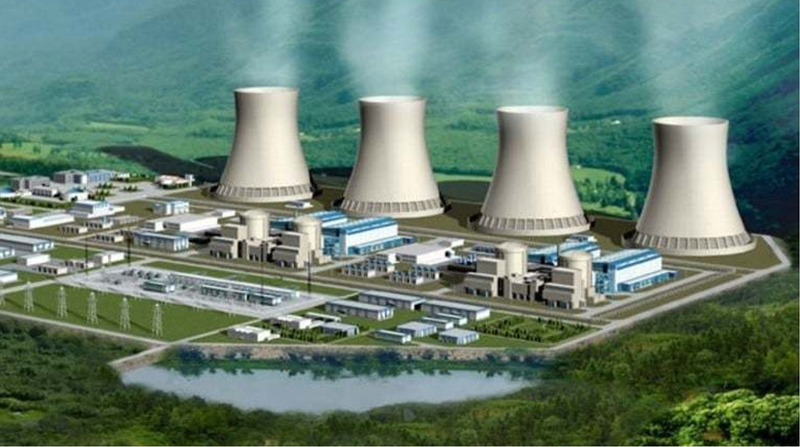
Vietnam has revived its long-shelved nuclear power program in an effort to address both chronic power shortages and carbon neutrality targets, but the negotiation landscape has shifted sharply following Japan’s withdrawal as a core partner. With talks over Ninh Thuận Unit 2 collapsing, Vietnam has entered a renewed competitive phase, weighing alternative partners including Russia, South Korea, France, and China. As urgent power supply needs intersect with geopolitical and diplomatic considerations, international competition over nuclear projects in Southeast Asia and other emerging markets is becoming increasingly complex.
Vietnam Targets Operation of Two Nuclear Plants by 2031
According to Reuters on the 8th (local time), Vietnamese Prime Minister Phạm Minh Chính instructed government officials to conclude negotiations with Russia within the month and to identify a new partner to replace Japan for the second nuclear power plant. “Negotiations have not progressed as expected,” Phạm said, stressing that “multiple obstacles, including delays in consultations, require immediate action.” He also reaffirmed the existing goal of bringing two nuclear power plants into operation by 2031.
Vietnam hosts dense production bases for global manufacturers such as Samsung Electronics and Apple, driving a rapid surge in electricity demand. At the same time, industrial expansion and rising middle-class consumption, compounded by climate anomalies such as droughts and typhoons, have triggered repeated large-scale blackouts. In response, the Vietnamese government decided to reintroduce nuclear power as a long-term stabilizer alongside renewables and gas, reviving the Ninh Thuận 1 and 2 projects that were halted in 2016. Russia was designated as the partner for Ninh Thuận Unit 1, while Japan was assigned Unit 2.
Under the original schedule, contracts for Ninh Thuận Unit 1 were to be signed in September last year, with Unit 2 scheduled for last month. Prolonged negotiation deadlock, however, pushed timelines back. Ultimately, Naoki Ito, Japan’s ambassador to Vietnam, formally announced Japan’s withdrawal last month, stating that “given the completion timeline, Japan would find it difficult to carry out the Ninh Thuận Unit 2 project.” Japanese officials reportedly concluded that participation was no longer realistic after weighing project delays, cost burdens, and schedule feasibility.
South Korea Emerges as a Practical Alternative Amid Tight Deadlines
Industry observers initially expected negotiations to proceed smoothly, given the long-standing cooperative relationship between Japan and Vietnam since the establishment of diplomatic ties in 1973. Vietnam is one of Japan’s largest recipients of official development assistance (ODA), and Hanoi had previously made formal requests to Tokyo for technical and financial support related to nuclear development. Japan’s government and corporations, for their part, viewed Vietnam as a strategic foothold in Southeast Asia and sought to leverage the project as a springboard for reviving overseas expansion of Japan’s nuclear industry, which had contracted after the Fukushima disaster.
Diverging perceptions during negotiations, however, proved decisive. Vietnam prioritized accelerating reactor commissioning to address immediate power shortages and carbon neutrality commitments, while Japan maintained that extended timelines were unavoidable due to safety verification and technological maturity. Japan’s insistence on first demonstrating next-generation reactor models domestically before exporting them made Vietnam’s proposed 2030 operation target increasingly unattainable. Ultimately, Vietnam’s focus on power supply urgency and Japan’s emphasis on sustaining its domestic nuclear ecosystem prevented convergence.
Following Japan’s exit, the Ninh Thuận project has re-entered a competitive phase. Reuters reports that South Korea, France, and Australia are currently cited as potential partners. South Korea, in particular, is viewed as a practical alternative, leveraging its export track record at the Barakah nuclear power plant in the United Arab Emirates. France is reportedly considering a package combining European nuclear technology with robust financing capabilities. Australia, while limited in domestic nuclear construction experience, is being discussed as a possible partner by pairing its world-leading uranium reserves with nuclear fuel supply, financing, and diplomatic support.
Russia Expands Presence Across Emerging Markets Including Kazakhstan
At the same time, analysts caution that negotiations with Russia or China remain firmly on the table, given Vietnam’s longstanding diplomatic and energy cooperation dating back to its socialist era. As countries grappling with power shortages and carbon neutrality pressures increasingly turn to Russia’s model—characterized by large-scale financing and rapid project execution—Russia is rapidly expanding its footprint in the global nuclear construction market. The integration of political relations and energy cooperation underpinning Russia’s approach is seen as a pragmatic option from Vietnam’s perspective.
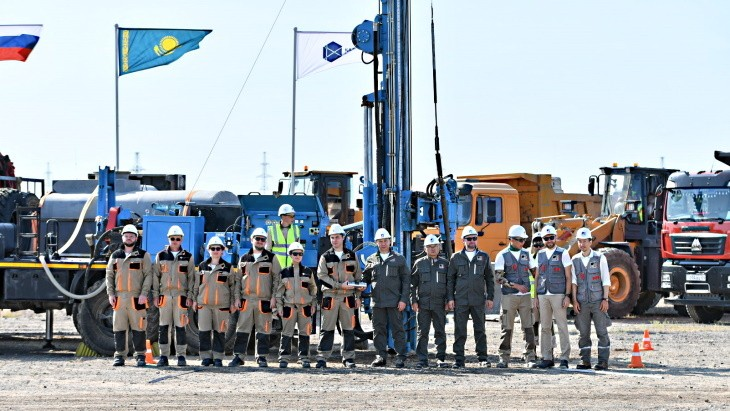
Kazakhstan, the world’s largest uranium producer, last year selected Russia’s state-owned nuclear corporation Rosatom as the developer of its first nuclear power plant. South Korea, France, and China participated in the bidding process, but Russia ultimately prevailed. Industry assessments point to Rosatom’s package strategy—combining technology transfer with sovereign export financing—as the decisive factor. While the project is formally structured as an international consortium, observers expect Rosatom to effectively lead the venture.
China is also expanding its reach in the nuclear export market. Backed by China National Nuclear Corporation (CNNC) and China General Nuclear Power Group (CGN), Beijing promotes cost competitiveness and rapid construction, drawing on extensive domestic nuclear build-out experience. In recent years, China has intensified package proposals in Southeast Asia that integrate financing with EPC (engineering, procurement, and construction). However, sanctions risk, technology standards, and security concerns continue to weigh on negotiations, leading analysts to view China primarily as a competitive pressure variable rather than a frontrunner.
Similar Post