[Weak KRW] Won–Dollar Exchange Rate Diverges From Korea’s Fundamentals? Capital Outflows Entrenched as Economic Base Erodes

Anne-Marie Nicholson is a fearless reporter covering international markets and global economic shifts. With a background in international relations, she provides a nuanced perspective on trade policies, foreign investments, and macroeconomic developments. Quick-witted and always on the move, she delivers hard-hitting stories that connect the dots in an ever-changing global economy.
Authored On
Modified
Bessent “Excessive Exchange-Rate Volatility a Concern”
U.S. Equity Investment Frenzy Persists, FDI Negative for Three Consecutive Quarters
Corporate Relocation Accelerates, Undermining Economic Foundations
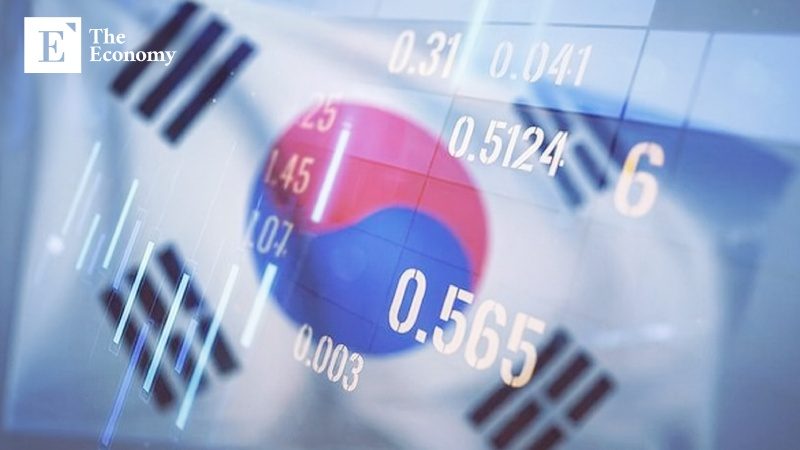
U.S. Treasury Secretary Scott Bessent has publicly expressed concern that the recent depreciation of the South Korean won does not align with the country’s underlying economic fundamentals. The unusual intervention by the U.S. Treasury chief regarding Korea’s foreign-exchange market is being interpreted as a pointed signal toward emerging fractures in capital flows surrounding the Korean economy. The recent weakness of the won appears less a byproduct of dollar strength than the result of surging outbound investment and slowing domestic growth. Despite a current account surplus, expanding overseas equity investment and the relocation of production bases abroad are structurally amplifying dollar demand, entrenching upward pressure on the exchange rate.
U.S. Treasury: Won–Dollar Rate Misaligned With Korea’s Fundamentals
On the 14th (local time), Secretary Bessent said via a post on social media platform X and an official Treasury statement that he discussed the recent depreciation of the won during a meeting the previous day with Deputy Prime Minister and Finance Minister Koo Yun-cheol. “The recent weakness of the won is inconsistent with Korea’s strong economic fundamentals,” Bessent said, adding that “excessive volatility in the foreign-exchange market is undesirable.”
A veteran foreign-exchange specialist with decades of experience in the hedge fund industry, Bessent rarely comments directly on specific currency levels. However, his recent remarks come amid heightened sensitivity following reports that he had shared concerns over one-sided yen depreciation in discussions with Japan’s finance minister Satsuki Katayama, prompting interpretations that Washington is signaling broader caution toward Asian currencies. Over the past nine months, the dollar has weakened against major advanced-economy currencies, while several Asian currencies moved in the opposite direction. During that period, the yen fell more than 9%, and the won declined by roughly 3%.
In a separate statement, the U.S. Treasury said Bessent and Koo also discussed cooperation on critical minerals and ways to strengthen bilateral economic ties. Bessent emphasized that “given Korea’s strong economic performance in core industries supporting the U.S. economy, Korea remains a key U.S. partner in Asia.”
Bessent’s rare verbal intervention is widely seen as reflecting concern that elevated exchange rates could hinder the implementation of a $350 billion bilateral investment commitment by Korea to the United States. The Treasury said the two sides also discussed ensuring the full and faithful execution of bilateral trade and investment agreements, alongside currency issues. Bessent stressed that “smooth implementation is essential,” noting that the agreement would further deepen the U.S.–Korea economic partnership and help drive the revival of U.S. industrial capacity. The message conveyed to Seoul was clear: excessive weakness in the won must not obstruct Korea’s investment commitments to the United States.

Expanding Capital Outflows, Declining Foreign Direct Investment
The won had recovered to around 1,420 per dollar late last year following market intervention by Korean authorities and strategic currency hedging by the National Pension Service. However, depreciation pressure resurfaced at the start of the year, with the currency falling for ten consecutive trading sessions after December 24. Prior to Bessent’s remarks, the won had been trading near 1,470 per dollar, approaching its weakest level in 17 years, before rebounding as much as 1.15% to around 1,462 following his comments.
The persistence of a high exchange rate reflects won weakness more than dollar strength. According to the Bank for International Settlements, Korea’s real effective exchange rate stands at 90.14, well below the benchmark level of 100, indicating a significant erosion in the won’s purchasing power relative to major trading partners. A key structural factor is the surge in overseas investment. Despite dollar inflows from current account surpluses and foreign equity investment, demand for dollars to finance overseas stock purchases has been even stronger, sustaining upward pressure on the won–dollar rate.
Indeed, enthusiasm for U.S. equity investment shows little sign of cooling, even after the government introduced tax incentives aimed at encouraging retail investors to repatriate capital. Expectations that U.S. equities will continue to outperform have outweighed policy inducements. Viewing outbound dollar flows as a key driver of exchange-rate instability, financial authorities have stepped up pressure on overseas investment by retail investors. On the 12th, Financial Supervisory Service Governor Lee Chan-jin instructed financial institutions to curb overseas investment marketing and promotional events, citing the rapid growth in foreign-currency financial products.
Yet the government’s strong verbal intervention and stabilization measures announced on December 24—after which the exchange rate fell from the 1,480 range to the low 1,420s—ironically created a perceived buying opportunity for retail investors, reinforcing dollar accumulation and U.S. equity investment. Dollar deposits and dollar-denominated insurance products at major banks also surged. Dollar deposits at the five largest banks had fallen to about $57.2 billion by the end of October last year, before rebounding for two consecutive months. In December alone, balances jumped by $6.88 billion, an increase of 11.4%. Cumulative sales of dollar-denominated insurance products at the same banks totaled about $1.24 billion last year, nearly double the previous year’s $0.69 billion. The conviction that holding dollars is advantageous has become deeply entrenched among investors.
As the won’s depreciation drags on, foreign direct investment—bringing dollars into Korea for factory construction or corporate acquisitions—has fallen sharply. According to the National Statistical Portal, FDI inflows on a notification basis totaled $7.57 billion in the third quarter of last year, down 23.1% year on year. Cumulative FDI for the first three quarters reached $20.67 billion, a decline of $4.51 billion, or 17.9%, from a year earlier. FDI notifications have remained negative for three consecutive quarters since the first quarter, with the pace of decline accelerating from −9.2% in the first quarter to −19.1% in the second and −23.1% in the third. As FDI involves converting dollars into won, it normally serves as a source of dollar supply in the foreign-exchange market—an effect that has now weakened materially.
Corporate Exodus From Korea Gains Momentum
At a deeper level, the exchange-rate trend reflects a slowdown in Korea’s growth engine and a structural imbalance in capital flows. In the past, building factories, headquarters, and R&D centers in Korea was seen as the foundation of corporate success. That calculus has now reversed. According to the Korea Trade-Investment Promotion Agency, as of early 2025, nearly 9,930 Korean companies operated across 84 countries, with manufacturing and production facilities accounting for the largest share of overseas subsidiaries at 28.4%. This signals a continued shift toward establishing production bases abroad rather than exporting from Korea.
By contrast, only 24 companies decided to return operations to Korea last year, fewer than the 26 recorded in 2021. Since the government enacted legislation in 2014 to encourage the reshoring of overseas firms, just 126 companies have returned over nine years. During the same period, 26,406 new overseas subsidiaries were established. The data underscore that Korean firms are prioritizing exit over domestic reinvestment.
The trend is most pronounced in semiconductors, batteries, and electric vehicles. U.S. policies such as the Inflation Reduction Act and the CHIPS Act have acted as powerful magnets for Korean manufacturers. Samsung Electronics, for example, is investing roughly $14 billion to build a semiconductor plant in Taylor, Texas, accepting construction costs more than twice those in Korea. LG Energy Solution, SK On, and Samsung SDI are jointly pursuing more than ten battery plants in the United States, often in partnership with Hyundai Motor and Kia. Hyundai Motor Group alone plans to invest about $22 billion to build an EV-dedicated plant and battery cell factory in Georgia, the largest single overseas investment in the group’s history.
Companies consistently cite U.S. subsidies, access to a massive market, and the need to manage political and regulatory risk as drivers of this shift. The prevailing strategy is to concentrate R&D in Korea while generating profits in the United States. The deeper concern is that this pattern is becoming the norm rather than the exception. It extends beyond conglomerates to mid-sized and small manufacturers, many of which are relocating to Southeast Asia, including Vietnam, Indonesia, and Thailand. Korea faces rapidly rising minimum wages and electricity costs, while tax incentives for capital investment have been scaled back. In contrast, Southeast Asian countries offer labor costs roughly one-third of Korea’s, along with tax breaks and industrial land.
The regulatory gap is equally stark. In Korea, building a factory typically requires two to three years due to environmental reviews, labor consultations, local consent, and administrative litigation. In Southeast Asia, the process can be completed in months. More troubling still is the growing movement to relocate corporate headquarters abroad. Among startups, incorporation in Singapore has already become commonplace, while many firms have shifted research operations to Silicon Valley, London, or Dubai. The rationale is straightforward: easier access to capital, talent recruitment, and lighter regulation. The implication is unmistakable—Korea is steadily losing its appeal as a base for corporate operations.
Anne-Marie Nicholson is a fearless reporter covering international markets and global economic shifts. With a background in international relations, she provides a nuanced perspective on trade policies, foreign investments, and macroeconomic developments. Quick-witted and always on the move, she delivers hard-hitting stories that connect the dots in an ever-changing global economy.
Similar Post