[Foundry] Intel’s 1.8-Nanometer-Class Yield Reversal to 60% Puts Samsung’s No. 2 Foundry Position at Risk

Matthew Reuter is a senior economic correspondent at The Economy, where he covers global financial markets, emerging technologies, and cross-border trade dynamics. With over a decade of experience reporting from major financial hubs—including London, New York, and Hong Kong—Matthew has developed a reputation for breaking complex economic stories into sharp, accessible narratives. Before joining The Economy, he worked at a leading European financial daily, where his investigative reporting on post-crisis banking reforms earned him recognition from the European Press Association. A graduate of the London School of Economics, Matthew holds dual degrees in economics and international relations. He is particularly interested in how data science and AI are reshaping market analysis and policymaking, often blending quantitative insights into his articles. Outside journalism, Matthew frequently moderates panels at global finance summits and guest lectures on financial journalism at top universities.
Authored On
Modified
KeyBanc estimates Intel 18A yield at 60%
Intel signals turnaround after Nvidia 18A test halt rumors and yield controversies
Samsung SF2 yield estimated in the 40% range, while reports on Exynos cite 60%, creating conflicting assessments
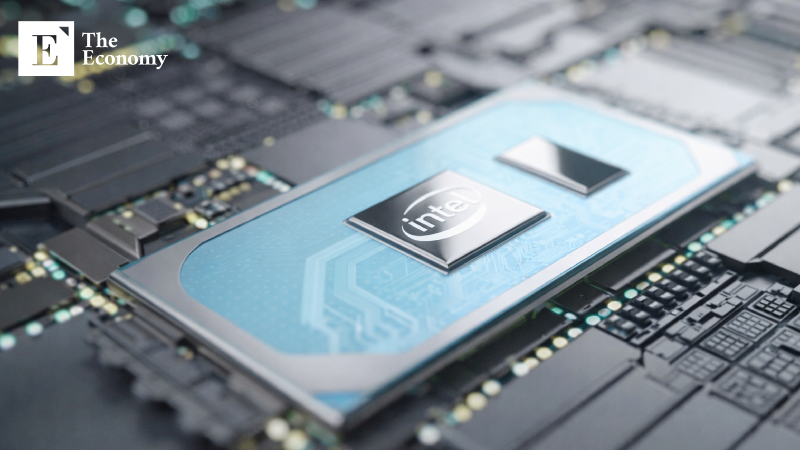
KeyBanc Capital Markets, a U.S. investment bank, has estimated that U.S. semiconductor firm Intel has achieved a yield of approximately 60% on its 18A (1.8-nanometer-class) process. The estimate suggests that Intel’s manufacturing process, which had recently struggled amid controversy over halted Nvidia chip tests, has entered a phase of relative stabilization. By contrast, Samsung Electronics faces diverging assessments of yields between its in-house chips and those produced for external customers. Should Intel’s technological advance translate into sustained momentum, Samsung could find its position as the world’s second-largest foundry under threat.
Intel 18A Yield Estimated at 60%, Could It Displace Samsung as the No. 2 Foundry Player
A report released on the 13th by John Vinh, an analyst at KeyBanc, estimates that Intel’s 18A foundry process is delivering yields exceeding 60%. Vinh assessed that industry leader TSMC’s next-generation process yields are around 80%, while Samsung’s SF2 yields are estimated at below 40%. He projected that Intel, leveraging its progress in advanced chip manufacturing, could overtake Samsung to claim the No. 2 position in the foundry market. On this basis, he raised Intel’s price target to $60 and upgraded the stock to “overweight.” Although the estimate does not represent an official disclosure from Intel, the market has taken note of the fact that a prominent Wall Street investment bank has issued concrete figures alongside an optimistic outlook, interpreting this as a sign that Intel’s manufacturing process may be stabilizing more rapidly than expected.
That said, parts of the industry caution against drawing conclusions based solely on numerical comparisons. Process naming conventions differ by manufacturer, making it difficult to state definitively that Intel’s 18A process is physically more advanced than Samsung’s SF2. Moreover, even identical yield figures can vary significantly depending on how strictly performance specifications are applied. Nonetheless, the symbolic weight of process names and the stark numerical contrast of “60% versus 40%” have led market participants to increasingly view Intel as a credible challenger to Samsung’s second-place foundry status.
This technological progress is expected to draw interest from potential customers. The report noted that Apple could consider using 18A for entry-level chips in MacBooks and iPads, while, over the longer term, next-generation 14A processes could be applied to iPhone chips. It also suggested that Amazon Web Services and Meta may turn to Intel Foundry for custom chip production, while Microsoft and Sweden’s Ericsson could consider Intel for artificial intelligence accelerators and 5G communications chips, respectively. Although Intel’s foundry business still trails industry leaders by a wide margin in revenue terms, the competitive landscape could shift rapidly if such interest from major technology firms translates into actual orders.
From Nvidia Test Halt to a Direct Leap Toward 14A, Intel’s Edge-of-the-Cliff Rebound
The 60% yield estimate has drawn particular attention because, as recently as a month ago, Intel’s foundry business was widely viewed as facing an existential crisis. Reuters reported on the 24th of last month, citing sources, that Nvidia had conducted chip production tests using Intel’s 18A process but decided not to proceed further with discussions. At the time, the market largely interpreted the move as being linked to yield issues at Intel. Reuters had previously reported, citing sources, that 18A yields were around 5% toward the end of 2024 and approximately 10% in the summer of the previous year, while noting that precise figures were difficult to confirm due to differences in yield calculation methodologies. Within the industry, an initial ramp-up benchmark is often cited at around 50%, while profitability is typically associated with yields in the 70–80% range.
Amid such uncertainty, signs of strategic recalibration emerged within Intel. Reuters reported last July that Intel Chief Executive Officer Lip-Bu Tan had considered shifting the company’s foundry focus from 18A to 14A, a move that could have resulted in impairment losses on investments tied to 18A equipment. The 14A process, which involves the full deployment of high-NA EUV equipment, is designed to target high-performance computing demand. Even so, given that Intel itself remains the largest customer for 18A, the company has maintained a dual-track strategy, sustaining 18A while preparing for the next generation.
Against this backdrop, the latest signal of yield stabilization is being interpreted as evidence that Intel has secured the minimum momentum needed to use 18A as a bridge toward 14A. At CES 2026, held from the 6th to the 9th, CEO Tan expressed confidence in the 14A process, stating that Intel would be “going big time into 14A.” Even so, a 60% yield does not equate to immediate profitability. Intel Chief Financial Officer Dave Zinsner cautioned last October that 18A yields would not reach industry-standard margins until 2027, underscoring that significant hurdles remain before full commercial success can be declared.
Samsung SF2 Yield at 40% Versus 60%, Conflicting Assessments
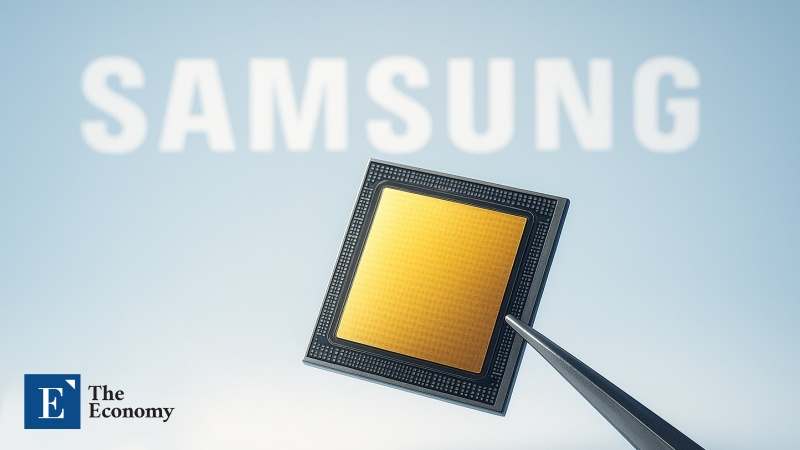
As Intel’s pursuit gains visibility, market views on the actual yield of Samsung Electronics’ SF2 process remain divided. While the KeyBanc report estimated Samsung’s yield at below 40%, Taiwan-based IT publication DigiTimes reported last November that Samsung’s in-house mobile application processor, the Exynos 2600, had achieved yields of around 60%, signaling potential progress. Some observers expect Samsung to demonstrate the stability of its SF2 process through mass production of the Exynos 2600 in 2026, yet global investment banks continue to adopt a cautious stance on Samsung’s large-scale manufacturing capability.
The divergence in figures reflects differences in evaluation criteria between objective performance testing and yields measured on manufacturers’ in-house chips. Market research firm TrendForce has assessed SF2 yields at around 50% when applying stringent application processor benchmark standards, while DigiTimes cited a 60% level based on Samsung’s internally optimized Exynos design. In effect, yield interpretations vary depending on the benchmark applied. Industry sources note that improvements in in-house application processor yields do not automatically translate into the ability to meet the more demanding requirements of major external customers such as Qualcomm or Nvidia.
Ultimately, the decisive factor is which company secures firm market confidence first. In the third quarter of 2025, TSMC solidified its dominance with a commanding 71% share of the foundry market. Samsung held second place with 6.8%, but faces intense pressure from third-ranked SMIC at 5.1%. In this fiercely competitive environment, should Wall Street’s estimate that Intel’s 18A yield has entered a stable 60% range be validated, Samsung could find itself confronting not only challenges to its claim of technological leadership but also a direct threat to its long-held position as the world’s No. 2 foundry.
Matthew Reuter is a senior economic correspondent at The Economy, where he covers global financial markets, emerging technologies, and cross-border trade dynamics. With over a decade of experience reporting from major financial hubs—including London, New York, and Hong Kong—Matthew has developed a reputation for breaking complex economic stories into sharp, accessible narratives. Before joining The Economy, he worked at a leading European financial daily, where his investigative reporting on post-crisis banking reforms earned him recognition from the European Press Association. A graduate of the London School of Economics, Matthew holds dual degrees in economics and international relations. He is particularly interested in how data science and AI are reshaping market analysis and policymaking, often blending quantitative insights into his articles. Outside journalism, Matthew frequently moderates panels at global finance summits and guest lectures on financial journalism at top universities.
Similar Post