U.S. Credit Downgrade Warning Amid Pressure on Powell Investigation; Treasury and Rate Shock Looms if Dollar Confidence Falters

Siobhán Delaney is a Dublin-based writer for The Economy, focusing on culture, education, and international affairs. With a background in media and communication from University College Dublin, she contributes to cross-regional coverage and translation-based commentary. Her work emphasizes clarity and balance, especially in contexts shaped by cultural difference and policy translation.
Authored On
Modified
Controversy Over Erosion of Fed Independence as Powell Faces Investigative Pressure; Fitch Issues Downgrade Warning
Political Interference Spurs Inflation Risks and Treasury Sell-Off, Raising Fears of Foreign Capital Flight
Fiscal Dominance Undermines the Foundations of Dollar Hegemony, Amplifying Systemic Financial Risk
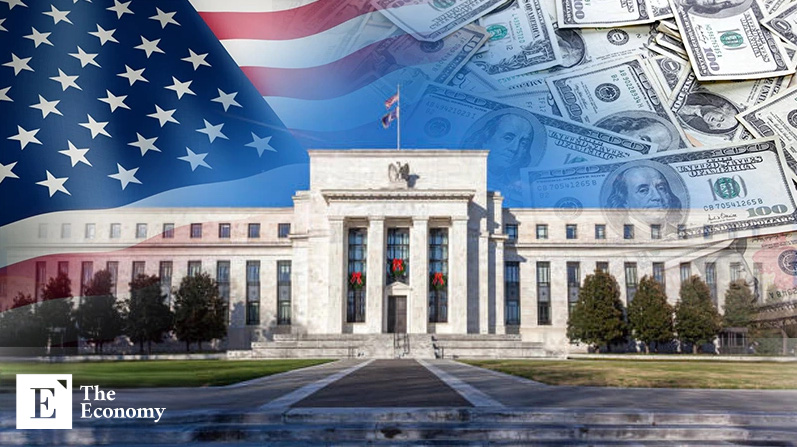
As the Donald Trump administration’s pressure on the Federal Reserve escalates into an unprecedented Justice Department investigation, the risk of a downgrade to the United States’ sovereign credit rating is rapidly materializing. Concerns are mounting that the erosion of central bank independence in pursuit of short-term rate cuts could instead entrench inflation and trigger a surge in Treasury yields, thereby undermining the very foundations of U.S. creditworthiness. Combined with the country’s astronomical debt burden, this dynamic is emerging as a major flashpoint that threatens the dollar’s status as the world’s reserve currency.
Fitch Warns Fed Politicization Is Detrimental to U.S. Credit as Powell Pressure Intensifies
According to Reuters on the 15th (local time), international credit rating agency Fitch Ratings identified early signs of weakening confidence in the U.S. dollar’s global reserve currency status as the most serious risk factor. James Longsdon, Fitch’s head of sovereign ratings, emphasized that the full politicization of a central bank is detrimental to the creditworthiness of any country, including the United States, explaining that trust in the dollar’s reserve currency role underpins America’s fiscal flexibility. He warned that actions which materially erode confidence in the dollar would weigh negatively on the sovereign rating, while adding that no definitive signs have yet emerged at this stage. Richard Francis, Fitch’s senior director, also defined Federal Reserve independence as a core pillar supporting the U.S. sovereign rating (AA+), noting that future assessments will focus closely on governance changes, institutional checks and balances, and inflation outcomes.
Fitch’s warning comes as controversy over Fed independence has intensified following Federal Reserve Chair Jerome Powell’s disclosure that he is under investigative pressure from the Justice Department. With his term set to expire in May, Powell revealed in a video statement on the 11th that he had received a grand jury subpoena and threats of criminal indictment from the Department of Justice on the 9th, related to his congressional testimony in June last year. The stated grounds for the investigation center on alleged cost overruns in the renovation of the Federal Reserve’s Washington, D.C. headquarters, which totaled $2.5 billion, and questions surrounding potential perjury in Powell’s testimony. Powell characterized the probe as a “pretext” aimed at coercing interest rate cuts, accusing the administration of abusing investigative authority to exert influence over monetary policy.
In response, former Federal Reserve chairs and leading economists issued a joint statement asserting that Fed independence and public trust in the institution are essential to achieving price stability, maximum employment, and appropriate long-term interest rates. The statement was signed by former Fed chairs Ben Bernanke, Alan Greenspan, and Janet Yellen, along with former Treasury secretaries Timothy Geithner, Jacob Lew, Henry Paulson, and Robert Rubin. It also included prominent economists such as Harvard professor Kenneth Rogoff, Gregory Mankiw, Jared Bernstein, Jason Furman, Glenn Hubbard, and Christina Romer, bringing the total number of signatories to 13.
They warned that the investigation represents an assault on the Fed’s independence, resembling practices typically seen in institutionally fragile emerging markets, and cautioned that it could fuel inflation and impair economic functioning. Standard & Poor’s Global Ratings, one of the three major credit rating agencies, had already underscored in an October report last year that shifts in the political environment that weaken institutional integrity and policy effectiveness could intensify downward pressure on the U.S. rating, reaffirming that the Fed’s credibility is a cornerstone of the dollar’s standing.
Rising Political Interference Signals Inflate Risk Premiums as U.S. Treasuries Weaken Amid Inflation Fears
The more serious concern is that as signals of political interference intensify, markets immediately interpret them as fiscal risk. Analysts warn that a loss of Fed independence could paradoxically drive interest rates higher. When market participants perceive a central bank as succumbing to political pressure, they demand additional risk premiums on Treasury yields to compensate for inflation risk and policy uncertainty. Because bond prices reflect the present value of future principal and interest payments, rising market yields driven by heightened risk perceptions translate directly into falling bond prices. While the Trump administration is pressing the Fed for rate cuts, experts caution that a collapse in market confidence could instead trigger a sharp sell-off in Treasuries and a rise in borrowing costs across the economy.
Underlying this pressure is a structural fiscal flashpoint: chronic budget deficits. U.S. federal government debt stood at $38.5678 trillion at the end of last year. The Congressional Budget Office projects in its long-term outlook (2025–2055) that the debt-to-GDP ratio will climb to 156%, while net interest costs will rise from 3.2% of GDP to 5.4%. Tyler Cowen, a professor at George Mason University, argues that the core issue behind threats to Fed independence is not merely political pressure but the accumulated weight of persistent fiscal deficits. As repeated budget compromises and tax cuts push debt beyond critical thresholds, Cowen contends that the United States may opt to monetize its debt through inflation rather than pursue tax hikes or spending cuts.
This view aligns with the “Big Cycle” theory long advocated by Ray Dalio, founder of Bridgewater Associates. Dalio has argued that heavily indebted democracies tend to choose inflation—the path of least political resistance—over austerity or default. Cowen similarly forecasts that the U.S. could enter an “ugly deleveraging” phase, tolerating annual inflation of around 7% over the next five years to erode the real value of its debt. In such a scenario, future generations would be forced to repay obligations in a sharply devalued currency, and Fed independence would inevitably erode under the weight of overwhelming debt pressures.
Fiscal Dominance Shakes the Three Pillars of Dollar Hegemony, Heightening Systemic Financial Risk
Artificially induced inflation and abrupt interest rate spikes would deliver direct losses to global investors holding U.S. Treasuries. As of November last year, foreign holdings of U.S. government debt reached a record $9.36 trillion, up $112.8 billion from the previous month. Japan, with $1.2 trillion, and the United Kingdom, with $888.5 billion, emerged as major buyers, while China reduced its holdings to $682.6 billion, the lowest level since 2008, reflecting heightened risk management.
Some argue that demand from cryptocurrency and stablecoin issuers is partially offsetting Treasury outflows, but Rogoff counters that these flows would be insufficient to stem global capital flight if confidence in the Fed fundamentally collapses. He also warned that such instruments could be exploited for tax evasion or illicit finance, criticizing excessive regulatory easing such as the GENIUS Act, a stablecoin regulatory bill, as a serious mistake that would ultimately require reversal.
If monetary policy becomes subordinated to fiscal needs—a condition known as fiscal dominance—global financial markets would be pushed into a state of structural instability. Roger Ferguson, former vice chair of the Federal Reserve, has warned that presidential pressure weakens Fed independence and erodes confidence in the dollar as a reserve currency, prompting investors to demand higher yields on U.S. Treasuries in anticipation of widening deficits. Recent increases in Treasury yield volatility are widely interpreted as evidence that these concerns are already being priced into markets.
Experts assess that current developments are simultaneously shaking the three pillars that have long underpinned dollar hegemony: security or hard power, trust in the rule of law, and Federal Reserve independence. Rogoff cautioned that if these pillars collapse, crises will exact a steep cost, projecting that the dollar could face a major reckoning within four to five years if current trends persist. Moritz Kraemer, chief economist at Germany’s Landesbank Baden-Württemberg, likewise warned that undermining Fed independence could lead to a credibility collapse reminiscent of Turkey’s experience. As foreign investors—the largest holders of U.S. Treasuries—confront the dual blow of a weakening dollar and surging yields, markets are increasingly recognizing that the price of marginally lower interest rates could ultimately be the erosion of sovereign creditworthiness and the stability of the financial system itself.
Siobhán Delaney is a Dublin-based writer for The Economy, focusing on culture, education, and international affairs. With a background in media and communication from University College Dublin, she contributes to cross-regional coverage and translation-based commentary. Her work emphasizes clarity and balance, especially in contexts shaped by cultural difference and policy translation.
Similar Post