Tesla Pivots to Full FSD Subscription Model, Stability Strategy Emerges Amid Autonomous Driving Controversy

Authored On
Modified
FSD Redefined as Driver Assistance System in 2024
Structural Disputes Over Accident Liability Persist
Automakers Shift Focus From Level 4 to Advanced Level 2 Systems
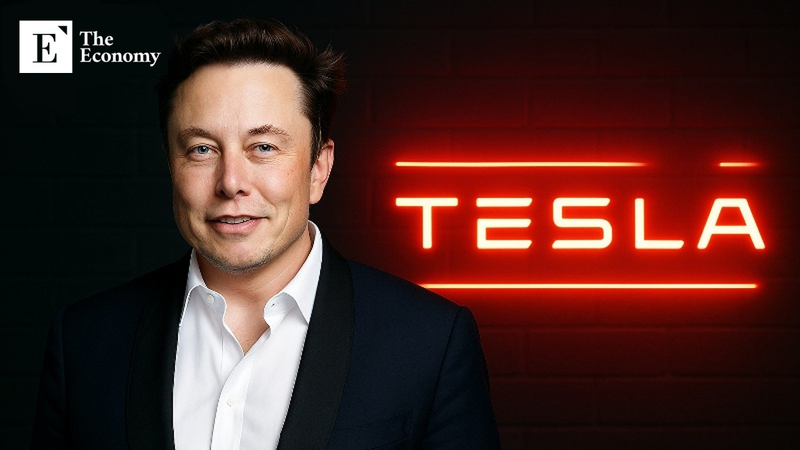
Tesla has halted the one-time, permanent purchase option for its Full Self-Driving (FSD) system and has fully transitioned to a subscription-only model. While the move reflects a strategic shift toward a software-driven service revenue structure, analysts note that it also signals a sober recognition that autonomous driving technology has yet to reach full maturity. The redefinition of FSD, ongoing legal and institutional liability debates, and broader strategic recalibration across the automotive industry collectively suggest that the autonomous driving narrative is entering a new phase.
Tesla Transforms Revenue Model Through Subscription-Only FSD
According to Reuters and other local media outlets, Elon Musk, Tesla’s chief executive officer, announced on X (formerly Twitter) that Tesla would discontinue FSD sales after February 14, with access available exclusively through a monthly subscription thereafter. Until now, U.S. customers could either purchase FSD outright for $8,000 for lifetime ownership or subscribe on a monthly basis for $99.
Musk has long framed FSD as more than a vehicle option, describing it as an “asset whose value increases over time.” He repeatedly emphasized that early purchasers would benefit as prices rose, arguing that once full autonomy was realized, vehicle values would surge accordingly. Tesla did raise FSD prices multiple times to encourage early adoption, but the shift to a subscription-only model marks a clear departure from that strategy.
Industry observers interpret the decision as a signal of Tesla’s broader revenue transformation. Rather than securing one-time income at the point of vehicle sale, the company is reinforcing a recurring revenue structure centered on software services. By adopting a subscription model, Tesla can secure more predictable cash flows tied to usage duration while gaining greater flexibility in rolling out feature updates and adjusting pricing over time.
FSD Safety Controversy Remains Unresolved
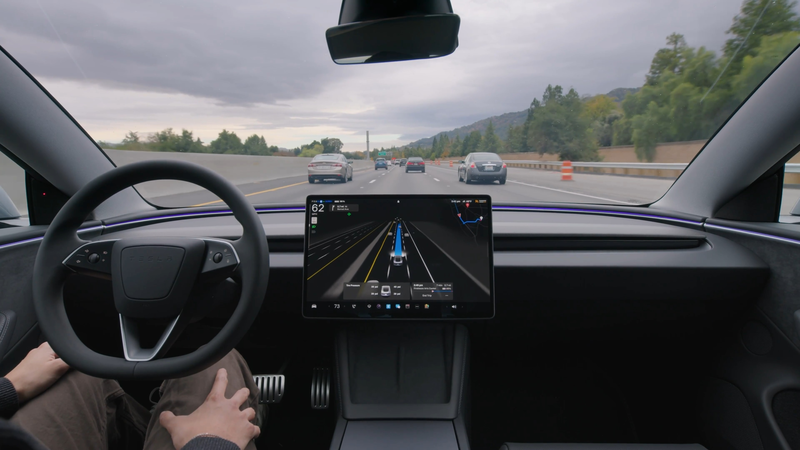
Skeptics argue that the subscription pivot also reflects Tesla’s assessment that autonomous driving remains incomplete from both technical and regulatory standpoints. In 2024, Tesla officially removed the “beta” label that it had used for four years and declared FSD’s formal release, while adding the designation “Supervised.” This clarified that although the vehicle can handle acceleration, braking, and steering autonomously, continuous driver supervision and intervention remain essential. While Tesla had previously promoted FSD as approaching unmanned autonomy, the change effectively reclassified it as an advanced driver assistance system.
Even after its official launch, FSD has been rolled out only on a limited basis to select Tesla owners. As a result, industry experts contend that broader consumer evaluations remain insufficient and that more time is needed to assess real-world performance at scale. Despite Musk’s claims that FSD enables long stretches of driving without intervention, critics argue that performance optimized for controlled demonstrations does not necessarily reflect average driving conditions. With safety and reliability questions unresolved, selling FSD as a fully completed capability may carry growing risks.
Concerns have intensified as supervised FSD has been deployed on public roads. Following software updates last October, Tesla clarified that liability in the event of an accident rests entirely with the driver. The core issue lies in the disconnect between the system’s perceived functionality and its legal classification. Under current regulations, even in hands-free driving scenarios, responsibility remains with the driver rather than the manufacturer. Industry analysts warn that unless this regulatory gap is addressed, uncertainty surrounding FSD will persist.
Gradual Improvement Takes Priority Over Abrupt Leaps
From a technological standpoint, this cautious approach is increasingly evident. While artificial intelligence systems can outperform humans in repetitive, rule-based decision-making, they still struggle to fully replicate human intuition in unpredictable situations. Experts note that autonomous systems perform increasingly well on highways, where variables are limited, but continue to face clear constraints in urban environments and sudden hazard response. As a result, incrementally enhancing Level 2 systems to deliver a near–Level 3 driving experience is widely viewed as the most pragmatic path forward.
The broader automotive industry has likewise shifted toward a more grounded strategy. While automakers once raced toward Level 4 and Level 5 commercialization, many are now reassessing those ambitions in light of technical limitations and real-world complexity. The focus has turned to highly reliable driver assistance systems that operate under defined conditions, emphasizing step-by-step advancement rather than sweeping breakthroughs. Autonomous driving is increasingly being framed as a domain requiring continuous updates and oversight rather than a finished, one-time solution.
This shift is reflected in automakers’ concrete strategies. Mercedes-Benz has introduced a Level 3 conditional autonomy system limited strictly to specific highway environments, with carefully defined operating conditions. Hyundai Motor has concentrated on advancing highway driving assistance features, while urban autonomous driving remains in the testing phase. Major automakers in the United States and China are also maintaining experimental projects such as robotaxis, but are prioritizing the enhancement of driver assistance technologies in mass-produced vehicles, signaling a clear recalibration of industry-wide expectations.
Similar Post