AI-driven memory crunch forces even Apple and Google to line up, pushing price shocks into PCs and smartphones

Aoife Brennan is a contributing writer for The Economy, with a focus on education, youth, and societal change. Based in Limerick, she holds a degree in political communication from Queen’s University Belfast. Aoife’s work draws connections between cultural narratives and public discourse in Europe and Asia.
Authored On
Modified
Memory shortage deepens amid AI demand surge, DDR5 prices jump as much as fourfold
Global big tech queues up as supply-demand balance flips
PCs and smartphones hit hard, with price hikes and product cancellations mounting
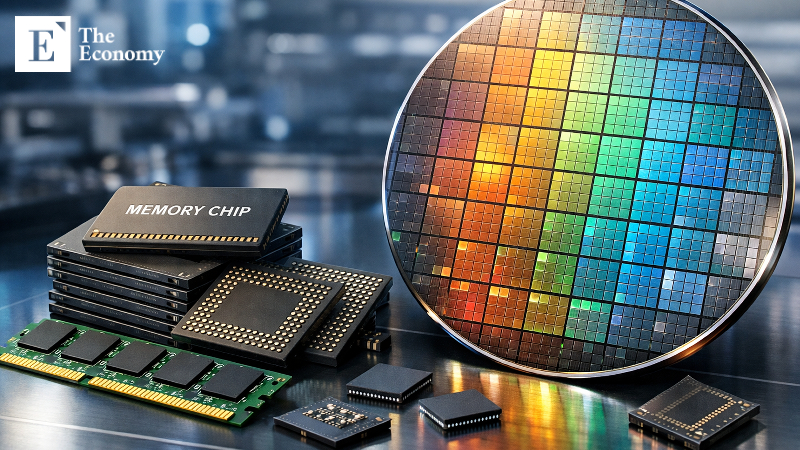
Global memory chip prices are soaring. As the AI boom drives a surge in demand for high-bandwidth memory (HBM) and mainstream DRAM, supply is failing to keep pace with the market. The price shock triggered by this supply squeeze is spreading quickly beyond memory makers to downstream markets such as PCs and smartphones.
Sky-high memory prices
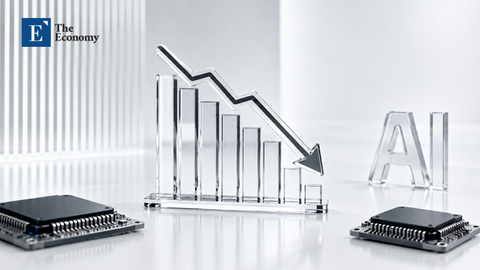
According to market analysis released by Germany-based hardware outlet 3DCenter and VideoCardz on the 19th (local time), average DDR5 desktop memory prices in Germany (across 20 models) had surged 340% by mid-January 2026 compared with July last year. A 2x32GB DDR5-5600 kit rose from €530 last month to €677 this month, while a 2x16GB DDR5-6000 model jumped 427%, from €75 in July last year to €395 this month.
Prices for older-generation products are also climbing. This month, DDR3 and DDR4 prices were up an average of 219%—about 3.2 times—compared with July last year. Notably, while DDR5’s January increase eased to 27.6% from the prior month, older memory rose 46.3%, posting an even steeper climb. 3DCenter said that for consumers looking to build or upgrade a PC, January 2026 is “the worst time.”
The trend is being seen worldwide, not just in Germany. TrendForce’s latest report on spot-price movements showed that in the second week of January (Jan. 7–13), mainstream DRAM prices rose by as much as more than 10% from the previous week (Dec. 31, 2025–Jan. 6, 2026). The biggest gainer was the DDR4 8Gb 1Gx8eTT chip, which climbed 12.26% week on week. DDR4 1Gx8 3200MT/s rose 8.14% over the week, while DDR4 2Gx8 3200MT/s gained 7.50%. TrendForce forecasts that contract prices for mainstream DRAM in the first quarter will rise by around 55% to 60% from the previous quarter.
Big tech on alert as supply crunch intensifies
Memory prices are staying elevated largely because the supply-demand imbalance persists. In recent years, memory makers have prioritized advanced process nodes and new production capacity for server DRAM and HBM to meet AI server demand. That has left overall DRAM supply struggling to keep up with broader market needs even as the “big three” expand capacity. According to an analysis by KB Securities, the industry’s DRAM demand-fulfillment rate for customers is around 60%, with server DRAM fulfillment falling below 50%.
As the supply squeeze drags on, big tech companies such as Google and Apple are stepping up efforts to secure volume. According to unnamed industry sources, employees from major tech firms have recently traveled to South Korea, touring production lines at Samsung Electronics and SK Hynix to press for more DRAM supply. Some overseas media reports have also said Apple has stationed procurement staff for extended stays at business hotels near Samsung and SK Hynix sites around Hwaseong and Pangyo, as it pursues long-term supply agreements spanning two to three years.
Tensions around memory supply are also flaring. In one widely circulated account, senior Microsoft executives visiting SK Hynix’s headquarters reportedly stormed out of a meeting after being told the company could not meet their supply demands. A post on an IT industry blog also claimed that Google fired a procurement executive after failing to forecast memory demand and secure long-term agreements (LTAs) in advance, leaving the company exposed to HBM shortages.
PC and smartphone prices set to rise across the board
The memory crunch is now directly hitting downstream markets such as PCs and smartphones. As component costs climb, product prices are starting to move up in quick succession. LG Electronics’ 2026 LG Gram Pro AI 16-inch model with an Intel Core Ultra 5, released this month, is priced at about $2,150, up roughly $340 from the previous model at about $1,810. Samsung Electronics’ Galaxy Book6 Pro (NT960XJG-KD72G), which uses Intel’s next-generation “Panther Lake” (Core Ultra Series 3), is also priced higher at about $2,410, up about 25% from the Galaxy Book5 Pro at roughly $1,930.
Price increases may also be coming to Samsung’s Galaxy S series, which has been kept flat for two consecutive years since 2024 (excluding the Ultra model). Roh Tae-moon, head of Samsung’s Device eXperience (DX) division, said at a press briefing at CES 2026 on the 5th (local time) that “rising memory prices are the biggest concern” and that they “will inevitably affect product pricing to some extent.” Memory’s share of smartphone manufacturing costs has risen from around 10%–15% to more than 20%.
China’s smartphone maker Meizu has already canceled the launch of its slim “Meizu 22 Air,” which had been slated for release this month, citing surging memory prices. The company said a sharp rise in memory costs had become a major obstacle to its smartphone business plan, making a commercial launch impossible. While Meizu is no longer considered a major supplier today, it sold more than 20 million smartphones annually as recently as 2015.
Aoife Brennan is a contributing writer for The Economy, with a focus on education, youth, and societal change. Based in Limerick, she holds a degree in political communication from Queen’s University Belfast. Aoife’s work draws connections between cultural narratives and public discourse in Europe and Asia.
Similar Post