[U.S. Defense Industry] Is U.S. defense rebuilding being done at allies’ expense? Questions raised by the “Donro Doctrine”

Niamh O’Sullivan is an Irish editor at The Economy, covering global policy and institutional reform. She studied sociology and European studies at Trinity College Dublin, and brings experience in translating academic and policy content for wider audiences. Her editorial work supports multilingual accessibility and contextual reporting.
Authored On
Modified
Limits of a high-end, low-volume production model exposed
Breakthrough sought through opening to allies
Warning signs of Trump-style unilateral diplomacy
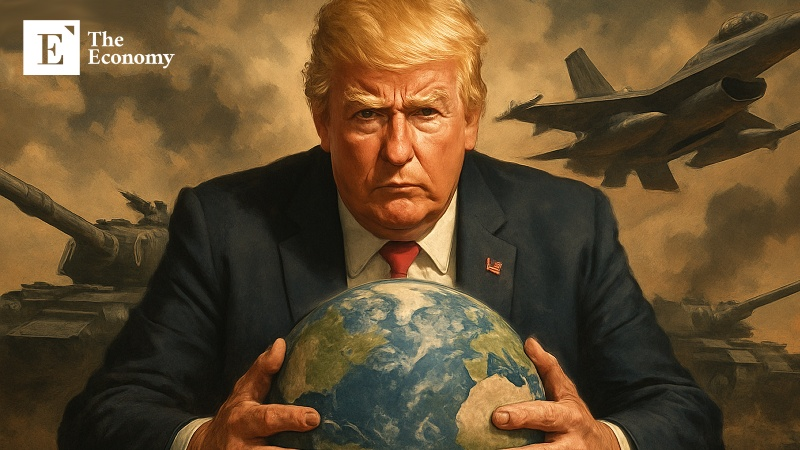
The U.S. defense industry is facing a diagnosis that, despite developing some of the world’s most advanced weapons, it has been constrained by limited production capacity. Since the 2000s, the erosion of the manufacturing base has weakened the industrial ecosystem supporting defense production, while rivals such as Russia and China have accelerated mass production and new weapons development. Against this backdrop, Washington has begun looking beyond its own borders for a path to defense-industrial revival, turning instead to market opening with allies.
A difficult path to recovery alone
In recent years, the U.S. defense industry has entered a complex crisis, revealing its inability to mass-produce and deploy weapons at the speed required, even while maintaining technological superiority. The Trump administration has responded with what amounts to a forced remedy, sharply increasing defense spending and intervening in corporate capital policies. Critics argue, however, that such measures fall short of addressing the structural problem. President Donald Trump previously proposed raising the 2027 defense budget to 1.5 trillion dollars, an increase of more than 50%, while floating plans to prohibit share buybacks and expanded dividends at major defense contractors.
The roots of the problem lie in the long-term weakening of the U.S. manufacturing base since the early 2000s. Following the end of the Cold War, the United States reduced investment in manufacturing and defense production during the so-called “peace dividend” era, as the economic center of gravity shifted rapidly toward services and finance. As a result, the downstream industrial ecosystem that supports defense manufacturing—metalworking, precision components, materials, and skilled labor—was severely eroded. This has led to the assessment that while the U.S. remains capable of designing the most sophisticated weapons systems in the world, it lacks the capacity to produce them at scale.
Russia’s invasion of Ukraine exposed these weaknesses starkly. The battlefield evolved into a war of attrition, where large quantities of relatively inexpensive drones and munitions proved more decisive than a limited number of high-cost precision weapons. The U.S. defense system supporting Ukraine struggled to keep pace. Given that the United States once pioneered unmanned aerial vehicle development, this reality has been particularly sobering. The mass deployment of low-cost drones by Russia and Ukraine underscored the lesson that hundreds of “good enough” weapons can reshape a battlefield more effectively than a single perfect system, highlighting the limits of America’s high-end, low-volume production model.
The gap is also becoming evident in next-generation weapons. While China and Russia have pushed ahead in hypersonic weapons development, the United States has been hamstrung by lengthy procurement and fielding timelines. China’s manufacturing scale, in particular, is viewed as a critical variable that Washington finds most challenging. Stephen Jen, chief executive of Eurizon SLJ Capital, noted that the volume advantage of Chinese defense firms has long been underestimated, adding that even if Chinese systems achieve only 80% of the performance of U.S. weapons, their battlefield utility would still be substantial.
Joint production and shared supply chains with allies
Faced with these constraints, the United States has begun seeking solutions through greater market opening with allies rather than relying solely on domestic recovery. Judging that it would be difficult to rapidly expand production capacity on its own, Washington has opted to integrate defense industry policy with diplomacy and trade, absorbing allied demand and capital to restart its industrial base. This approach has been encapsulated in the concept of the “Donro Doctrine,” which aims to build an economic mechanism linking allied defense spending to the revival of U.S. defense manufacturing.
The U.S. State Department formalized this direction in its “Fiscal Years 2026–2030 Strategic Plan” released on the 15th. The document states that the United States will pursue commercial deals in all bilateral relationships and negotiations so that allies and partners prioritize American companies and solutions. It adds that this will help build a strong pro-American economic bloc centered on U.S. firms and exports, and that by purchasing U.S. technology stacks and defense systems, allies and partners will fund America’s reindustrialization and help ensure U.S. economic and technological leadership throughout the 21st century.
At the same time, Washington has signaled its intention to use access to its defense industry as a diplomatic lever. The State Department said it would encourage allies to increase their own defense spending and invest in deterrence, offering in return greater access to a revitalized U.S. defense industrial base. This would include joint production, shared component supply chains, and enhanced interoperability. The expectation is that an integrated defense industrial base would provide both the United States and its allies with greater “strategic depth of production” in the event of future conflicts.
The United States has also made clear that it expects allies to shoulder a certain level of burden. By reiterating the need for higher defense spending by partners, including South Korea, Washington has signaled that increased budgets should translate into purchases of U.S.-made weapons. For allies, this creates new negotiating challenges related to the scope of defense cooperation, levels of technology transfer, and long-term industrial autonomy. As a result, the Donro Doctrine has drawn mixed reactions, seen by some as a pragmatic option for rebuilding U.S. defense capacity, and by others as a framework whose effectiveness will depend on how far allies are willing to accommodate American demands.
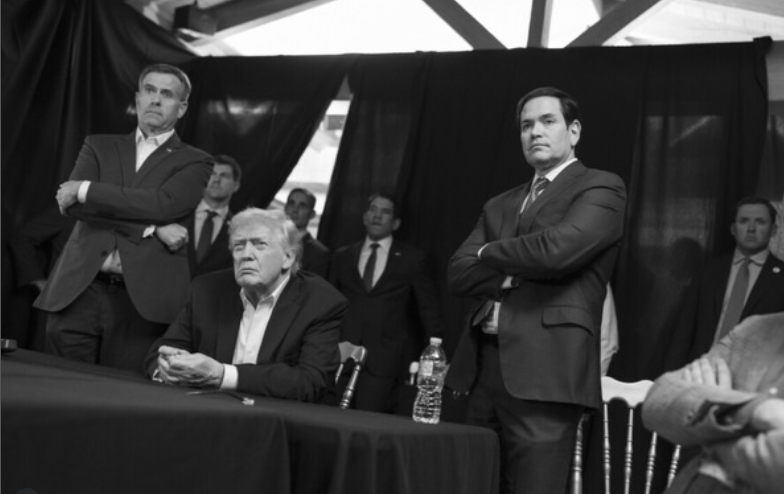
A shift toward unilateral demands
By inverting the non-interventionist philosophy of the Monroe Doctrine, the Donro Doctrine reflects a pronounced unilateral streak in U.S. diplomacy. The original Monroe Doctrine, proclaimed in 1823 by President James Monroe, sought to block European intervention in the Americas while committing the United States to non-interference in European political and military affairs. It was largely a defensive declaration, shaped by the decline of the Spanish and Portuguese empires and the emergence of newly independent states in Latin America, at a time when the United States had yet to become a global hegemon.
The Donro Doctrine that has taken shape under Trump’s second term dismantles those principles. By explicitly combining the Monroe Doctrine with Trump’s initial “D,” Washington has signaled a clear shift in its foreign policy direction. Major international media have described this as a doctrine that defines the Western Hemisphere as an exclusive U.S. strategic space and legitimizes active pressure and intervention in matters directly tied to national interests. Unlike the passive, defensive logic of non-intervention, it represents an assertive strategy that mobilizes economic, military, and diplomatic tools to enforce influence.
This shift is reflected in concrete policies and rhetoric. Trump has taken a hard line against the Nicolás Maduro regime in Venezuela and has raised issues such as control of the Panama Canal, the strategic value of Greenland, and even the possibility of annexing Canada. These moves are widely interpreted as prioritizing short-term U.S. interests through pressure and transactional diplomacy, rather than consensus or coordination. Some critics have labeled this approach a “brakeless Donro Doctrine,” arguing that America First has evolved into a more aggressive form of foreign policy.
In this context, the Donro Doctrine represents a reversal of the Monroe Doctrine’s historical principles, placing U.S.-centric power politics at the forefront. The challenge is that such unilateralism may undermine cooperation with allies precisely at a time when Washington depends on them to rebuild its defense industry. As unilateral demands accumulate, the sustainability of the strategy itself could be constrained. Whether the Donro Doctrine can ultimately support the revival of the U.S. defense industrial base will depend less on Washington’s resolve than on the choices made by its allies.
Niamh O’Sullivan is an Irish editor at The Economy, covering global policy and institutional reform. She studied sociology and European studies at Trinity College Dublin, and brings experience in translating academic and policy content for wider audiences. Her editorial work supports multilingual accessibility and contextual reporting.
Similar Post