EU moves to upend reliance on Chinese equipment, signaling broad bans across telecoms, energy, and security infrastructure

Authored On
Modified
Equipment exclusions pushed on security and market-rule concerns
China seeks to undermine legitimacy with “double standards” claims
Differences in conflict management, signs of circumvention strategies
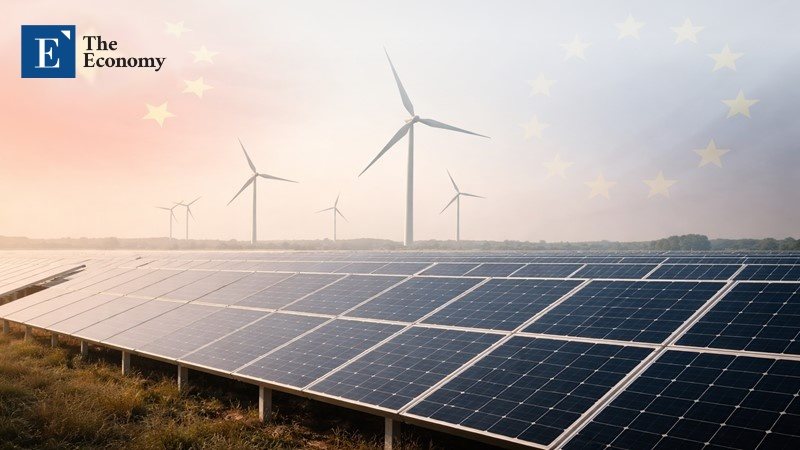
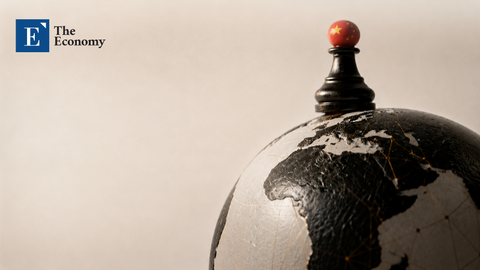
The European Union has signaled a policy shift by defining China as a risk factor that disrupts market order. The bloc is considering excluding Chinese-made equipment across energy and security infrastructure, elevating measures that had previously been advisory into legally binding obligations. As China pushes back by accusing the EU of applying double standards toward the United States and other major countries, cost burdens and diverging interests among member states have emerged as key variables. The international community is closely watching the contrast between how the EU manages disputes with other countries and how China is responding.
From “cooperation partner” to “market disruptor”
According to major local outlets including Germany’s Deutsche Welle (DW) on the 19th (local time), the European Commission is moving to bar Chinese equipment suppliers from critical infrastructure across member states. The plan would upgrade restrictions on so-called high-risk suppliers—previously limited to nonbinding guidance—into legally enforceable requirements, effectively blocking Chinese companies such as Huawei and ZTE from accessing Europe’s core networks. The concern is that China could collect sensitive data or disable systems in a crisis through equipment embedded in telecommunications networks, solar power systems, and security scanners at airports and ports.
The move is widely seen as an EU-wide policy pivot spanning multiple industries. The Commission is reportedly considering amendments to the Cybersecurity Act to clarify the definition of high-risk suppliers and compel member states to enforce exclusions. This contrasts with the 2020 5G security guidelines, which labeled Huawei a high-risk vendor but lacked binding force, leading to divergent national responses. Sweden moved swiftly to exclude Chinese telecom equipment, while Spain and Greece continued to adopt Huawei gear, raising questions about the guidelines’ effectiveness.
The shift in EU thinking is also tied to accumulated trade and industrial frictions in recent years. Last year, the EU launched an investigation under the International Procurement Instrument (IPI), accusing China of discriminating against foreign firms in its medical device procurement market. Whereas past EU pressure on China relied on narrow tools such as public procurement, the bloc is now expanding regulation to cover private-sector critical infrastructure, citing security concerns. The Atlantic Council described this as a move from “engagement” to “de-risking,” arguing that perceptions of China’s state-led industrial policy and subsidy structures distorting European markets underpin the policy change.
Political consensus within Europe has largely formed. French President Emmanuel Macron and German Chancellor Friedrich Merz have publicly stressed the need for technological self-reliance at recent events on European digital sovereignty in Berlin. DW cited experts saying Europe can no longer sustain a structure of simultaneous dependence on the United States and China in future industries such as artificial intelligence, semiconductors, and cloud computing. This reflects the EU’s reframing of “China risk” as an issue of market rules and strategic autonomy.
Cost burdens, however, remain a practical challenge. European alternatives such as Nokia and Ericsson are generally more expensive than Huawei equipment, raising costs for companies. Industry assessments suggest Huawei has expanded market share by pricing its products up to 40% lower than competitors. The GSMA estimates that excluding Chinese equipment would raise Europe’s 5G deployment costs by about 64.35 billion dollars. As a result, resistance from member states to transferring decision-making authority over telecom infrastructure to the Commission, along with potential pushback from operators, cannot be ruled out.
China seeks to exploit U.S.–EU divisions
China reacted sharply after the EU’s exclusion plans became public. Chinese foreign ministry officials argued the move was a political choice beyond technology or security concerns, accusing the EU of applying exclusionary standards to China while making exceptions for the United States. Repeatedly invoking “double standards,” they said the policy undermines the market principles and rule-of-law values the EU claims to uphold. The response is widely seen as an attempt to challenge the legitimacy of the EU’s approach.
State-run Global Times echoed the criticism, saying the EU forces Chinese firms out of infrastructure projects while remaining silent or acquiescent when the United States applies pressure through tariffs or territorial issues. The paper argued the EU’s approach reflects a loss of strategic judgment under great-power coercion, and claimed that expanding regulation from telecom networks to all industries lacks clear technical or legal justification. Excluding specific countries and companies without concrete verification procedures, it said, runs counter to market order.
Cost and feasibility have also been central to China’s critique. Global Times noted that more than 90% of solar panels installed across Europe are produced in China, warning that blanket exclusions would trigger massive replacement costs and supply disruptions. Forced removal of Chinese suppliers, it argued, would delay infrastructure development and ultimately raise consumer prices. By citing concerns already voiced within the EU, China sought to frame its position as more than self-interested defense.
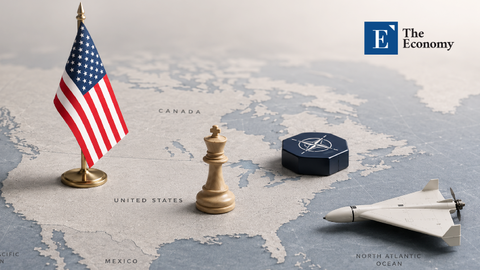
Another line of attack targets EU–U.S. relations. The paper referenced U.S. President Donald Trump’s use of tariff threats in pressing Denmark over Greenland, arguing that the EU responds conciliatorily to U.S. territorial and trade pressure while adopting a hard line toward China under the banner of security. The aim appears to be reinforcing the perception that the EU is aligning with U.S. interests in the U.S.–China rivalry, while warning that excluding China could deepen Europe’s dependence on the United States and narrow its long-term options.
Criticism versus denunciation, and quiet bilateral outreach?
Historically, when the EU has clashed with the United States and other partners, disputes have largely been managed within legal and institutional frameworks. A prominent example is the fine imposed last December on X (formerly Twitter), owned by Elon Musk. The EU fined the platform 140.4 million dollars under the Digital Services Act (DSA), ruling that its paid “blue check” verification misled users by exposing them to fraud and manipulation. X had begun selling the badge for eight dollars per month, a departure from its former role as an authentication tool for public figures and institutions.
Musk denounced the fine as censorship suppressing free speech and said the EU should be dismantled. U.S. Vice President JD Vance and Secretary of State Marco Rubio also criticized the move as an attack on American tech platforms. The European Commission, however, maintained that the action was not targeted regulation but a neutral application of law, emphasizing that enforcement remained within legal channels even amid value clashes over free expression and platform governance.
China’s response has been markedly different. Government officials and a wide range of state and private media have collectively challenged the EU’s actions by rejecting their legitimacy outright through the double-standards narrative. At the same time, China has pursued tailored outreach to individual EU member states behind the scenes. It offered France a new order for 148 Airbus aircraft, resumed beef imports from Ireland that had been halted over mad cow disease concerns, discussed reopening pork imports from Spain, and floated visa-free travel talks and the resumption of direct flights with the Czech Republic.
This approach explains why the European Commission is wary of prolonged confrontation with China. There is concern that China’s strategy could fragment member-state interests. Separately from the current issue, the EU is preparing subsidy investigations into Chinese wind turbines and rail vehicles, driven by fears that overcapacity and low pricing threaten European manufacturing. If individual countries pursue side deals for short-term economic gain, EU-wide responses on foreign subsidies or infrastructure security could be weakened.
Similar Post