[US-EU] Danish pension fund dumps U.S. Treasuries, signaling Europe’s turn to financial pressure

Niamh O’Sullivan is an Irish editor at The Economy, covering global policy and institutional reform. She studied sociology and European studies at Trinity College Dublin, and brings experience in translating academic and policy content for wider audiences. Her editorial work supports multilingual accessibility and contextual reporting.
Authored On
Modified
Rising pressure on U.S. interest rates
Scenario of broader Treasury sell-offs across Europe
Risk of armed confrontation and heightened military tensions
A Danish pension fund’s decision to liquidate its entire holdings of U.S. Treasuries has sent shockwaves through global markets. As long-term institutional investors begin to reassess their exposure to dollar assets, market participants are increasingly focused on the potential impact of Europe’s sizable U.S. asset holdings. What began as a dispute between Europe and the United States over Greenland, initially expressed through tariff threats, has now spilled over into financial markets and, more recently, into rising military tensions.
Outlook points to weaker dollar valuation
On the 20th, according to Bloomberg, Danish pension fund AkademikerPension announced plans to dispose of its entire U.S. Treasury holdings, totaling about 100 million dollars, within the month. The fund, which serves roughly 170,000 members, manages approximately 26 billion dollars in assets and is one of Denmark’s major institutional investors. Anders Schelde, the fund’s chief investment officer, said in a statement that given the United States’ large fiscal deficits and rising debt burden, Treasuries were no longer an appropriate holding. He added that the fund would seek alternatives such as dollar cash or short-term agency bonds for liquidity and risk management.
Concerns about the declining appeal of U.S. Treasuries are reflected in fiscal indicators. U.S. fiscal deficits stood at around 1.78 trillion dollars at the end of last year. Against this backdrop, Moody’s downgraded the U.S. sovereign credit rating from Aaa to Aa1 in May last year, citing elevated deficits and rising debt-servicing costs. The move challenged long-standing assumptions about Treasuries as a risk-free asset. Should large volumes of Treasuries be released into the market, upward pressure on yields would likely intensify, increasing the risk of a weaker dollar.
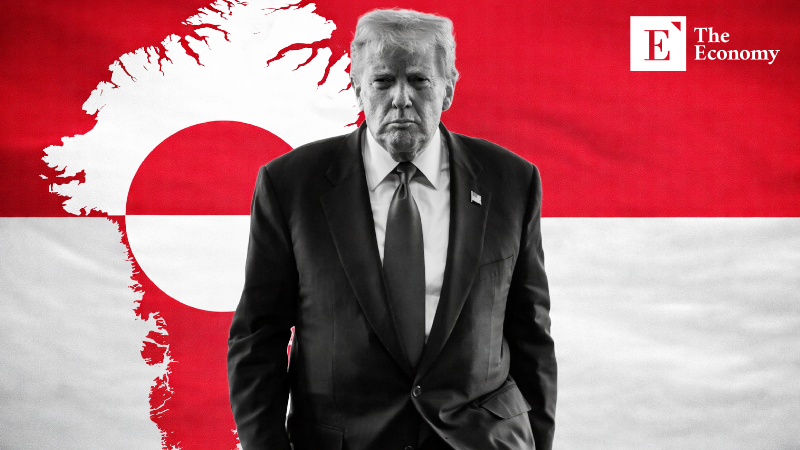
AkademikerPension said the decision was not directly linked to tensions between the United States and the European Union over Greenland, but noted that the broader situation did not make the decision any harder to reach, implying some influence. Earlier, U.S. President Donald Trump declared that starting next month, a 10 percent tariff would be imposed on eight European countries opposing U.S. moves regarding Greenland, warning that tariffs could rise to 25 percent by June if the United States failed to secure control. In response, discussions within the European Union began to include retaliatory tariffs and the potential sale of U.S. assets.
Denmark has been among the first to act. Prior to AkademikerPension’s move, Lærernes Pension had already reduced its exposure to U.S. Treasuries, citing concerns over U.S. debt sustainability and potential erosion of Federal Reserve independence. PFA Pension also trimmed its holdings during portfolio adjustments. Ray Dalio, founder of Bridgewater Associates, warned that beyond a trade war, the possibility of a capital war should not be ignored, cautioning that declining demand for U.S. Treasuries could deal a serious blow to an economy already strained by inflation and debt.
Asset sales emerge as response to tariff conflict
Markets are watching closely to see whether Denmark’s Treasury sales could trigger similar moves across Europe. If the dollar enters a sustained weakening phase, European governments and investors holding large volumes of U.S. Treasuries could face valuation losses, making asset sales an attractive defensive option. Signs of a “sell America” trend have already surfaced. After trading resumed following the Martin Luther King Jr. Day holiday, yields on 30-year U.S. Treasuries rose by 9 basis points to 4.93 percent, while 10-year yields climbed 4 basis points to 4.273 percent.
Financial institutions and policy research reports echo similar concerns. Morgan Stanley MUFG Securities noted in a recent report that European leaders, including French President Emmanuel Macron, were considering retaliation beyond tariffs in response to U.S. economic pressure. As uncertainty rises due to President Trump’s unpredictable policies, Europe and other regions are increasingly seeking to reduce reliance on the U.S. dollar. This suggests that discussions around trimming dollar assets and selling Treasuries may represent a broader strategic shift rather than isolated actions.
The scale of Europe’s U.S. asset holdings amplifies the potential impact of a sell America scenario. According to the U.S. Treasury, European Union investors hold more than 10 trillion dollars in U.S. assets, with public-sector entities such as central banks accounting for an estimated 2.34 trillion dollars. Even a partial release of these public-sector holdings could trigger sharp rises in U.S. interest rates and severe market volatility. The Guardian observed that for Europe, weaponizing capital rather than trade would likely have a far more destructive impact on markets.
Still, some argue that such scenarios are unlikely to fully materialize. Bloomberg quoted ING chief economist Carsten Brzeski as saying that most European-held U.S. Treasuries are owned by private investors, making it difficult for governments or the European Union to orchestrate coordinated sales. Unlike China, European authorities have limited ability to direct private capital for political purposes. U.S. Treasury Secretary Scott Bessent also dismissed the idea at the Davos Forum, calling claims that Europe would abandon Treasuries an illogical narrative.
Military preparedness steps up
Emergency discussions within Europe are increasingly extending beyond finance into security. On the same day, Greenland Prime Minister Jens-Frederik Nielsen said at a press conference in Nuuk that while a military clash with the United States was unlikely, worst-case scenarios must still be considered. He announced plans to form a dedicated task force involving local authorities and to issue guidance urging households to stockpile five days’ worth of food. The remarks drew attention as they marked a shift from government-level contingency planning to explicit references to civilian preparedness.
Greenland’s Finance Minister Múte Egede also warned that the territory was under immense pressure and must be ready for all scenarios. The New York Times commented that Nordic countries, once focused on deterring Russia, now find themselves reassessing the United States as a potential security concern. Although Nordic states had prepared for armed conflict since the early 2020s, previous measures remained largely at the guideline level and were aimed primarily at Russia. The change in perceived threats is now expected to translate into more concrete institutional responses.
Military measures are already moving into the operational phase. Denmark has deployed 100 troops to western Greenland to strengthen defenses and, together with seven NATO members, is conducting Arctic Endurance exercises focused on Greenland’s defense. The operation, involving Denmark, the United Kingdom, France, Germany, and others, had progressed slowly in the latter half of last year but was accelerated and intensified after President Trump openly expressed intentions regarding Greenland.
Canada has also joined these efforts, expanding the scope across the North Atlantic. On the 19th, Canadian broadcaster CBC reported that contingency plans submitted to the federal government included the option of deploying a small number of troops to Greenland. Canadian Prime Minister Mark Carney indicated support for Denmark-led military operations, stating that Greenland’s future should be decided by Greenland and Denmark. On the same day, Canada announced plans to send NORAD military aircraft to Greenland’s Pituffik base to strengthen defense cooperation.
Niamh O’Sullivan is an Irish editor at The Economy, covering global policy and institutional reform. She studied sociology and European studies at Trinity College Dublin, and brings experience in translating academic and policy content for wider audiences. Her editorial work supports multilingual accessibility and contextual reporting.
Similar Post