[China Property] From a Symbol of Wealth to a Liability: Capital Exodus Toward Gold and Tokyo

Matthew Reuter is a senior economic correspondent at The Economy, where he covers global financial markets, emerging technologies, and cross-border trade dynamics. With over a decade of experience reporting from major financial hubs—including London, New York, and Hong Kong—Matthew has developed a reputation for breaking complex economic stories into sharp, accessible narratives. Before joining The Economy, he worked at a leading European financial daily, where his investigative reporting on post-crisis banking reforms earned him recognition from the European Press Association. A graduate of the London School of Economics, Matthew holds dual degrees in economics and international relations. He is particularly interested in how data science and AI are reshaping market analysis and policymaking, often blending quantitative insights into his articles. Outside journalism, Matthew frequently moderates panels at global finance summits and guest lectures on financial journalism at top universities.
Authored On
Modified
The End of China’s Property Invincibility Myth
Gold Buying Frenzy Amid Safe-Haven Preference
Chinese Investment Concentration in Tokyo Apartments
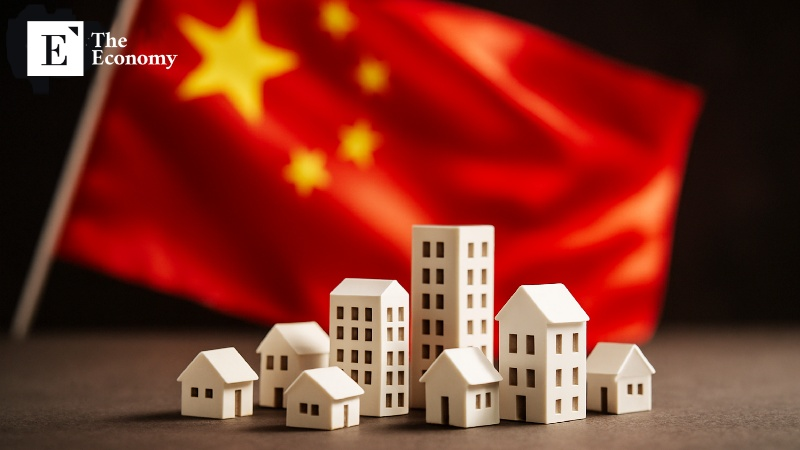
As the myth underpinning China’s property market—long regarded as the backbone of the economy—continues to erode, a full-scale “asset exodus” is gaining momentum among high-net-worth individuals, marked by a sweeping reconfiguration of wealth portfolios. Real estate, once treated as the definitive yardstick of wealth, has fallen out of favor amid declining returns, rapidly ceding ground to gold and Japanese property assets. This reallocation of China-origin capital is emerging as a disruptive force reshaping global gold price dynamics and Japan’s real estate landscape.
20% of Chinese High-Net-Worth Individuals Cut Property Exposure
According to the South China Morning Post (SCMP) on the 21st, a new investment trend is taking hold among China’s wealthy: selling property and reallocating capital into gold as part of retirement and investment strategy overhauls. Data from the Hurun Research Institute show that Chinese high-net-worth individuals are steadily reducing their real estate holdings while sharply increasing their allocation to gold. This shift reflects a reassessment of liquidity and asset stability. For decades, the notion that “property equals wealth” dominated China, but plunging property investment returns combined with rapid population aging have accelerated the pivot toward gold.
The case of Li Jiang, a 60-year-old manufacturing business owner in Guangdong Province, vividly illustrates this changing mindset. Since 2020, Li has sold five of the seven properties he previously owned, retaining only his primary residence and one property earmarked for inheritance. He converted the proceeds into gold. “Property used to be the best way to pass on wealth, but now ownership itself feels like a burden,” Li said. “For retirement, one home is sufficient, which is why I decided to sell.”
This trend, originating among the wealthy, is likely to ripple across China’s broader retirement and investment markets. According to Hurun’s China High-Net-Worth Individuals Retirement Strategy Report, China’s population aged 60 and above has surpassed 300 million, with roughly 55,000 people reaching retirement age each day. At the same time, the number of high-net-worth households is declining. Historically, wealth accumulation among China’s affluent relied heavily on rising property values and corporate dividends. Over the next year, however, respondents plan to cut exposure to investment properties and bank wealth management products while increasing allocations to gold.
Gold Prices Soar on China’s ‘Gold Hoarding’
China’s central bank, pursuing asset diversification, has also been actively accumulating gold. According to official disclosures by the State Administration of Foreign Exchange under the People’s Bank of China, the country added approximately 26 metric tons of gold last year alone. China’s total gold reserves now stand at 2,305 metric tons. While this places China among the world’s largest holders in absolute terms, gold still accounts for only about 8% of its vast foreign exchange reserves. However, given long-standing speculation over undisclosed purchases beyond official statistics, market participants generally regard official figures as a lower bound rather than a definitive measure. Bruce Ikemizu, director at the Japan Bullion Market Association, said, “No one really trusts China-related official numbers,” adding that “China’s actual gold holdings could be as high as 5,000 metric tons.”
China’s gold rush has also propelled global prices higher. Last week, February-delivery gold futures on the New York Mercantile Exchange surged past $4,600 per ounce, setting a new all-time high. After breaking through the psychological resistance level of $4,500 earlier this year, prices have continued to climb, marking a gain of more than 60% year on year. Major banks including HSBC are now projecting that gold could breach $5,000 per ounce in the first half of the year.
The market’s sensitivity to China was also evident when news of a major domestic gold discovery triggered an immediate price reaction. In October last year, the China Geological Survey announced the discovery of a super-giant gold deposit in Pingjiang County, Hunan Province, classified among the world’s largest single deposits. The agency estimated the deposit’s value at approximately $84 billion. Following the announcement, gold prices—then surging—briefly reversed lower as fears of a supply shock took hold. The episode underscored how shifts in Chinese capital sentiment can directly transmit into global commodity markets.

Surge in Chinese Investment Riding Weak Yen and Ultra-Low Rates
Following gold, Japanese real estate has become another major destination for Chinese capital. Amid an extremely weak yen, Japanese property is increasingly viewed by Chinese investors as a safe-haven asset akin to gold. According to data compiled by global real estate consultancy Colliers, Chinese investors deployed a total of $1 billion into Japanese real estate in the first quarter of last year—more than double the five-year average of $428 million.
An industry insider noted, “There are Chinese buyers who purchase multiple apartments priced around $3.1 million each entirely in cash, and in some cases they buy an entire floor or even a whole building outright.” Masahiro Tanikawa, Head of Investment Services at Colliers Japan, said, “Chinese investors have traditionally focused on mainland property, but the collapse of China’s real estate market has redirected capital flows toward more stable markets such as Japan.”
Some investors, however, are targeting short-term capital gains rather than long-term residency, leading to a rapid increase in vacant luxury apartments in central Tokyo. According to Japan’s Diamond Online, newly built condominiums in Tokyo’s core are typically priced in the multi-million-dollar range, yet vacancy rates in prime districts such as Chiyoda and Minato have exceeded 10%.
Speculative buyers often leave properties vacant rather than leasing them out, as tenants can complicate future sales and weaken negotiating leverage. With a 10% price increase alone capable of generating gains of several hundred thousand dollars, many investors calculate that paying maintenance fees while keeping units empty is more profitable. A resident in Chiyoda Ward said, “It feels like only about 30% of the apartments are actually lived in.” Municipal surveys corroborate this, showing that roughly 70% of owners are non-residents. In addition, some Chinese investors are increasingly marketing or reselling Japanese properties through social media platforms such as Weibo and Xiaohongshu. Diamond Online warned that if this trend persists, reduced demand for neighborhood shops, hospitals, and other essential services could accelerate urban hollowing in central Tokyo.
Matthew Reuter is a senior economic correspondent at The Economy, where he covers global financial markets, emerging technologies, and cross-border trade dynamics. With over a decade of experience reporting from major financial hubs—including London, New York, and Hong Kong—Matthew has developed a reputation for breaking complex economic stories into sharp, accessible narratives. Before joining The Economy, he worked at a leading European financial daily, where his investigative reporting on post-crisis banking reforms earned him recognition from the European Press Association. A graduate of the London School of Economics, Matthew holds dual degrees in economics and international relations. He is particularly interested in how data science and AI are reshaping market analysis and policymaking, often blending quantitative insights into his articles. Outside journalism, Matthew frequently moderates panels at global finance summits and guest lectures on financial journalism at top universities.
Similar Post