[AI Hegemony War] U.S. Loosens the Lock Despite “Selling Nuclear Weapons” Warning, China Counters With Customs Rejection

Authored On
Modified
Anthropic CEO likens exports to “selling nuclear weapons to North Korea,” issuing a hardline security warning
China defies U.S. export approval with customs rejections, doubling down on self-reliance
Massive capital deployment accelerates China’s technological autonomy, with hardware limits the key test
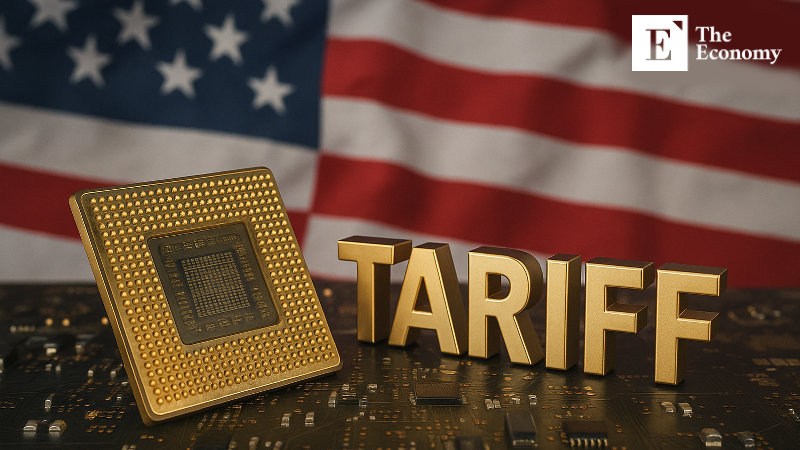
As Dario Amodei, chief executive officer of Anthropic, brands the export of Nvidia’s cutting-edge H200 AI chip to China as a catastrophic leakage of strategic assets that threatens national security, China has launched a counteroffensive—rejecting Washington’s conciliatory gesture outright. While the United States partially approved exports in pursuit of tariff revenue and market leverage, Beijing has refused entry, mandating the use of domestically produced chips in data centers and placing a decisive bet on de-Nvidiaization and technological self-reliance.
“H200 Exports Are Equivalent to Selling Nuclear Weapons,” Anthropic CEO Warns
On the 20th (local time), Amodei said in an on-site interview at the World Economic Forum in Davos that the Trump administration’s approval of Nvidia’s H200 sales to China was “akin to selling nuclear weapons to North Korea,” delivering a blistering rebuke. As the head of the company behind the generative AI chatbot Claude, he underscored that high-performance AI semiconductors transcend ordinary commercial goods and constitute strategic assets with profound national security implications. Amodei warned that “even if the United States is years ahead technologically, the moment advanced chips are handed to a rival, that gap will narrow rapidly,” adding that such a move could prove a grave mistake with enormous security ramifications.
Amodei likened the future of AI to “a country of geniuses in a data center,” explicitly flagging the risks of technological control under authoritarian regimes. He cautioned that as many as 100 million intelligences surpassing Nobel laureates could fall under the control of a single state, and that if such computational power were misused, scenarios resembling—or exceeding—the totalitarian surveillance dystopia depicted in George Orwell’s 1984 could materialize. His remarks were widely interpreted as warning that high-end AI chips could be repurposed for threats on the scale of biological and chemical weapons development or cyberattacks capable of destabilizing states.
Industry alarm has intensified because the approved chip represents a substantial performance leap. On the 13th, the U.S. Commerce Department’s Bureau of Industry and Security announced via the Federal Register that exports of the H200 to China would shift to a case-by-case licensing regime. Items previously subject to a blanket ban would become exportable upon individual review. The U.S. government is reported to have imposed conditions including a cap tying export volumes to a limited share of U.S. sales and a requirement that 25% of the chip price be paid to the U.S. government as a fee.
The concern is that while the H200 sits below Nvidia’s flagship Blackwell line, it delivers roughly six times the performance of the H20, the model previously designated for China. Despite the stringent conditions, the most powerful chip legally permitted to enter China would be unleashed. Critics argue that Washington is eroding its own technological edge in exchange for a 25% fee windfall.
U.S. Unlocks the Door, China Strikes Back With Customs Rejection
China, however, has responded with an uncompromising posture, delaying or denying customs clearance. On the 14th, Reuters reported, citing multiple sources, that China had barred H200 imports. U.S. technology outlet The Information likewise reported that Chinese authorities notified some IT firms of restrictions on H200 purchases. Orders had surged after approval signals from the Trump administration, but the latest move has clouded the chips’ entry prospects. The action amounts to a de facto counter–import control imposed immediately after formal approval, with customs authorities reportedly blocking corporate purchases except in extremely limited cases such as university research and development labs.
This show of resolve is widely seen as part of a meticulously coordinated push for semiconductor self-sufficiency. In November last year, Chinese authorities issued guidance effectively banning the use of foreign AI chips in state-funded data center projects. For projects less than 30% complete, even pre-contracted foreign chips were ordered removed and contracts canceled, forcibly reducing reliance on Nvidia. State-backed data center projects nationwide are understood to fall within the scope of these rules. The message is clear: even if U.S. chips return to the market, Beijing intends to block them strategically to secure domestic market share for homegrown suppliers.
Industry watchers view the move as a reflection of growing Chinese confidence. In July and September last year, Beijing conducted trial runs by recommending purchase suspensions of Nvidia’s H20 and RTX series on security grounds. A semiconductor industry executive noted, “China’s shift from a defensive posture under U.S. controls to an offensive stance is rooted in both determination and rising technical confidence.” Regulation has been paired with aggressive incentives, including steep electricity discounts for data centers that adopt domestic chips, guaranteeing demand for firms such as Huawei and Cambricon and buying time to close the technology gap.
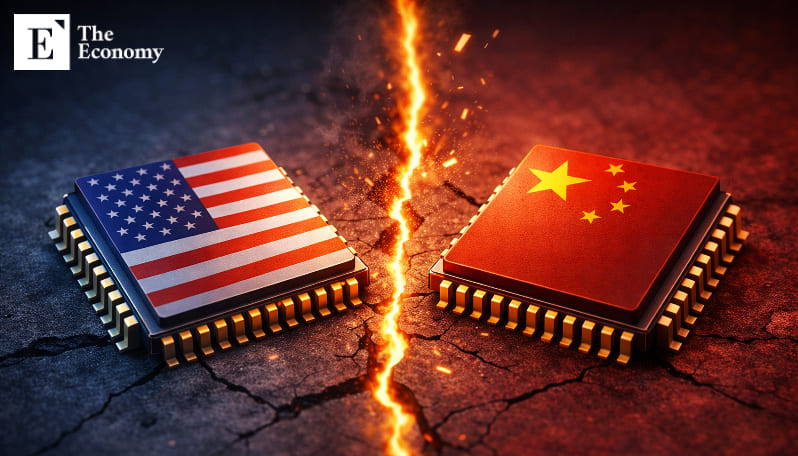
China Fills Nvidia’s Void: The Export-Control Paradox and the Fork Between Autonomy and Isolation
Whether U.S. export controls ultimately catalyze China’s technological autonomy or drive it into isolation remains fiercely debated. Nvidia CEO Jensen Huang has long argued that sustained U.S. restrictions would only compel China to develop substitutes, cultivating new competitors—the “paradox of controls.” The recent easing is seen by some as reflecting Nvidia’s push to re-enter the Chinese market. The company contends that maintaining U.S. firms’ presence in China keeps Chinese standards tethered to the American ecosystem, serving long-term security and commercial interests. The worst-case scenario, it argues, would be China building an independent ecosystem beyond U.S. influence while Washington keeps the door shut.
Huang’s concerns appear partly vindicated. After being boxed in by U.S. controls in 2022, China has carved out a markedly stronger position in just three years. Cut off even from Nvidia’s older models, Beijing assembled an investment fund of about $54 billion and poured capital into domestic AI semiconductor champions including Huawei and Cambricon, treating chip development as a national priority. In October last year, Huawei unveiled the Ascend 910C, delivering roughly 60% of the performance of Nvidia’s H100, and showcased a scale-out strategy bundling 384 chips to approach Nvidia system-level performance. Cambricon followed with the MLU 590, offering about 80% of the A100’s performance and supplying major Chinese big-tech firms—earning the moniker “China’s Nvidia.” The shift has been so pronounced that Huang lamented China’s advanced-chip market share plunging from 95% in 2022 to nearly zero recently. Morgan Stanley has projected that China could achieve 100% self-sufficiency far earlier than prior estimates of 82% by 2027 due to aggressive localization policies.
Skeptics, however, argue that China’s drive will collide with the physical limits of hardware. A report by the Council on Foreign Relations estimates that the most advanced U.S. AI chips are currently about five times more powerful than Huawei’s latest offerings, with the gap potentially widening to as much as seventeenfold by 2027 due to packaging and yield constraints. Even within China, sober assessments are emerging. Tang Jie, founder of AI startup Zhipu, acknowledged that “despite progress in certain areas, the gap with the United States may in fact be widening.” Justin Lin, Alibaba’s AI chief, has put the probability of China overtaking global leaders within three to five years at below 20%. Chinese AI startup DeepSeek is also reported to have reintroduced Nvidia chips for parts of its latest model development after encountering performance limits with domestic hardware. Ultimately, whether the current export-control standoff propels China toward durable autonomy or stalls its ambitions will hinge on its ability to offset constrained chip performance and fragile supply chains through superior software optimization.
Similar Post