[US–EU] Tariffs Weaponized Even Against Allies, ‘Trump-Style Diplomacy’ Expands Into Military Pressure

Authored On
Modified
Retaliatory tariffs imposed on eight European countries over Greenland
Indiscriminate tariff pressure deployed across diplomatic and security issues
Sovereignty infringement controversy escalates over potential military intervention in Venezuela
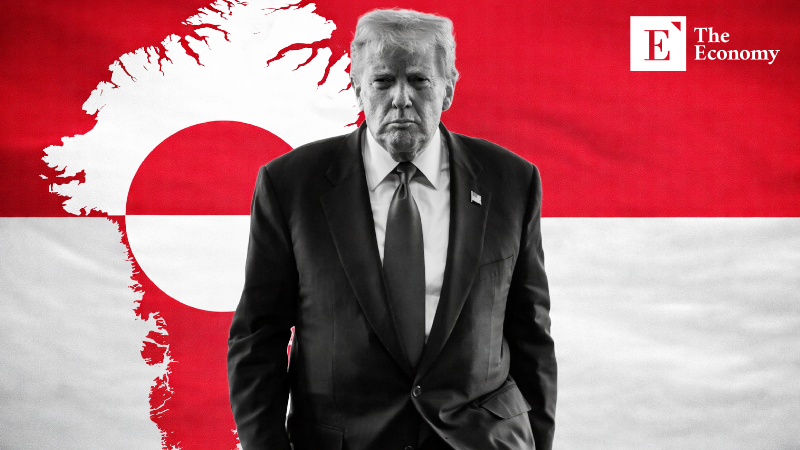
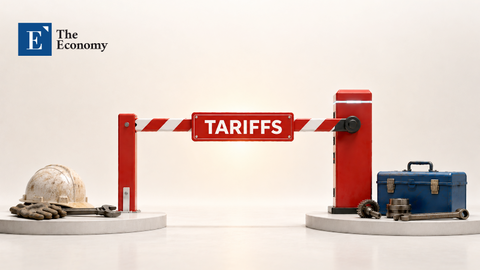
Tensions surrounding Greenland are escalating rapidly after U.S. President Donald Trump announced steep tariffs on eight European countries that dispatched small military contingents to Greenland, an autonomous territory of Denmark. Within the international community, criticism is mounting that Trump’s approach amounts to the outright “weaponization” of tariffs, using indiscriminate high duties to coerce counterparts over sensitive diplomatic and security matters. More recently, foreign policy disputes have extended beyond economic sanctions to the deployment of military coercion, fueling concerns that the United States is reverting to a 19th-century style of imperialism centered on power and interests.
10% Tariffs on Eight Countries Including the UK Starting Next Month
On the 20th (local time), President Trump told NBC News in a phone interview that he would “100%” impose tariffs on European countries if negotiations to purchase Greenland were to fail. Asked whether he would use military force to secure Greenland, he declined to comment, offering no specific position. He added that “Europe should be focused on the Russia–Ukraine war, not Greenland.” Later that day, after attending a college football championship game in Miami, Florida, Trump told reporters, “Denmark cannot protect Greenland and does not even go there,” adding, “We need Greenland.”
Earlier, on the 16th, Trump said at a White House roundtable meeting that tariffs could be imposed on countries unwilling to cooperate on Greenland for reasons of national security. The following day, on the 17th, he announced via his social media platform Truth Social that tariffs would be levied on eight European countries—Denmark, Norway, Sweden, Finland, the United Kingdom, France, Germany, and the Netherlands—that had dispatched small military units to Greenland for training purposes. Under the plan, tariffs of 10% would take effect in February, rising to 25% in June. Trump said the measures were intended “to swiftly and conclusively end potential risk situations” and would remain in place “until an agreement is reached on the complete and total acquisition of Greenland.”
In the NBC interview, Trump also addressed the Nobel Peace Prize. While saying he had no interest in the award, he claimed that Norway “completely controls” the prize decision, despite Norway’s longstanding position that an independent five-member committee appointed by its parliament selects the laureate. Trump further asserted that his foreign and security policies had prevented eight wars and saved countless lives, arguing that this constituted a reward greater than the Nobel Prize.
Despite these remarks, Trump wrote in a letter to Norwegian Prime Minister Jonas Gahr Støre that, given the decision not to award him the Nobel Peace Prize despite having halted more than eight wars, he no longer felt obligated to focus solely on peace. While peace would remain a priority, he said he could now place greater emphasis on what was good and appropriate for the United States. The message was widely interpreted as a warning that U.S. interests would take precedence over global peace following the failed Nobel bid. Norway is among the eight European countries targeted by the tariffs.
Allies and Adversaries Alike Targeted in Pursuit of National Interest
As Trump’s hardline rhetoric over Greenland continues, the eight European countries named as tariff targets issued a joint statement publicly criticizing the Trump administration’s threats. Denmark, Norway, Sweden, Finland, the United Kingdom, France, Germany, and the Netherlands warned that tariff threats could weaken transatlantic relations and trigger a dangerous cycle of escalation. As NATO members, they reaffirmed their commitment to strengthening Arctic security as a shared transatlantic interest. European Commission President Ursula von der Leyen also criticized the proposed tariffs in a speech at the World Economic Forum annual meeting in Davos on the 20th, calling additional tariffs among longstanding allies a mistake.
Concerns have also emerged within U.S. political circles over retaliatory tariffs against allies. On the 17th, moderate Republican Senator Thom Tillis of North Carolina said that responding in this manner to allies who sent small military contingents to Greenland for training purposes was harmful to the United States, American businesses, and U.S. alliances. He warned that such actions would benefit only Russia’s President Vladimir Putin, China’s President Xi Jinping, and other adversaries seeking to fracture NATO. He added that pursuing coercive measures to seize allied territory went beyond foolishness.
International criticism has focused on Trump’s repeated use of tariffs as de facto instruments of retaliation. A prominent example is Mexico, which Trump threatened with tariffs of 25% to 30% over illegal immigration and fentanyl trafficking. These threats were used as leverage to enforce the United States–Mexico–Canada Agreement and strengthen border security. More recently, Trump said he would impose 25% tariffs on countries trading with Iran in response to the suppression of anti-government protests, continuing his reliance on trade pressure to advance foreign policy objectives.
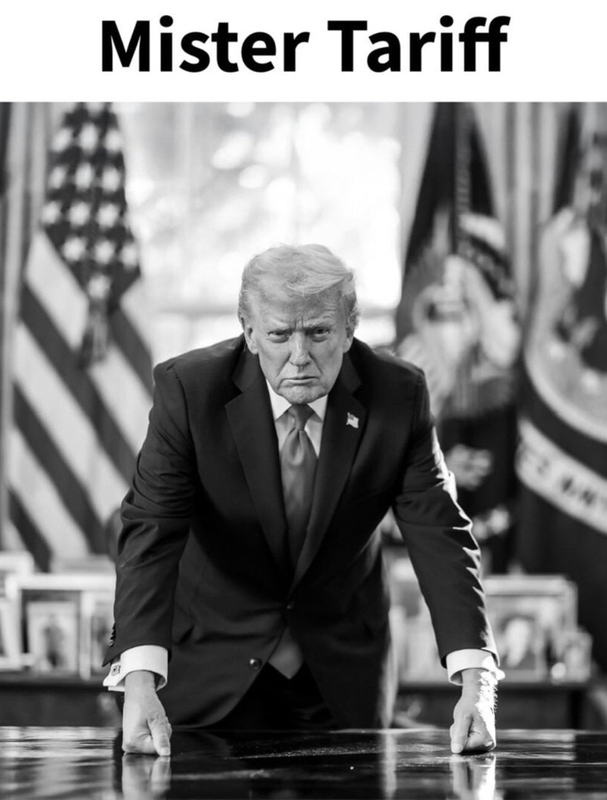
Despite the backlash, Trump has expressed confidence in his tariff strategy. On the 16th, he posted a black-and-white photo on Truth Social showing himself staring straight ahead with clenched fists resting on the Resolute Desk. The image bore the bold caption “The Tariff King.” He later reposted the same image with the caption changed to “Mister Tariff.” The image was also shared on the White House’s official X account. At a White House roundtable meeting the previous day, Trump claimed that global pharmaceutical companies had lowered prescription drug prices in the United States because he had pressured them by threatening tariffs.
Collapse of the International Order Under America-First Doctrine
The core issue is that the Trump administration’s approach has extended beyond tariff pressure to erode national boundaries and undermine sovereignty itself. The international community continues to debate whether U.S. airstrikes in Venezuela and the arrest of President Nicolás Maduro and his wife constitute violations of international law. On the 4th, the European Union issued its first joint statement on the matter, stressing that the principles of international law and the United Nations Charter must be upheld under all circumstances. The EU emphasized that permanent members of the UN Security Council bear a special responsibility to safeguard these principles as the foundation of the international security system—an indirect rebuke of the United States.
The statement was joined by leaders of major European countries, including the United Kingdom, France, and Germany, which have refused to recognize Maduro as Venezuela’s legitimate leader following disputed elections. Spain, meanwhile, issued a separate joint statement with five left-leaning Latin American governments—Brazil, Chile, Colombia, Mexico, and Uruguay—warning that U.S. actions had set a dangerous precedent for peace and regional security and placed local populations at risk. European media reported that EU leaders acknowledged the legitimacy concerns surrounding the Maduro regime while underscoring the need for caution regarding the legality of U.S. procedures and the future governance and sovereignty of Venezuela.
Moreover, concerns over sovereignty violations are no longer confined to Venezuela or Greenland. Following Maduro’s arrest, Trump singled out neighboring Latin American countries in remarks to reporters. He described Colombia as being led by a “disgusting man” who enjoys producing cocaine for sale in the United States, and when asked whether he was considering military operations, replied that it was “a good idea.” Regarding Cuba, he said it would collapse on its own and that U.S. action would not even be necessary. Some observers warn that the Venezuela episode could serve as a springboard for expanding U.S. intervention, potentially extending to the Middle East, particularly Iran.
Experts caution that Trump’s aggressive America-first approach is destabilizing the very norms that have governed the international order. The New York Times, citing experts, described the arrest of the Maduro couple as not only illegal but also unwise, characterizing it as a regression to imperialism marked by the fusion of military force and diplomatic pressure to secure oil resources. The Guardian similarly argued that U.S. foreign policy is combining 19th-century imperialism with 21st-century weaponry. If tariff pressure and military intervention become a standardized package in disputes over resources and territory, analysts warn that the international order could be reshaped not by negotiation and rules, but by raw power.
Similar Post