BOE Manufacturing Defects and the Shift of iPhone OLED Orders Reconfirm the Gap Amid China Catch-Up Narrative

Authored On
Modified
Samsung Display’s entrenched lead reaffirmed
Mass OLED production systems still elusive
Short-term volume growth vs. long-term tech maturity gap
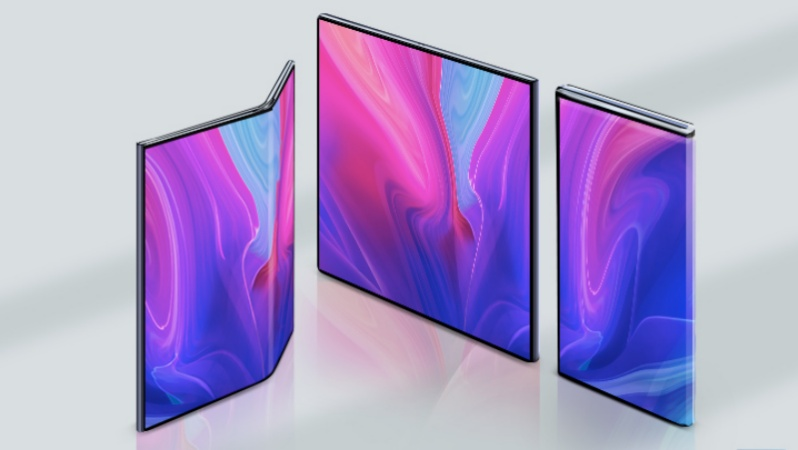
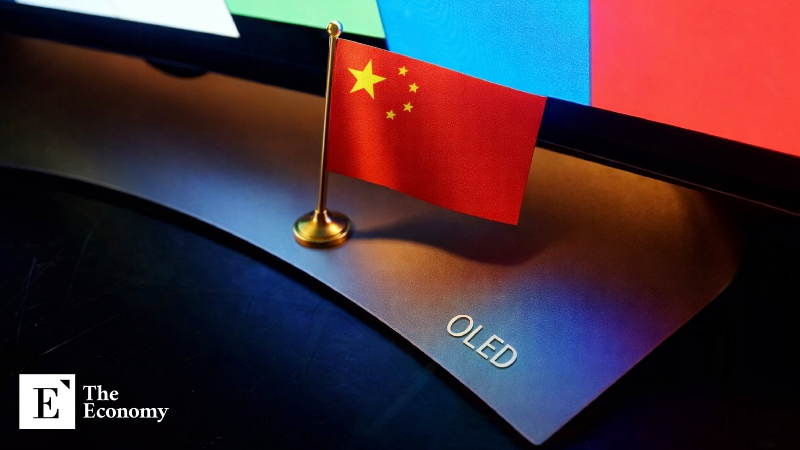
China’s largest display maker BOE has reportedly halted production of organic light-emitting diode (OLED) panels supplied to Apple after failing to resolve persistent quality defects. While BOE has maintained a long-term relationship with Apple by supplying panels mainly for legacy iPhone models, prolonged issues in a specific manufacturing process have now put millions of units’ worth of orders at risk. Markets view the episode as a signal that Apple is reshaping its supplier network around supply stability and quality reliability.
Difficult Transition From LTPS to LTPO
On the 21st, IT industry outlet The Elec reported, citing industry sources, that BOE had been unable to fix defects in a specific manufacturing process that first emerged late last year, forcing a complete halt in production for certain models. The affected products are LTPS (low-temperature polycrystalline silicon) OLED panels supplied for the iPhone 15 and 16. According to the report, “Given BOE’s track record of stable panel supply to Apple, the current process defect is highly unusual and embarrassing,” adding that “orders totaling several million units have already been redirected to Samsung Display.”
BOE has supplied OLED panels across multiple iPhone generations, from the iPhone 13 released in 2021 through models up to the iPhone 17 series. It has also delivered panels for entry-level models such as the iPhone 16e and 17e, which reuse OLED panels originally designed for the iPhone 14 and therefore posed fewer quality challenges. However, the latest production disruptions have spread to newer legacy models, including the iPhone 15 and 16, and even to 일부 iPhone 17 OLED panels. As a result, industry observers expect a comprehensive review of BOE’s entire iPhone OLED production line.
The setback is emerging as a significant opportunity for Samsung Display, long regarded as the most reliable supplier in terms of production capacity. In 2024, BOE’s iPhone OLED shipments were estimated at roughly 40 million units, translating to an average monthly volume of about 3 million units. Even compared with LG Display, the second-largest vendor, Samsung Display is widely seen as having superior capacity and stability, enabling it to supply a broader range of models more consistently. Analysts say the recent reallocation of orders reflects this structural advantage.
Apple’s evolving OLED adoption strategy also provides important context. In the iPhone 16 series released in 2024, Apple applied LTPS OLED panels to the standard and Plus models, while reserving LTPO OLED panels for the higher-end Pro and Pro Max variants. Starting with the iPhone 17 lineup, however, Apple has adopted LTPO OLED panels across all four models. LTPO technology offers superior power efficiency and variable refresh rates compared with LTPS, but it also entails greater technical complexity and more demanding manufacturing processes. This shift underscores Apple’s growing emphasis on long-term supplier reliability and technological stability.
Expansion Limited to Low-Cost, Standardized Volumes
Industry analysts note that China has struggled to replicate in OLED the rapid technological scaling and market dominance it achieved in LCDs. In the LCD sector, Chinese firms combined massive capital investment with government subsidies to quickly drive down costs and expand market share. OLED, however, has proven far more challenging. According to Counterpoint Research, Chinese suppliers such as BOE, Visionox, and CSOT accounted for 38% of global OLED shipment volume in the second quarter of last year, up about 3 percentage points from the previous quarter.
At first glance, the figure suggests meaningful growth. In reality, the combined share of the three companies only slightly exceeded Samsung Display’s 37% share. When LG Display’s 9% share is included, it becomes clear that Chinese suppliers still fall short of overtaking their Korean counterparts. Moreover, much of China’s volume growth has been concentrated in low- to mid-range, standardized products, leaving Chinese firms at a profitability disadvantage compared with Korean companies that focus on high-value panels. BOE’s failure to secure LTPO orders illustrates this imbalance in concrete terms.
The challenges facing China’s OLED transition are further compounded by surging memory prices, which are rapidly pushing up smartphone manufacturing costs. TrendForce projects that global DRAM prices will rise by 55–60% quarter-on-quarter in the first quarter of this year. Memory accounts for an estimated 34% of the bill of materials in mid- to low-range smartphones, more than double the roughly 14% share seen in premium models. For Chinese smartphone makers, which rely heavily on the mid-range segment, expanding OLED adoption while also increasing memory capacity has become structurally burdensome.
Recent moves by Chinese handset makers reflect this pressure. DreamSmart Group’s Meizu canceled the planned launch of the Meizu 22 Air, originally scheduled for early this year. Xiaomi announced price hikes, with President Lu Weibing stating that “memory chip price increases have exceeded expectations,” leaving the company unable to delay price adjustments. As a result, the Xiaomi Vivo X300 saw its price rise by about $14.37. Honor similarly discontinued its X6 series 8GB+256GB entry model and restructured its lineup around configurations with 12GB or more of memory, raising prices by roughly $71.84.
Shifting Perceptions of the Korea–China Technology Gap
Until last year, the dominant market narrative held that China’s OLED catch-up was within reach. In an August report titled “Comparative Competitiveness of Advanced Industries Between Korea and China,” the Gyeonggi Research Institute noted that Chinese display makers were rapidly entering mid- and low-range smartphone, wearable, and automotive OLED segments, expanding their market share. The report even suggested that in certain areas, the technology gap between BOE and Korean OLED firms had narrowed to less than a year. China’s success in seizing leadership in LCDs through price competitiveness and massive investment strongly influenced perceptions of the OLED race.
The data initially supported this view. According to Omdia, Chinese display makers held a 49.7% share of the global OLED market by shipment volume in the first quarter of 2024, effectively matching Korea. This was driven largely by the rapid adoption of domestically produced OLED panels within China’s smartphone market, where locally sourced OLEDs accounted for 86.1% of panels used in the first half of last year. However, that momentum faltered in the second half of the year as cost pressures intensified and smartphone production slowed, allowing Korean suppliers to reclaim the lead.
China has made clear that it intends to narrow the gap through aggressive capacity expansion. Counterpoint Research forecasts that China will account for 83% of global OLED capital expenditure by 2027, roughly six times Korea’s share. BOE has announced plans to invest $80 billion this year in 8.6-generation OLED facilities for IT applications, while Visionox plans to commit a similar amount to mass-production lines by 2027. The 8.6-generation OLED process uses substrates about 2.2 times larger than those of sixth-generation lines, offering higher production efficiency and improved cost competitiveness.
Whether such investment will translate into immediate gains remains uncertain. OLED manufacturing requires extended periods to stabilize yields after initial mass production. Panels for smartphones and IT devices must meet stringent standards for long-term image retention, power efficiency, and burn-in control. The strategy that worked in LCDs—large-scale investment followed by aggressive price pressure—does not apply as readily to OLED. This helps explain why, despite rapid capacity expansion, Chinese suppliers remain confined to a limited role in premium smartphones and key customer programs.
Similar Post