[Arctic Hegemony] As Ice Retreats, the Calculus Changes: Why the U.S. Is Fixated on Greenland

Stefan Schneider brings a dynamic energy to The Economy’s tech desk. With a background in data science, he covers AI, blockchain, and emerging technologies with a skeptical yet open mind. His investigative pieces expose the reality behind tech hype, making him a must-read for business leaders navigating the digital landscape.
Authored On
Modified
Shipping lanes and resource access transformed, strategic value surges
U.S. seeks leadership through infrastructure investment
Northeast Asian maritime order also drawn into the equation
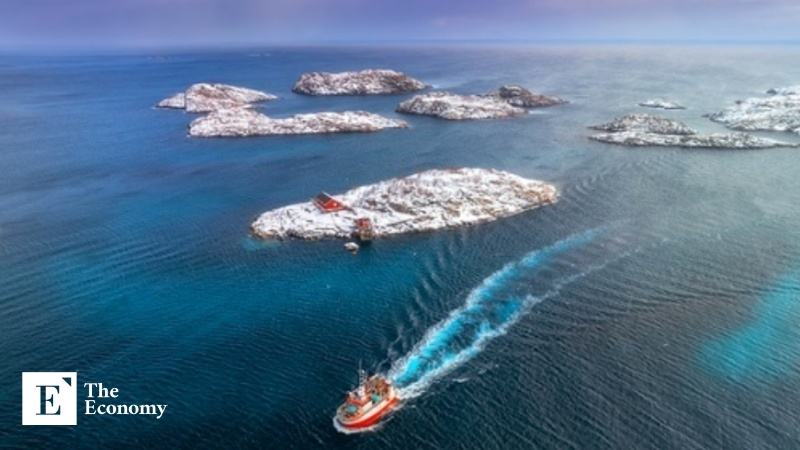
Remarks by U.S. President Donald Trump on Greenland have refocused attention on the Arctic’s strategic value. As climate change accelerates ice melt, Greenland has emerged as a pivotal node where shipping routes, resources, and military considerations converge. Washington increasingly views the island as part of a long-term strategy to secure leadership in the Arctic.
With Russia’s military predominance and control over Arctic sea lanes intersecting with China’s attempts to expand its Arctic footprint, the United States has stepped up large-scale investment and infrastructure expansion to operationalize this strategy. The implications extend beyond the immediate stakeholders, introducing new variables for maritime transport structures and energy security in Northeast Asia.
From the periphery to a central strategic theater
According to diplomatic sources on the 21st (local time), Trump has repeatedly argued that Greenland, an autonomous territory of Denmark, should be incorporated into U.S. territory—statements that have drawn renewed global attention to the Arctic’s strategic significance. In a phone interview with The Atlantic on the 4th of this month, the day after U.S. forces captured Venezuelan President Nicolás Maduro, Trump said that “other countries could become targets of U.S. intervention just like Venezuela,” adding that “we need Greenland for America’s defense.” The remarks were widely interpreted as implying that control over Greenland could be pursued by force, sparking extensive debate.
Greenland, the world’s largest island at 2.16 million square kilometers, occupies a geopolitical crossroads linking the Arctic Ocean and the North Atlantic. As climate change lengthens the Arctic’s ice-free season, the region has evolved into a multilayered strategic space combining military, shipping, and resource interests. Where harsh conditions once limited access, extended navigability has sharply increased the value of effective control. Trump’s comments resonated because they reflect a broader reality: the Arctic has shifted from a remote frontier to a core strategic arena.
Greenland’s military importance has been emphasized since the early Cold War. The United States operates the Pituffik Space Base (formerly Thule Air Base) in northwest Greenland, serving as a hub for missile early warning, space surveillance, and Arctic operations. The base is regarded as a critical outpost capable of detecting intercontinental ballistic missiles launched from Russia at the earliest stage. Given that ballistic missile trajectories often pass over the Arctic, control of this region confers a decisive advantage in homeland defense.
Greenland is also believed to hold substantial reserves of strategic resources, including oil, natural gas, uranium, zinc, iron ore, and rare earth elements. With China controlling more than 90% of the global rare earth supply chain, Greenland’s potential has become increasingly attractive to the United States and its allies as an alternative source. While extraction costs and environmental constraints remain, the geopolitical value of strategic minerals extends beyond pure economic calculations. The U.S. Geological Survey estimates that up to 1.5 million tons of rare earths may lie beneath Greenland’s ice.
Russia’s expanding influence further amplifies the Arctic’s strategic weight. Russia controls roughly half of the Arctic’s landmass and exclusive economic zones, and about two-thirds of the Arctic population is Russian. Of the 66 major military bases and facilities in the Arctic, 30 are located on Russian territory. Moscow has modernized bases neglected after the Soviet collapse, strengthening radar and missile systems and continuing investments in nuclear submarines and early-warning capabilities even amid the war in Ukraine.
The Northern Sea Route cuts across both military and economic considerations. Linking Asia and Europe, the route can reduce sailing distances by 30–40% and transit times by 10–15 days compared with the Suez Canal route. A container ship that departed Ningbo, China, on September 22 last year and arrived at Felixstowe in the UK on October 12 via the Arctic demonstrated that commercial use of the route has moved beyond theory into practice. Greenland sits at the western gateway of this corridor, giving it decisive importance for maritime control and logistics.
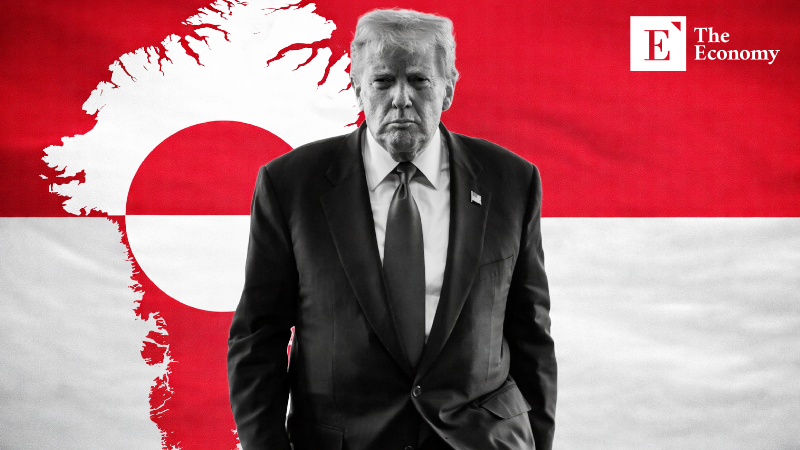
Military buildup amid U.S. efforts to counter China and Russia
This backdrop explains why the United States has continued massive investment beneath Trump’s hardline rhetoric. Washington judges that the Arctic has already become a tangible arena for military, logistical, and resource competition. With Russia establishing overwhelming presence, U.S. policymakers increasingly view diplomatic signaling alone as insufficient to preserve balance. Loss of Arctic leadership is treated not merely as a regional setback but as a challenge with implications for the entire global security architecture linking the Atlantic and Pacific, prompting a shift toward investment-driven responses.
A symbolic example is the expansion of U.S. icebreaker capacity. The U.S. government recently decided to acquire 11 next-generation icebreakers in cooperation with Finland, a leader in icebreaking technology. Four will be purchased directly from Finland, while seven will be built in U.S. shipyards using Finnish designs and technical support. The move effectively bends the Jones Act principle that public and military vessels be built domestically. Trump described the decision as a national security choice to counter “aggressive military deployments and economic penetration by Russia and China.”
The decision reflects a stark capability gap. Russia operates about 40 icebreakers, including eight nuclear-powered vessels, effectively dominating the Arctic Ocean. The United States, by contrast, has only three large operational icebreakers, many of them aging and of limited effectiveness. Icebreakers are essential not only for supporting other ships but also for route control, resource exploration, and military activity. Canada’s Simons Foundation has noted that “without icebreakers, it is difficult to exercise sovereignty in the Arctic.”
China’s actions add further impetus. In 2018, Beijing labeled itself a “near-Arctic state,” unveiled the “Polar Silk Road,” joined the Arctic Council, and steadily invested in infrastructure and research projects, while deepening cooperation with Russia. U.S. willingness to combine investment with signals of potential military confrontation reflects a calculation that the long-term costs of losing Arctic leadership would be far greater.
New rules and costs unavoidable
Opening Arctic sea lanes is likely to reshape Northeast Asia’s maritime order in layered ways. China, South Korea, Japan, and Taiwan depend almost entirely on maritime routes for energy and raw material imports, concentrated along the Malacca Strait–Suez Canal–Taiwan Strait axis. While efficient in peacetime, these routes are vulnerable to geopolitical tension or conflict, as shown by repeated disruptions in the Suez Canal and shipping restrictions caused by drought at the Panama Canal.
For Northeast Asia, the Taiwan Strait is the most sensitive variable. As China intensifies military pressure under its “one China” principle, the strait is increasingly seen not just as a regional flashpoint but as a global logistics bottleneck. Japan, South Korea, and Taiwan rely on it for energy imports, key components, and exports of finished goods; China itself routes more than 70% of its energy imports through the strait. The stability of the Taiwan Strait thus underpins economic stability across the region.
In this context, the Northern Sea Route represents more than a mere alternative. Running along Russia’s northern coast, it offers shorter distances and lower fuel and operating costs while reducing dependence on specific chokepoints. Coupled with Alaska LNG and Russia’s Arctic LNG projects, it presents new supply options for Northeast Asia, potentially diversifying political risk compared with long Middle East routes via the Malacca Strait.
Who controls the Arctic route will therefore directly shape Northeast Asia’s maritime order. If Russia monopolizes route management and icebreaking support, countries may trade one form of dependence for another. If the United States and its allies play a larger role in safety and rule-setting, the Arctic route could function as part of a more multipolar maritime network. Either way, the Northern Sea Route is less a “free alternative” than a strategic space accompanied by new rules and costs.
Stefan Schneider brings a dynamic energy to The Economy’s tech desk. With a background in data science, he covers AI, blockchain, and emerging technologies with a skeptical yet open mind. His investigative pieces expose the reality behind tech hype, making him a must-read for business leaders navigating the digital landscape.
Similar Post