“Legal Battles and Outsourcing Escalate” GM Korea Labor Dispute Reaches a Breaking Point, Exit from Korean Market Looms

Authored On
Modified
Hardline Confrontation Between Labor and Management Over Downsizing of Maintenance and Logistics Infrastructure
Shift to Contracted Logistics Triggers Illegal Union Occupation, Disrupting Parts Supply
Sustainability of GM Korea’s Operations Reaches Its Limit
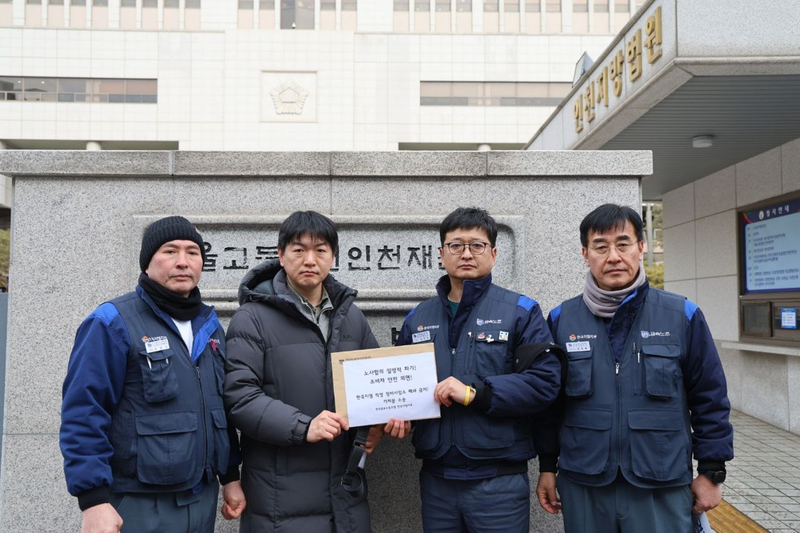
The labor dispute surrounding the closure of GM Korea’s company-operated service centers has escalated into a full-fledged legal battle. Amid ongoing parts supply disruptions caused by the occupation of the Sejong parts logistics center, the union has now filed an injunction with the court seeking to halt the closure of maintenance facilities. As signs of paralysis spread across production, maintenance, and logistics operations, market observers warn that mounting union-related risks could provide General Motors with a pretext to withdraw from the Korean market.
Union Files Injunction Lawsuit to Block Closure of Company-Operated Service Centers
According to the automotive industry on the 27th, the GM Korea chapter of the Korean Metal Workers’ Union under the Korean Confederation of Trade Unions held a press conference on the 26th, announcing that it had filed an injunction lawsuit with the Incheon District Court to block the closure of company-operated service centers. At the press conference, the union stated that management had “unilaterally violated labor-management agreements and rendered the collective bargaining agreement meaningless,” adding that “the closure of company-operated service centers must be halted immediately.” The union further argued that management was attempting to evade automakers’ safety responsibilities through outsourcing, claiming this would seriously threaten consumer safety and run counter to the intent of the Automobile Management Act.
The conflict originated from GM Korea’s decision to close its company-operated service centers. In November last year, GM Korea announced plans to shut down nine such centers nationwide as part of a profitability enhancement and business restructuring effort. Beginning February 15, approximately 380 partner service centers are slated to take over these functions. While the move resembles Samsung Electronics’ outsourced after-sales service model, GM Korea would become the first among Korea’s five major automakers to eliminate all company-operated service centers. The union’s parent organization, the Korean Metal Workers’ Union, opposed the move, arguing that the closures would degrade service quality, fuel customer dissatisfaction, and damage the brand’s image.
The labor dispute has further intensified due to complications at the Sejong parts logistics center. The facility serves as a core hub, storing after-sales service parts for GM Korea vehicles such as Chevrolet models and handling nationwide service center distribution and export logistics. Late last year and earlier this year, GM Korea switched the logistics operator from Woojin Logistics to Jeongsu Distribution. After 120 Woojin Logistics employees were denied job succession, they occupied the logistics center in protest.
Management attempted to secure alternative routes, including temporary warehouses in Gunsan, North Jeolla Province, but union blockade rallies prevented these efforts, leaving parts supply disruptions unresolved. As parts deliveries to partner service centers nationwide were cut off, repair times for accident-damaged vehicles have stretched to three to four times longer than usual, accelerating consumer harm. In response to the escalating crisis, GM Korea issued an official statement expressing regret and proposed hiring affected workers into production roles at its Bupyeong and Changwon plants. Most workers rejected the offer, suggesting the dispute will be prolonged.
Jeongsu Distribution, the newly contracted logistics firm, is also struggling. Having hired dozens of new employees to expand operations, the company says it cannot absorb all former Woojin Logistics workers. Jeongsu Distribution CEO Oh Jeong-taek said, “We’ve been unable to operate for a month while still paying wages. All we can do is hope the situation gets resolved.” The union has entered full protest mode, continuing a tent sit-in now in its 76th day in front of the Korea Development Bank, calling on the state-owned lender to fulfill its responsibility regarding the roughly $599 million in public funds injected into GM Korea. In addition to the injunction lawsuit, the union plans to file public-interest audit requests targeting the Ministry of Land, Infrastructure and Transport, the Ministry of Trade, Industry and Energy, the Ministry of Employment and Labor, and the Korea Development Bank.
Persistent Labor Disputes Rekindle Exit Speculation
Market consensus suggests the current labor conflict is once again reviving speculation over GM’s potential exit from Korea. Rumors of a GM Korea withdrawal have circulated for more than a decade. After GM acquired GM Daewoo in 2002, GM Korea grew into a hub for small and compact vehicle development and production, posting operating profits approaching $740 million in 2013. However, GM’s 2014 decision to withdraw the Chevrolet brand from Europe sharply reduced production volumes at GM Korea, which had supplied vehicles to that market. When The Wall Street Journal reported at the time that GM planned to cut Korean production by 20% by 2016, exit concerns resurfaced.
Speculation flared again in 2017, as GM Korea posted cumulative net losses of approximately $1.48 billion over the previous three years, coinciding with the final year of GM’s pledge to maintain operations for 15 years. GM had already withdrawn from low-profit markets such as Australia and Russia and restructured its Bupyeong and Changwon plants in Korea. As conditions deteriorated, the Korean government injected an additional roughly $600 million in public funds in 2018, with GM committing to maintain production in Korea for at least 10 years.
Six years later, exit rumors quietly resurfaced last year. Although GM Korea posted profits for three consecutive years driven by U.S. exports, domestic sales accounted for just 3–5% of total volumes. Speculation intensified after GM Korea decided earlier this year to sell idle land at the Bupyeong plant and all nine company-operated service centers, fueling concerns that the company may be entering an exit phase.
Particularly notable is the growing focus on Korea’s labor-friendly policies and legal risks. Among GM’s global operations, Korea has stood out for repeated production disruptions and losses tied to labor disputes. In 2020, GM Korea’s chief executive officer was even accused by the union of illegal dispatch practices. While GM continues to deny exit plans, analysts note that unless structural challenges and regulatory pressures—such as the Serious Accidents Punishment Act and the so-called Yellow Envelope Act—are addressed, exit speculation could resurface at any time.
Chain Bankruptcies and Commercial Collapse, Gunsan Reduced to a Ghost City
GM Korea has already delivered a severe blow to labor relations by shutting down its Gunsan plant in North Jeolla Province in 2018, citing profitability concerns. The closure wiped out 1,900 jobs overnight. While the union accepted the restructuring to prevent a complete exit from Korea and protect remaining positions, the move inflicted a profound shock on the regional economy. Following the shutdown, restaurants, motels, clothing stores, real estate offices, and other service businesses linked directly or indirectly to the plant closed en masse. As factory workers and supplier employees left the area, landlords and self-employed merchants lost their customer base, triggering a rapid contraction of the local commercial ecosystem. With consumption multipliers severed, Gunsan increasingly resembled a ghost city. At the time, an estimated 25% of the city’s population suffered direct economic damage, with unemployment far exceeding the national average as population decline and consumption stagnation reinforced each other.
For years, the GM Korea union pursued wage hikes and bonuses through repeated strikes, prioritizing worker compensation over corporate growth. Meanwhile, GM’s financial performance deteriorated sharply, posting cumulative losses exceeding $1.48 billion from 2014 to 2016 and annual losses ranging from roughly $444 million to $1.48 billion in 2017–2018. Despite worsening financial conditions, continued demands for higher wages and frequent partial and full strikes repeatedly halted production, inflicting damage on suppliers. Production disruptions inflated costs, which in turn translated into reduced investment and intensified restructuring pressure.
Following the closure of the Gunsan plant, the city entered a prolonged crisis. At least 70,000 people, including displaced workers and their families, faced economic hardship, while manufacturing output steadily declined. Despite multiple stimulus and industrial diversification initiatives by central and local governments, population outflows and job losses proved difficult to reverse. Eight years on, the fallout from the GM Gunsan plant closure continues. Former workers have shifted into taxi driving or relocated to nearby cities such as Jeonju, further depressing local consumption. Persistent weak sales and operating losses have eroded competitiveness, reinforcing criticism that the union’s unilateral protest tactics, divorced from the company’s deteriorating business realities, have pushed the regional economy to the brink of survival.
Similar Post