“Malaysia Considers Additional Purchases of South Korean FA-50 Fighter Jets,” Signaling Shifts in Southeast Asian Security

Authored On
Modified
“Superior in delivery timelines, maintenance, and operations”
China factor rapidly reshaping Southeast Asia’s security environment
Rising regional conflict risks elevate the value of combat experience
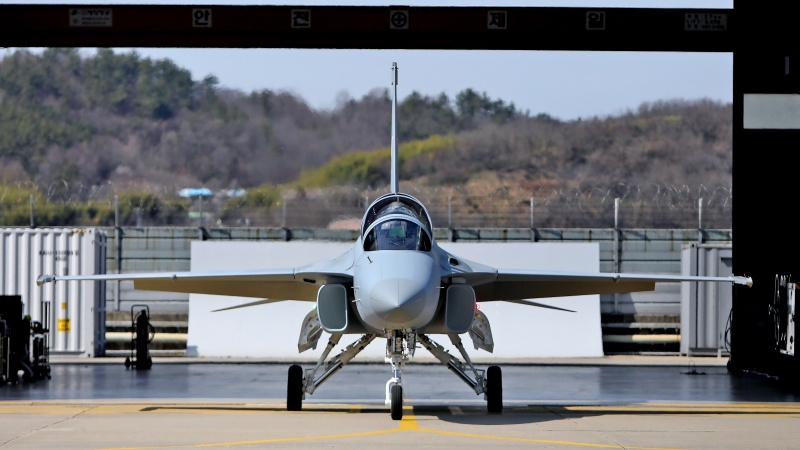
News that the Royal Malaysian Air Force is seriously considering additional purchases of South Korean–made FA-50 fighter jets has drawn attention to the strategic context behind the move. Having already verified supply reliability through an initial acquisition, Malaysia is once again turning to the aircraft as a practical solution to fill capability gaps in its force structure. At the same time, broader rearmament trends across Southeast Asia and accumulated experience with regional disputes are pushing procurement criteria in a more pragmatic direction. In this sense, Malaysia’s decision offers a snapshot of how defense acquisition strategies are evolving amid changes in the regional security environment.
Moves to streamline air force aircraft types
According to defense-focused outlet Defense24 on the 27th, the Royal Malaysian Air Force has recently leaned toward purchasing the FA-50M as a replacement for aging light combat aircraft and the increasingly uncertain F/A-18 fleet. Malaysia initially sought to acquire used fighter jets produced in the United States and previously operated by the Kuwaiti Air Force to address capability shortfalls, but prolonged procedural delays prompted a reassessment of more realistic alternatives. At present, Malaysia’s air force operates a highly diversified fleet, including 18 Russian-made Su-30MKMs, 15 British Hawk 208s, and seven U.S.-made F/A-18s, a multi-type structure marked by a high proportion of aging platforms and growing burdens in maintenance and logistics efficiency.
The experience of the ongoing first FA-50 acquisition plays a central role in this reassessment. In the first half of last year, Malaysia signed a contract with Korea Aerospace Industries (KAI) to procure 18 FA-50 aircraft. The deal, valued at $920 million, ranked among the largest defense acquisition projects in Malaysia’s history. More than half of the FA-50M production process is now complete, with phased deliveries expected within the year. During this period, the Royal Malaysian Air Force has simultaneously built training and maintenance systems while conducting pilot transition training to establish an operational foundation. This experience has reinforced the view that acquiring additional aircraft of the same type could accelerate force expansion while improving cost efficiency.
The FA-50M is widely regarded as a configuration that maximizes sensors, weapons, and networking capabilities within the limits of a light fighter platform. The export variant for Malaysia belongs to the FA-50 Block 20 family, incorporating an active electronically scanned array (AESA) radar, aerial refueling capability, and expanded weapons integration. Raytheon’s PhantomStrike radar or an equivalent system is expected to be installed, enhancing detection range and multi-target tracking capacity. Integration of the Sniper targeting pod has expanded the aircraft’s precision air-to-ground strike and intelligence, surveillance, and reconnaissance missions, while Link-16–based tactical data links have improved information-sharing capabilities in combined and joint operational environments.
From the perspective of Malaysia’s force structure, additional FA-50 acquisitions carry broader implications. Defense24 assessed that “if a 36-aircraft FA-50M fleet is established, logistics and maintenance efficiency will improve significantly through fleet simplification,” adding that the aircraft could “minimize capability gaps during the phased replacement of aging platforms while serving as an intermediate ‘bridging force’ ahead of future acquisitions of medium- and heavy-class fighters.” The FA-50’s appeal as a repeat-purchase option thus reflects calculations tied not only to near-term force reinforcement but also to longer-term modernization plans.
Force buildup aimed at securing “minimum deterrence”
Malaysia is far from alone in actively expanding its military capabilities through weapons procurement. Across Southeast Asia, concurrent increases in air and naval power have become increasingly visible, reflecting the surfacing of long-accumulated defense investment trends. Since the 2000s, defense spending among major Southeast Asian countries has surged, with Indonesia up 7.3 times, Cambodia 7.9 times, and Vietnam sixfold—far outpacing East Asia’s overall increase of 4.1 times over the same period. This points to a phase in which delayed modernization efforts prior to the 2000s are now unfolding simultaneously.
A key driver behind this trend is China’s expanding military presence. Beijing has asserted claims over roughly 90% of the South China Sea, fueling ongoing disputes with the Philippines, Vietnam, Malaysia, and Brunei. China’s construction of artificial islands, their militarization, and expanded naval and air force activities in the region have underscored the need for regional states to strengthen control over their territorial waters and airspace. As a result, countries have begun focusing on reinforcing capabilities that minimize military gaps in the event of conflict, while avoiding full-scale military competition with China.
At the country level, Indonesia emerged in 2021 as Southeast Asia’s second-largest defense spender, while Vietnam increased its defense budget from less than $1 billion in 2000 to around $5 billion in 2021. Singapore, though posting a relatively modest 2.6-fold increase rate, remains the region’s only country with defense spending exceeding $10 billion. The Philippines, Malaysia, and Thailand have also maintained steady growth of roughly 2.5 to three times since the 2000s.
As defense spending has risen, procurement criteria have evolved accordingly. Whereas weapon selection in the past often hinged on political relationships or military cooperation frameworks with major powers, recent decisions increasingly emphasize price-to-performance ratios, delivery reliability, and practical considerations in operation and maintenance. This shift has also been influenced by the reality that procuring weapons from certain countries can carry diplomatic burdens amid intensifying U.S.–China strategic competition. This context is central to understanding not only Malaysia’s fighter jet choice but also broader rearmament trends across Southeast Asia.

Recasting the criteria for weapons selection
A growing number of regional border clashes has further reinforced Southeast Asian states’ logic for strengthening military capabilities. A notable example is last year’s armed confrontation along the Thailand–Cambodia border. The dispute originated in territorial disagreements near the Preah Vihear Temple, where tensions persisted around surrounding areas even after the International Court of Justice recognized Cambodian ownership of the temple. After more than a decade of relative calm following clashes in 2011, the border became unstable again last year, with small-scale skirmishes and shows of force putting both militaries’ rapid-response capabilities to the test.
A defining feature of the latest confrontation was the simultaneous prominence of its accidental nature and its potential for recurrence. While the Cambodian government characterized the incident as “unintentional” to prevent escalation, it also pointed to “internal control issues within the Thai military and decisions at the local commander level” as factors that heightened tensions. The episode reinforced regional perceptions that uncontrolled contact could escalate into armed conflict at any time, adding tangible security burdens for neighboring states. This, in turn, has strengthened the broader regional trend toward military investment aimed at bolstering border management and initial response capabilities.
The Thai military has openly assessed the weapon systems deployed during the confrontation with Cambodia. The Royal Thai Air Force stated that it had “accumulated real operational experience with the South Korean–made T-50TH light attack aircraft during border dispute responses,” calling the experience “clearly valuable.” According to the assessment, the aircraft’s precision strike capability and operational stability met the requirements for speed, accuracy, and maintenance efficiency in constrained engagement environments. Such evaluations suggest that in future procurement decisions, proven operational efficiency, rapid force deployment potential, and peacetime maintenance costs are likely to become decisive criteria.
Similar Post