China Sells U.S. Treasuries, Buys Gold; Dollar Weakens and Yuan Strengthens

As one of the youngest members of the team, Tyler Hansbrough is a rising star in financial journalism. His fresh perspective and analytical approach bring a modern edge to business reporting. Whether he’s covering stock market trends or dissecting corporate earnings, his sharp insights resonate with the new generation of investors.
Authored On
Modified
China Sells U.S. Treasuries and Ramps Up Gold Reserves in a Major Portfolio Shift
Yuan Stays Firm Against the Dollar, Breaking Below a Key Psychological Level
Trump Welcomes a Weaker Dollar, but Markets Watch for “Sell America” Risk
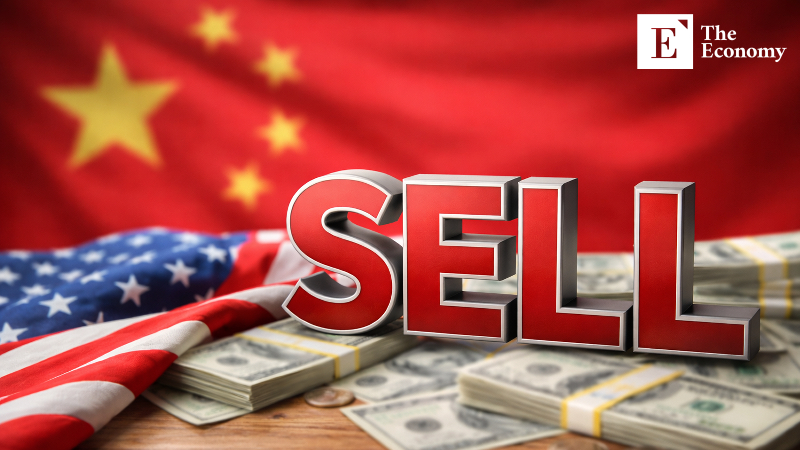
China is undertaking a fundamental overhaul of its asset portfolio. It has been selling off large amounts of U.S. Treasuries, where risks have grown amid rising debt burdens and concerns over erosion of central bank independence, while ramping up gold reserves to record levels to strengthen its grip on strategic resources. Against this backdrop, the yuan has continued to hold firm against the dollar.
China’s Move to Cut U.S. Treasury Holdings
According to the financial investment industry on the 29th, China has been steadily reducing its holdings of U.S. Treasuries. U.S. Treasury data show that as of November last year, China’s Treasury holdings stood at $682.6 billion, the lowest level since September 2008, when holdings totaled $618.2 billion. The figure is also about 10.2% lower than China’s Treasury holdings at the end of January last year, when Donald Trump took office, which stood at $760.8 billion. As a result, China’s share of total U.S. Treasury holdings has fallen to around 2%.
The primary reason behind China’s pullback is widely seen as concerns over U.S. debt. As of early this month, U.S. federal government debt totaled roughly $38.6 trillion, having swelled as annual spending continued to exceed revenues and deficits were financed through heavy Treasury issuance. According to the Congressional Budget Office (CBO), the net interest cost the federal government must bear on its debt currently amounts to 3.2% of U.S. GDP, and is projected to rise to 5.4% over the next 30 years.
Concerns over the independence of the U.S. central bank may also have influenced China’s portfolio shift. The Trump administration has continued to attack Federal Reserve Chair Jerome Powell, who is set to step down in May, raising questions about the Fed’s independence. In a video released on the 11th, Powell revealed that he had received a grand jury subpoena and threats of criminal charges from the Department of Justice on the 9th, tied to his congressional testimony last June regarding renovations to the Fed’s headquarters. In addition, President Trump is pressing for the removal of Fed Governor Lisa Cook and is currently engaged in legal battles over the issue.
China Stockpiles Gold Instead of U.S. Treasuries
After cutting the share of U.S. Treasuries in its portfolio, China has moved aggressively to buy gold. Data from the State Administration of Foreign Exchange show that China’s official gold reserves stood at about 74.15 million troy ounces, or roughly 2,306 metric tons, at the end of last year. The People’s Bank of China (PBOC) has purchased gold for 14 consecutive months through this month, and gold’s share of total foreign exchange reserves surpassed 9% for the first time in November. Australia and New Zealand Banking Group (ANZ), however, estimates that China’s actual gold holdings are roughly double the official figure, at around 5,500 tons. If that estimate is accurate, China would rank second globally, behind the United States with about 8,000 tons.
China has steadily expanded its gold reserves since the outbreak of the Russia–Ukraine war in 2022. In June last year, it announced the “Action Plan for High-Quality Development of the Gold Industry (2025–2027),” pledging to increase gold and silver production by 5% by 2027. Since then, reports of newly discovered gold mines have followed across the country. In November, the Ministry of Natural Resources said it had identified a gold deposit exceeding 1,000 tons in the Liaodong area of Liaoning Province—the first such find in China. Late last year, the Yantai city government in Shandong Province announced it had secured what it called Asia’s largest subsea gold deposit, with estimated reserves of about 3,900 tons, off the northern coast of Laizhou. Around the same time, Chinese mining company CMOC acquired three mines in Brazil for $1 billion.
Adding to the push, Shanghai authorities on the 22nd unveiled an “18-point action plan” aimed at strengthening links among futures, spot, and derivatives markets for non-ferrous metals and deepening market activity. The move reflects Beijing’s ambition to position Shanghai as a global hub for commodity price discovery. China is expected to continue stockpiling strategic resources—including gold, copper, and rare earths—to secure greater pricing power in global commodity markets. Ultimately, China’s sustained buildup of gold reserves underscores a long-term strategy to move away from dollar dominance and toward control over strategic resources.
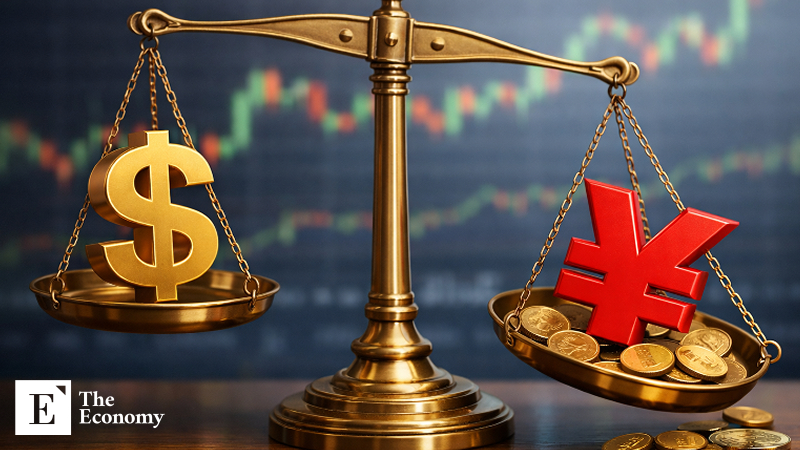
Dollar–Yuan Exchange Rate Slopes Lower
Against this backdrop, the dollar and the yuan have entered a broader phase of realignment. The yuan slipped below the psychologically important level of 7 per dollar late last year. In step with that move, the People’s Bank of China (PBOC) began setting the daily dollar–yuan fixing in the 6 range. As of the 29th, the fixing stood at 6.9771. This is widely read as a signal that the PBOC is effectively tolerating a stronger yuan. The daily fixing, set each morning by the central bank, serves as an official reference rate around which onshore yuan trading is allowed to fluctuate within a defined band.
The yuan’s strength is largely attributed to the U.S. rate-cut cycle. Dongfang Jincheng, a Chinese asset manager, said that since May last year Chinese banks have recorded a surplus in agency foreign-exchange settlements, indicating that Chinese residents are repatriating overseas dollar assets and converting them into yuan. Assets that had moved offshore during the period of high U.S. interest rates are now returning to China as U.S. rates fall, the firm said.
Others point to a recovery in market confidence in China’s economy. Beijing’s monetary easing and stimulus measures are seen as drawing foreign inflows. Bloomberg noted that better-than-expected readings in China’s manufacturing purchasing managers’ index boosted expectations for an economic rebound and sparked yuan buying. Goldman Sachs also said the yuan remains undervalued relative to market expectations and, given China’s solid economic fundamentals and current-account surplus, is among the currencies most likely to see further appreciation.
By contrast, the dollar has been trending lower. The dollar index (DXY), which measures the greenback against a basket of six major currencies, fell to 95.76 on the 27th, its lowest level in nearly four years. President Trump welcomed the weaker dollar, saying he thought it was “very good” and that the dollar was “doing very well.” He added that China and Japan had continued efforts to weaken the yuan and the yen, calling that unfair. In effect, the current combination of a stronger yuan and a weaker dollar aligns with what Trump has long favored.
Trump’s preference for a weaker dollar reflects the boost it gives to U.S. manufacturing and export competitiveness. During last year’s tariff battles, he repeatedly said that while he liked a strong dollar, a weak dollar made the country “a lot more money.” Markets, however, are wary that dollar weakness may help exports and ease fiscal pressures while also risking a broader “sell America” dynamic in financial markets. One market professional warned that if a weak-dollar environment persists, U.S. competitiveness in goods markets may improve, but financial-market competitiveness could erode quickly. The United States’ core strengths ultimately lie in financial products and high-end manufacturing, the expert said, questioning whether it makes sense to cling to a weak dollar at the expense of financial-market strength.
As one of the youngest members of the team, Tyler Hansbrough is a rising star in financial journalism. His fresh perspective and analytical approach bring a modern edge to business reporting. Whether he’s covering stock market trends or dissecting corporate earnings, his sharp insights resonate with the new generation of investors.
Similar Post