China fails to celebrate record trade surplus as deflation warnings put economic resilience to the test

Authored On
Modified
Headline growth masks economic contraction
Overcapacity-driven “push exports” hit structural limits
Risk of global supply tightening and inflation reversal
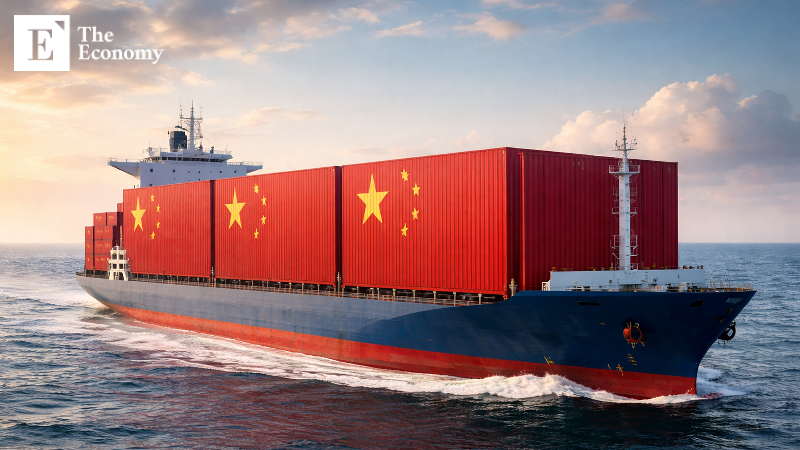
China is on track to post a record export performance after its trade surplus surged past $1 trillion last year. Advanced manufacturing sectors—including automobiles, batteries, and semiconductors—led exports and delivered clear headline growth. Beneath the surface, however, a combination of overproduction and weak domestic demand is simultaneously squeezing prices and corporate profitability. While Chinese authorities are concentrating policy efforts on boosting domestic consumption and stabilizing prices, markets are paying closer attention to the side effects of this unusual surplus, including the possibility that China-driven deflation could spread globally.
Corporate profits and wages under mounting pressure
China’s trade surplus last year is estimated to reach $1.2 trillion, the largest on record. Advanced products such as automobiles, batteries, and semiconductors accounted for 76% of the surplus, reflecting an increasingly sophisticated export mix. WSJ noted that “China achieved rapid headline growth by leaning on advanced sectors,” but added that “internally, the economy has entered the early stages of deflation, with corporate profits declining under the weight of overcapacity.” While export figures may appear to signal growth, domestic markets are seeing a dual trend of falling prices and deteriorating profitability.
This disconnect closely reflects the path China has taken over recent years, expanding its economic scale through debt-fueled growth. Massive infrastructure investment, local government–led industrial promotion, and concentrated funding for strategic industries sharply boosted production capacity, but real demand failed to keep pace. Once supply capacity crossed its limits, excess output could only be absorbed through price cuts. As a result, export volumes rose, but corporate margins and worker wages came under simultaneous pressure.
These dynamics are clearly visible on the ground. At Shanghai’s Qipu Road apparel wholesale market, more labor is now devoted to handling returns than to actual sales, and women’s apparel wholesalers say last year’s revenue may have fallen to roughly half of the previous year’s level. Merchants report cutting back on high-end consumption and relying on low-cost meals ordered through delivery apps to get by. Such hardship intensifies price-cutting competition at the wholesale level, pulling down factory gate prices and profit margins for manufacturers.
Against this backdrop, China’s unprecedented trade surplus has failed to function as a signal of economic recovery. A FactSet survey of 5,000 mainland-listed companies shows profit margins falling to their lowest level since the 2009 financial crisis. Declines are widespread, affecting not only traditional sectors such as steel and concrete but also growth industries including electric vehicles, robotics, and cosmetics. Fixed-asset investment also declined last year for the first time on record.
Experts widely describe the situation as a painful process in which an economy artificially inflated by debt is reverting toward its underlying size. Jeon Byeong-seo, head of the China Economy and Finance Research Institute, described China’s massive trade surplus as “roughly equivalent to the annual GDP of a mid-sized country,” while stressing that “the key point is that this is not a healthy surplus—it was created because imports collapsed amid weakened domestic consumption and investment.” The fact that price indicators and corporate profitability deteriorated even as the trade surplus hit record levels suggests that China’s core economic challenge has shifted from growth rates to its capacity to absorb demand.
Prices decline for 37 consecutive months
The Chinese government has moved aggressively to stimulate domestic demand. According to state-run Xinhua News Agency, the National Development and Reform Commission earlier this month pre-allocated $8.75 billion in ultra-long-term special government bonds to support local governments’ consumer replacement programs. The policy aims to boost short-term consumption by encouraging households to replace durable goods such as home appliances, digital devices, and automobiles, thereby defending industrial capacity utilization. By clearly placing domestic demand at the center of policy, authorities have signaled that they view the current downturn as a demand-side problem.
This shift reflects the disappointing pace of consumption recovery. In November, China’s retail sales growth slowed to 1.3% year on year, less than half the market expectation of 2.8%. Given that November includes Singles’ Day, China’s largest shopping festival, the figures point to severely weakened consumer sentiment. Subsidy-based efforts to lift prices have already failed once. Last year alone, the government deployed $42 billion in consumption support—double the previous year’s level—yet prices for home appliances and consumer goods continued to fall.
As weak consumption persists, the gap between production and demand has widened further. Data from the National Bureau of Statistics show that China’s producer price index (PPI) fell 2.1% year on year at the end of last year, marking 37 consecutive months of decline. Although the drop was slightly narrower than September’s -2.3%, it was insufficient to relieve accumulated price pressures across industry. Over the same period, industrial profits fell 5.5%, sharply reversing gains recorded in the prior two months. Production held steady or expanded, but demand absorption failed to keep pace, rapidly eroding profitability.
Efforts to offload excess output abroad are also hitting limits. China’s export price index, which had been declining since 2022, turned positive in June last year with a 0.5% year-on-year increase, the first in 25 months. In dollar terms, export prices rose by about 1.5% over the same period. This is widely seen as a signal that price collapse has merely paused. In fact, by August last year, China’s export prices remained roughly 17% below the 2022 average, indicating that global markets are reaching the limits of their ability to absorb unlimited volumes of low-priced Chinese goods.
Some observers have drawn parallels to the Great Depression of the 1930s in the United States, citing similarities such as sustained production capacity without corresponding consumption and investment, leading to repeated price declines and profit erosion. Forecasts that China’s economic growth will slow markedly this year amid property sector weakness and sluggish consumption fit this narrative. In a report earlier this month, the Bank of Korea’s Beijing office projected that “China’s economy will grow in the mid-4% range despite government policy support.”
Global fallout from short-term cost savings
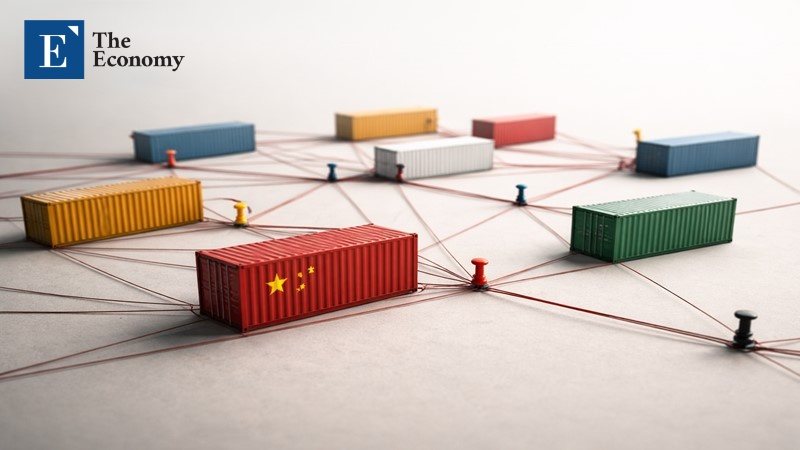
A larger concern is that the impact of China-driven deflation is beginning to spread worldwide. Despite deflationary pressure at home, Chinese industries have exported massive volumes of intermediate goods—such as steel, aluminum, solar panels, and electric vehicle batteries—at ultra-low prices. Overproduced goods flooded global supply chains, undermining the foundational strength of local manufacturing in many countries. Late last year, the U.S. manufacturing purchasing managers’ index (PMI) fell to 48, with S&P Global attributing the decline in part to “China’s low-price offensive.”
Manufacturing sectors in countries heavily dependent on intermediate goods have also taken a hit. In Vietnam, Thailand, and Indonesia, factory operating costs fell by about 20% due to plunging prices for steel and semiconductor components, but profitability worsened as selling prices dropped even more sharply. Germany’s automotive industry, meanwhile, saw production line utilization fall to an estimated 75% despite lower battery costs, as imports of Chinese-made vehicles surged. China’s low-cost supply has thus delivered short-term cost relief while simultaneously threatening the long-term viability of industries worldwide.
China’s domestic slowdown has also spread globally through commodity markets. Last year, China’s demand for raw materials fell 25% compared with pre-pandemic 2020 levels, driving synchronized declines in prices for copper, aluminum, oil, and iron ore. As a result, GDP growth in major mineral exporters such as Australia, Brazil, and Chile fell by about 2 percentage points, while Russia saw its currency depreciate roughly 15% amid weaker energy exports. In South Africa, mining unemployment exceeded 30%, pushing the sector into crisis territory. Commodity price volatility pushed energy costs higher, lifting air freight rates by more than 40% and contributing to a 5.1% contraction in global trade volumes.
China’s leadership appears to share these concerns and has begun rolling out countermeasures. The core strategy is to curb disorderly price-cutting competition and guide an orderly adjustment of excess capacity. Plans under consideration include slowing the pace of new investment in certain industries, phasing out inefficient facilities, and tightening regulations against selling below cost. Whether these measures can effectively improve global pricing structures and supply dynamics remains uncertain. If China’s manufacturing profit base weakens sharply in the short term, production cuts could also trigger a reversal in global inflation trends—an outcome policymakers cannot ignore.
Similar Post