Oil Slides 5% on U.S.–Iran Dialogue Signals, Clash Scenario Priced Out First

Authored On
Modified
“Serious talks underway” signal eases tensions
Break from $130-a-barrel outlook
Attention fixed on the “flashpoint” Strait of Hormuz
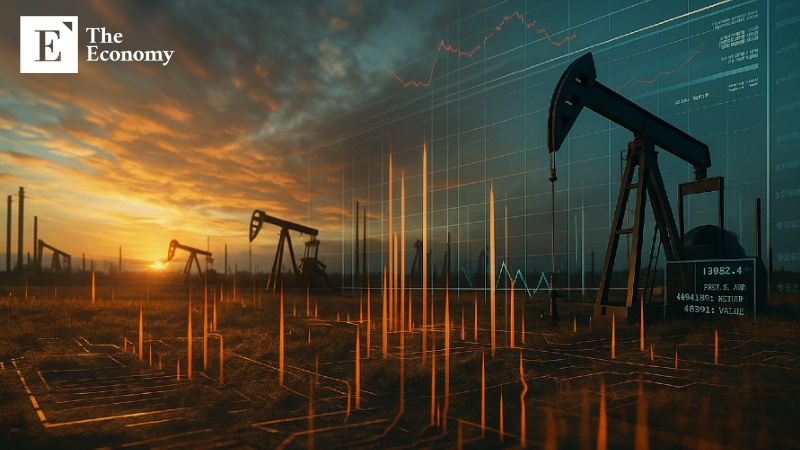
International oil prices fell about 5% in a single day, entering a rapid correction phase. The immediate trigger was the prospect of renewed nuclear-related talks between the United States and Iran. As leaders on both sides signaled a willingness to engage, the perceived risk of military confrontation diminished, sharply reducing the Middle East geopolitical premium that had been priced into crude. A stronger dollar and forecasts for milder weather added to the downside pressure, amplifying the decline.
January’s drivers of oil gains weaken simultaneously
On the 2nd, March-delivery West Texas Intermediate (WTI) futures on the New York Mercantile Exchange settled at $61.70 a barrel, down $3.51, or 5.3%, from the previous session. April Brent crude futures fell $3.40, or 4.9%, to close at $65.92 on ICE. Reuters noted that easing Middle East geopolitical risks, combined with a strong dollar and milder weather forecasts, intensified downward pressure on prices. Late-winter temperature outlooks pointing to warmer-than-usual conditions have sharply reduced demand for heating and power-generation diesel, it added.
Markets pointed to shifting signals between Washington and Tehran as the key driver of the selloff. As perceptions spread that the likelihood of a military clash in the region had receded, the geopolitical risk premium that had accumulated in prices was unwound in short order. Iran’s state-run Fars News Agency reported the previous day that President Masoud Pezeshkian had instructed officials to begin nuclear-related talks with the United States. President Donald Trump also told reporters that the U.S. was “in serious talks” with Iran, reinforcing expectations of a diplomatic thaw.
Analysts highlighted that the factors supporting oil prices throughout January weakened all at once. As extreme cold linked to the polar vortex and Middle East tensions both faded, market focus shifted back toward supply and inventories. Global energy broker PVM said the geopolitical and weather factors that had driven WTI up 14% and Brent up 16% last month were receding, leaving crude increasingly sensitive to production, stock levels, and producer policy. It added that OPEC+’s agreement to hold output steady in March should be interpreted in the context of these changing conditions.
Supply disruptions in Iran would still be a shock
The most extreme scenario previously discussed in oil markets was that a U.S. strike on Iran could send WTI soaring to around $130 a barrel. Oxford Economics modeled such outcomes by estimating the scale of potential supply disruptions. Iran is the world’s sixth-largest oil producer, pumping about 3.2 million barrels a day as of late last year, with exports of roughly 1.5 million barrels a day. Any disruption to production or exports due to military conflict would therefore have an immediate impact on global markets.
Other financial institutions offered varied projections. Citigroup said that if a U.S.–Iran conflict halted Iranian exports entirely, Brent could rise to $71 a barrel in the second quarter. Goldman Sachs warned that potential damage to Iranian production facilities must be considered, estimating that a reduction of 1 million barrels a day could lift prices by about $20 a barrel. These scenarios assume that other producers would be unable to offset Iranian supply losses quickly.
Markets have been most sensitive to risks surrounding the Strait of Hormuz, which handles about 20% of global oil consumption. Iran sits along the strait’s northern shore, giving it effective leverage over the passage. Nigel Green, chief executive of global financial advisory firm deVere Group, advised that oil traders should prepare for the possibility that the strait could become a strategic chokepoint capable of paralyzing global supply. The U.S. Congressional Research Service has likewise warned that prolonged closures or disruptions would have major consequences for both supply and prices.
Reflecting these risks, oil prices have shown heightened volatility. Over January, crude surged roughly 10%, producing a whipsaw market. Dubai crude rose 9.9% from $60.32 a barrel at the start of the month to $66.34 by month-end. Brent climbed 16.3% to $70.71, while WTI advanced 14.1% to $65.42. The $130-a-barrel scenario functioned as an upside assumption regarded as a realistic risk in an already volatile market.
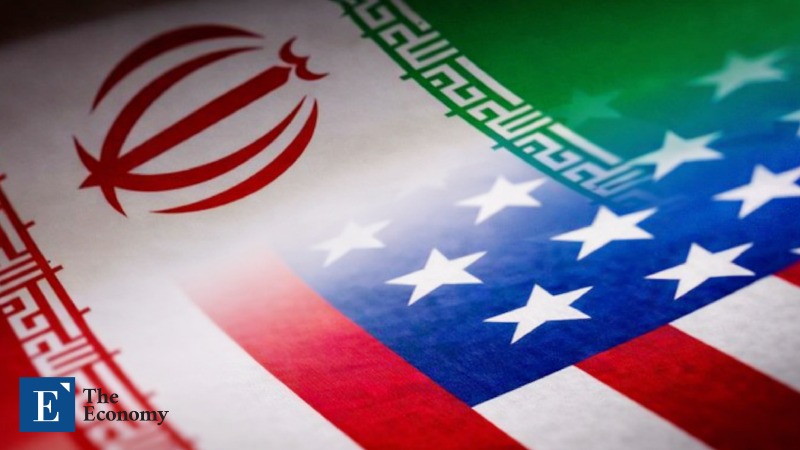
A war of nerves over the world’s busiest energy corridor
Until just two days earlier, Iran had stoked market anxiety by announcing plans for large-scale live-fire naval drills in the Strait of Hormuz. The move coincided with the deployment of a sizable U.S. naval presence in the region, including the aircraft carrier Abraham Lincoln, sharply raising military tensions. The drills were slated to occur amid ongoing anti-government protests in Iran and at a moment when the possibility of U.S. military involvement was being openly discussed. Markets closely watched both the risk of a direct clash and the symbolic and practical significance of the strait.
The United States responded swiftly. U.S. Central Command said in a statement that while it recognized Iran’s right to operate professionally in international airspace and waters, “dangerous and unprofessional behavior near U.S., allied, or commercial vessels could lead to miscalculation, escalation, and instability.” It added that it would not tolerate risky actions such as ambiguous low-altitude flights, high-speed vessel approaches on collision courses, or weapons targeting that could endanger U.S. personnel, ships, or aircraft. The message was widely read as a warning against actions that could trigger actual conflict.
Tensions eased abruptly after Iran’s Islamic Revolutionary Guard Corps Navy suddenly canceled the planned Strait of Hormuz drills. On the 1st, an Iranian government official said the exercises had never been formally confirmed, denying earlier reports, and stressed that safe and free navigation through the strait is important not only to Iran but also to neighboring countries. On the same day, Iranian diplomatic officials sought to deflect responsibility for heightened tensions, arguing that the military presence of external powers has instead been exacerbating instability around the waterway.
Similar Post