[U.S.–China Rivalry] “The Next Arena Is Financial Hegemony”: Confident of Victory in the Trade War, China Targets Reserve Currency Status Through De-dollarization

Siobhán Delaney is a Dublin-based writer for The Economy, focusing on culture, education, and international affairs. With a background in media and communication from University College Dublin, she contributes to cross-regional coverage and translation-based commentary. Her work emphasizes clarity and balance, especially in contexts shaped by cultural difference and policy translation.
Authored On
Modified
China Signals Determination to Break from the Dollar and Build a New Reserve Currency
Xi Jinping Calls for a “Strong Currency,” Urges Elevation of the Renminbi to Reserve Status
U.S. Counters by Pressing Allies to Adopt the Dollar as an Official Currency
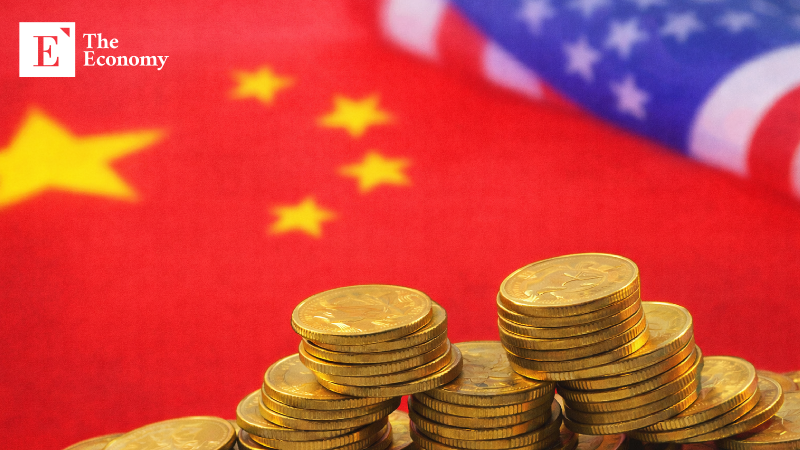
The debate over “de-dollarization,” aimed at reducing dependence on the U.S. dollar, has emerged as a core policy agenda in China. If tariffs and quotas once defined the primary battleground of U.S.–China rivalry, the front line has now shifted to capital flows and monetary policy. Having consolidated manufacturing competitiveness in the real economy and entrenched dominance over strategic assets such as rare earths, China is now seeking to seize the initiative in a financial confrontation. The United States, for its part, is reviewing defensive options to protect the dollar-based settlement system, signaling that bilateral tensions have entered a decisive phase centered on financial power.
From an Unwarranted Dollar to the Renminbi, Acceleration of Dollar Exit
According to a March 3 analysis by the South China Morning Post of the China National Knowledge Infrastructure (CNKI), China’s largest academic database, the number of papers addressing de-dollarization between 2023 and 2025 more than doubled compared with the previous three-year period. This surge is widely interpreted as a reaction within Chinese academia to the freezing of Russia’s foreign exchange reserves totaling $300 billion following the outbreak of the Russia–Ukraine war in 2022, which underscored the risks of the “weaponization of finance.” In fact, roughly half of all de-dollarization-related research during the period was published in 2023 alone.
Geopolitical instability intensified further after Donald Trump returned to the presidency, marked by a series of shocks including the launch of a global trade war in April 2025, the January 2026 abduction of Venezuelan President Nicolás Maduro and U.S. claims over oil resources, and attempts to purchase Greenland, a Danish territory, accompanied by tariff threats against European allies opposing the move. As global uncertainty escalated following Trump’s return, China appears to have opted for preemptive action rather than waiting for U.S.-led decoupling. The strategy is to reduce reliance on the United States before Washington can sever China from global economic networks.
Over recent years, China has already demonstrated the resilience of its manufacturing base and export-driven structure amid trade frictions with the United States. Despite high tariffs and technology restrictions, China’s share of global exports has remained stable, while its control over supply chains spanning intermediate and finished goods has strengthened. Dominance in strategic minerals, including rare earths, has further reinforced Beijing’s confidence. Control over refining and processing capabilities, coupled with export restrictions, has delivered immediate spillover effects across global industries, including those in the United States. Through this experience, China appears to have concluded that the risk of a trade war escalating into a threat to regime stability is limited.
Expansion of Cross-Border Settlements via Digital Renminbi, Growing Influence in Global Gold Markets
Against this backdrop, China has actively pursued measures such as reducing holdings of U.S. Treasuries, strengthening cooperation with emerging markets, and calling for reforms to international economic and financial governance. China’s proprietary settlement network, the Cross-Border Interbank Payment System (CIPS), was in use across 190 countries as of the end of last year, while renminbi-denominated liquefied natural gas trading on the Shanghai exchange continues to expand. Since 2024, China has also launched projects with countries including Saudi Arabia and Thailand using central bank digital currencies for cross-border payments. The People’s Bank of China emphasizes that CBDC systems can reduce settlement times to mere seconds and cut transfer costs by up to 50%.
Last month, China introduced interest payments on digital renminbi holdings, becoming the first country to do so among central bank digital currencies. The annual rate is set at 0.05%, with quarterly payments scheduled to begin next month. Digital renminbi trials are currently underway in 17 of China’s 31 provinces, municipalities, and autonomous regions. As of the end of last year, cumulative transaction volume had reached approximately $2.96 trillion, with personal digital wallets exceeding 230 million and corporate wallets surpassing 19 million. These efforts align with President Xi Jinping’s vision of a “strong renminbi.” In a 2024 address to senior regional officials, Xi called for building a robust currency capable of widespread use across international trade, investment, and foreign exchange markets, ultimately attaining reserve currency status.
China has simultaneously sought to underpin monetary credibility through aggressive positioning in global gold markets. Over recent years, Beijing has quietly accumulated large volumes of gold exceeding officially disclosed figures, seeking to fracture the dollar-centric fiat currency system. By reducing the dollar share of foreign exchange reserves while sharply increasing gold holdings, China aims to anchor the renminbi’s value to tangible assets and bolster confidence. Large-scale gold purchases have enhanced the stability of China’s reserve composition, while strategic interventions exploiting market volatility have expanded its influence over price formation. Indeed, gold prices, which had surged at a frenetic pace, suffered their steepest drop in more than 12 years on the 30th of last month as Chinese investors moved to lock in profits.
U.S. Counters with Expanded Dollarization
At the same time, China is amplifying the international role of the renminbi through expanded trade settlement usage and greater openness in its bond markets. Countries including Kenya and Angola have already converted portions of their dollar-denominated debt into renminbi, while the share of renminbi in global trade finance has climbed from below 2% to 7.6% in just three years, the second-highest share after the dollar.
Data from China’s State Administration of Foreign Exchange show that foreign banks’ holdings of fixed-income assets have more than doubled over the past decade to $1.5 trillion, with renminbi assets accounting for $484 billion. According to the Bank for International Settlements, renminbi-denominated lending to emerging markets increased by approximately $373 billion between 2020 and 2024. Indonesia and Slovenia are preparing to issue renminbi-denominated bonds, while Kazakhstan last month issued $3.3 billion in such bonds at a yield of 3.3%. The BIS has identified 2022 as a turning point marking the shift from a dollar- and euro-centric credit structure toward a renminbi-based system.
Beyond this, China is leveraging cohesion among the Global South to challenge the petrodollar system. Under the petrodollar framework, Saudi Arabia sells oil exclusively in dollars while the United States provides security guarantees, sustaining a dollar-centric international financial order. Dollar-denominated commodity transactions have enabled Middle Eastern nations to reinvest export proceeds into dollar assets, reinforcing U.S. monetary dominance. However, as China has emerged as the world’s largest oil importer, the growing influence of “petroyuan” transactions is eroding the petrodollar’s grip. As the Global South expands in scale, dollar hegemony is weakening in tandem.
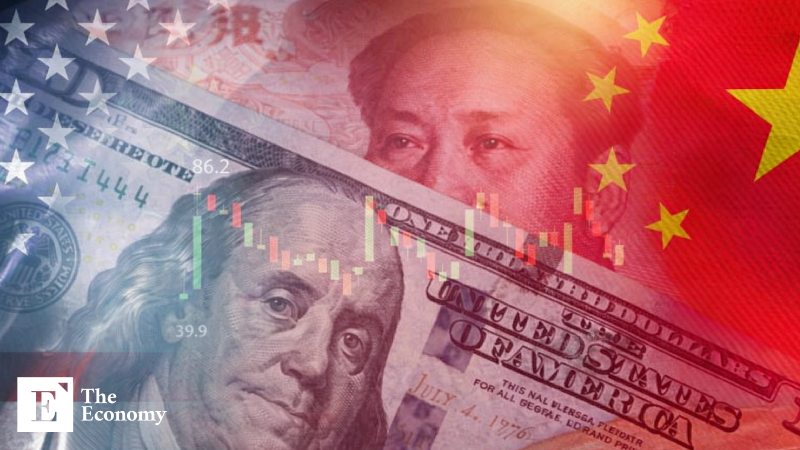
China’s de-dollarization push has forced the United States into a defensive posture. According to the Financial Times, the Trump administration discussed plans late last year to promote “dollarization” by encouraging other countries to adopt the dollar as a primary or official currency. Nations identified as potential candidates include Argentina, Lebanon, Pakistan, Ghana, Türkiye, Egypt, Venezuela, and Zimbabwe—countries vulnerable to currency crises. As China seeks to reduce dollar usage in trade with emerging markets, Washington aims to reinforce dominance by expanding a “dollar alliance” within the global financial system.
Siobhán Delaney is a Dublin-based writer for The Economy, focusing on culture, education, and international affairs. With a background in media and communication from University College Dublin, she contributes to cross-regional coverage and translation-based commentary. Her work emphasizes clarity and balance, especially in contexts shaped by cultural difference and policy translation.
Similar Post