“Repeated Detection of Unsettling Signals in Bilateral Cooperation” OpenAI–Nvidia Power Struggle Ahead of a $100 Billion Mega Deal

Siobhán Delaney is a Dublin-based writer for The Economy, focusing on culture, education, and international affairs. With a background in media and communication from University College Dublin, she contributes to cross-regional coverage and translation-based commentary. Her work emphasizes clarity and balance, especially in contexts shaped by cultural difference and policy translation.
Authored On
Modified
Nvidia Signals Possible Reduction in OpenAI Investment
OpenAI Reviews Adoption of Rival Products
Tensions Emerge as Both Sides Seek Alternative Partners
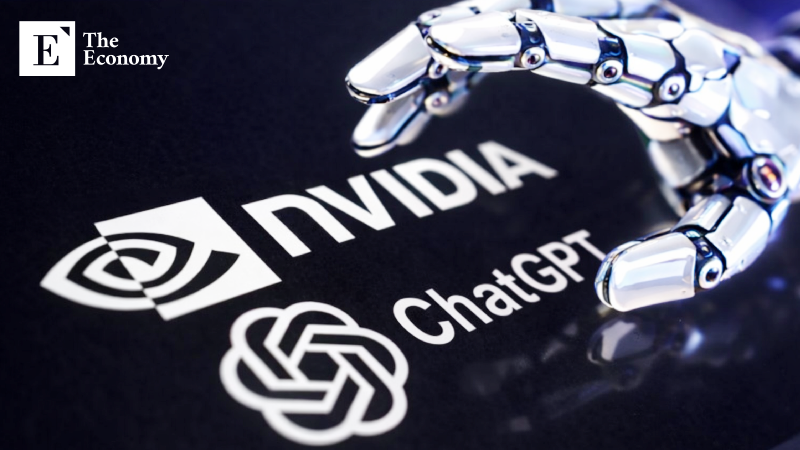
The long-standing alliance between OpenAI, the developer of ChatGPT, and Nvidia, the leader in the AI semiconductor market, is beginning to show subtle cracks. Following reports that Nvidia may defer or scale back its promised investment in OpenAI, new coverage has emerged indicating that OpenAI is actively exploring alternatives to Nvidia’s AI chips. The developments suggest that both companies have entered a psychological battle, leveraging their respective market dominance to secure negotiating leverage.
OpenAI Searches for ‘Inference Chips,’ Citing Performance Limits of Nvidia Hardware
According to Reuters on the 4th (local time), OpenAI has been searching since last year for AI chips to replace Nvidia’s GPUs for inference workloads in ChatGPT. The move reflects OpenAI’s assessment that Nvidia chips face limitations in the inference process, where AI models such as ChatGPT generate responses to user queries. OpenAI has reportedly flagged shortcomings in Nvidia GPUs’ ability to deliver rapid responses in certain scenarios, including software development and communication between AI systems and other software. As a result, OpenAI is said to have concluded that roughly 10% of its future inference computing demand will require AI chips from vendors other than Nvidia.
OpenAI has consistently signaled its intention to reduce both software and hardware dependence on GPUs. In particular, after Google and Broadcom jointly demonstrated that their tensor processing units delivered superior efficiency compared with GPUs in powering Google’s AI services last year, OpenAI began accelerating efforts to diversify its AI infrastructure beyond a GPU-centric model. Last month, OpenAI signed a supply agreement with Cerebras, a company that produces wafer-scale chips enabling computation and data storage on a single processor. OpenAI later entered talks with semiconductor firm Groq, but those discussions were halted after Nvidia and Groq signed a licensing agreement in December.
Industry analysts attribute the emerging rift to a broader shift in AI market priorities from training to inference. Nvidia GPUs have been well suited for large-scale data processing required during model training. However, in real-world inference deployment, the critical factor is delivering user responses with minimal latency, an area where OpenAI reportedly believes Nvidia products fall short.
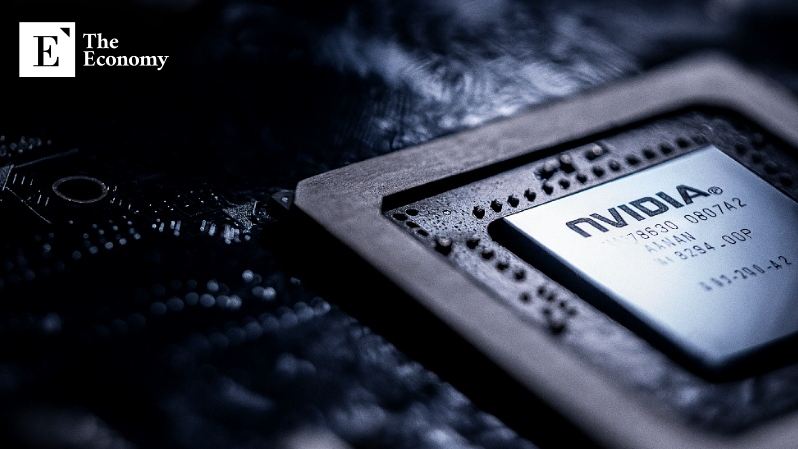
Partnership Announced but Stalled, Nvidia’s Internal Skepticism Emerges
Nvidia’s stance toward OpenAI has also evolved. On the 2nd, Nvidia CEO Jensen Huang stated that the company’s investment in OpenAI would be smaller than initially announced. Last year, the two companies formed a strategic partnership to build next-generation AI infrastructure with a minimum capacity of 10 gigawatts. The plan included a proposal for Nvidia to invest up to $100 billion in OpenAI, but Huang’s remarks signaled that the actual investment would fall below that figure.
At the time, the partnership drew significant attention as an alliance between two companies driving the “AI revolution.” However, critics raised concerns that the structure amounted to a circular transaction, with Nvidia’s investment ultimately being used to purchase Nvidia chips, potentially inflating the AI sector into a bubble. Although the two companies signed a letter of intent and pledged to finalize details within weeks, progress has reportedly stalled. Nvidia CFO Colette Kress stated at a conference in early December, more than two months after the announcement, that the infrastructure investment agreement with OpenAI had yet to be finalized. Nvidia had earlier disclosed in its November earnings report that there was no guarantee the OpenAI investment would materialize.
Beneath the surface, the tension reflects both companies expanding cooperation with each other’s competitors. Nvidia has been increasing investments in key AI partners using its ample cash reserves, including a $10 billion investment in Anthropic in November. Investors reportedly hope Nvidia will reduce its dependence on a narrow customer base concentrated among a few hyperscalers. OpenAI, meanwhile, has been strengthening partnerships with multiple semiconductor firms beyond Nvidia. In June last year, it announced collaboration with AMD on next-generation AI chips, followed by a custom AI chip partnership with Broadcom.
OpenAI’s Planned Fourth-Quarter IPO and the Fate of the AI Investment Boom
Publicly, both sides deny any rift. Huang reaffirmed Nvidia’s commitment to large-scale investment in OpenAI, dismissing reports of an investment freeze as “nonsense.” OpenAI CEO Sam Altman also downplayed reports that the company was seeking Nvidia chip alternatives, stating that “Nvidia makes the world’s best AI chips” and that OpenAI hopes to remain a “gigantic customer” for a long time.
Nevertheless, industry observers largely agree that a power struggle has begun. Nvidia’s signals of reduced investment appear to have prompted OpenAI to broadcast that it is exploring alternatives, a message interpreted as an attempt to gain leverage in future negotiations over chip supply priority and pricing. In essence, as Nvidia reassesses pricing, terms, and risk exposure tied to OpenAI, OpenAI is countering by signaling that it has other options.
Nvidia is keenly aware of OpenAI’s financial vulnerability and urgent hardware needs. OpenAI must deploy enormous computing resources to advance its large language models, with Nvidia accelerators functioning as a core asset in that process. At the same time, OpenAI is believed to be formulating a strategy to pressure Nvidia by leveraging its status as an industry leader. A formal reduction in Nvidia chip usage or a move toward in-house chip design or third-party partnerships could force Nvidia to absorb a hit to profitability.
Experts point to OpenAI’s planned initial public offering as the decisive factor shaping the alliance’s future. OpenAI is reportedly targeting an IPO in April and has begun informal discussions with Wall Street banks while recruiting new finance executives. A successful listing would give OpenAI greater control over capital raising and fundamentally reshape the negotiating landscape, providing clearer exit visibility for existing investors. Conversely, a disappointing IPO could sharply constrain OpenAI’s funding options.
Fortune magazine has argued that the success or failure of OpenAI’s IPO will determine the durability of the AI investment boom. On January 30, Fortune wrote that “if OpenAI successfully completes an IPO while burning billions of dollars and projecting losses through 2030, it would signal that the AI boom still has room to run,” adding that “if investors hesitate, or if the IPO stalls or is repriced, it would indicate that the market has finally reached its limits.” Some observers have even suggested that failure to go public could leave OpenAI vulnerable to acquisition by another company as early as 2027.
Siobhán Delaney is a Dublin-based writer for The Economy, focusing on culture, education, and international affairs. With a background in media and communication from University College Dublin, she contributes to cross-regional coverage and translation-based commentary. Her work emphasizes clarity and balance, especially in contexts shaped by cultural difference and policy translation.
Similar Post