Ford Ends Joint Venture With SK On, Keeps the Plants? Ford’s Exit Strategy Shifts Focus to ESS

Niamh O’Sullivan is an Irish editor at The Economy, covering global policy and institutional reform. She studied sociology and European studies at Trinity College Dublin, and brings experience in translating academic and policy content for wider audiences. Her editorial work supports multilingual accessibility and contextual reporting.
Authored On
Modified
Despite a $6 billion loss, Ford opts to “keep the factories”
Battery strategy shifts away from EVs
Technology partnerships pivot toward CATL and BYD
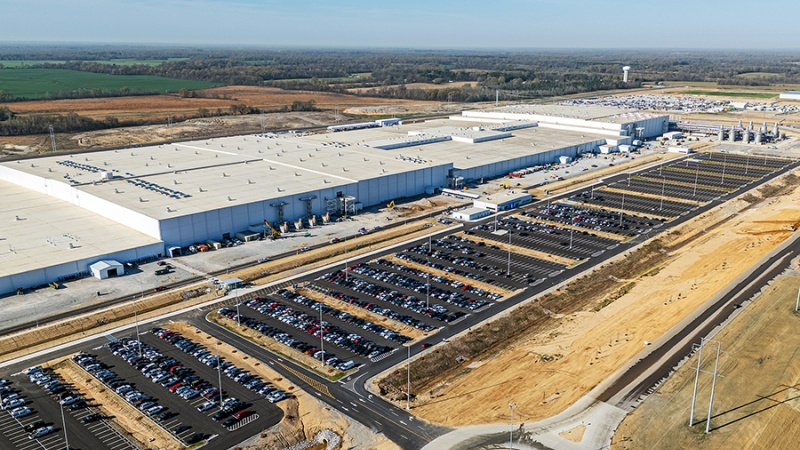
Ford has decided to dissolve its joint venture with SK On and assume all assets and liabilities of two existing battery plants previously owned by the venture. With this move, the alliance between the two companies formally enters its final stage after four years. Ford absorbed significant losses in the process of unwinding the joint venture’s corporate structure and, amid changing market conditions, shifted the center of its battery strategy from electric vehicles to energy storage systems (ESS). Combined with parallel efforts to pursue new partnerships, Ford’s latest moves are emerging as a barometer for potential changes in the global battery cooperation landscape.
Comprehensive Review of Battery Expansion Plans
Ford agreed to take over all assets and liabilities of two battery plants in Kentucky that were owned by the joint venture BlueOval SK during the dissolution process. As a result, Ford will bear losses totaling $6 billion. Ford plans to invest an additional $2 billion in the Kentucky facilities and repurpose them for battery-based ESS operations under its newly launched subsidiary, Ford Energy.
Ford and SK On had established the joint venture in 2022, each investing $5.7 billion, with plans to build three EV-dedicated battery plants in Tennessee and Kentucky to supply batteries exclusively to Ford. However, cracks began to appear in the partnership in the first half of last year. At the time, Ford announced it would reassess its entire North American battery expansion plan, citing slowing EV demand and mounting investment burdens. BlueOval SK subsequently adjusted plant launch schedules and the pace of capital deployment.
In December of the same year, the two companies finalized a decision to independently own and operate BlueOval SK’s production facilities. SK On took over the Tennessee plant nearing completion, while Ford assumed control of Kentucky Plant 1, which began operations in August last year. Construction of Kentucky Plant 2 was halted and the project was wound down. Ford returned its 50% stake in the joint venture to SK On through a capital reduction, leaving SK On with 100% ownership. The joint venture was restructured into a wholly owned subsidiary holding only the Tennessee plant.
SK On plans to operate the Tennessee plant independently and expand orders from North American customers. Although it lost Ford as a client, the company had secured a $10 billion EV battery order from Nissan in March last year, leaving room for a rebound. Observers also note that disentangling from Ford may reduce long-term financial strain, as heavy investment in North American production had weighed on SK On’s group-wide balance sheet. Once the joint venture liquidation is complete, roughly $4 billion in debt tied to the Kentucky facilities, including U.S. government loans, will be transferred to Ford, potentially reducing SK On’s net debt by around $10 billion.
Strategic Flexibility and Redefining Plant Roles
Industry watchers are focusing on the strategic shift behind Ford’s decision. Rather than exiting the battery business altogether, Ford chose to redefine the role of its facilities in response to areas of growing power demand. By pivoting toward the high-growth ESS market during a temporary slowdown in EV demand, Ford aims to increase strategic flexibility and avoid locking battery capacity solely into vehicle applications. This marks a departure from a battery strategy built exclusively around expanding EV sales.
At the same time, Ford decided to write off its entire $19.5 billion investment in EV operations and began reviewing a possible production halt for its flagship F-150 Lightning pickup. With the Trump administration ending the $7,500 per-vehicle EV purchase subsidy in late September last year, the assumption that EV sales growth alone could sustain profitability came under further strain. Redirecting battery production capacity toward alternative demand sources emerged as a practical option.
Ford’s execution plan centers on expanding ESS battery output and converting product specifications. The company announced plans to retrofit BlueOval SK’s Kentucky Plant 1 into a lithium iron phosphate (LFP) battery production line, with all output supplied to Ford Energy. Lisa Drake, Ford’s vice president for EV systems, said during the restructuring announcement that the company would combine previously acquired technology licenses with more than a century of large-scale manufacturing experience, underscoring that the ESS transition involves reconfiguring production technology, supply chains, and sales channels as a single integrated package.
Market conditions also support the shift toward ESS. In the U.S., ESS projects increasingly involve power generators, utilities, and large consumers, with cumulative installations entering a mature phase. As commercial and industrial projects aimed at grid stabilization and peak management expand, long-term investment in ESS infrastructure has increased. Against this backdrop, Ford’s decision to directly link battery production facilities to the power infrastructure market is seen as a move to improve demand predictability. Industry consensus holds that ESS offers the potential to improve both utilization rates and profitability.
Abandoning NCM, Doubling Down on LFP
Ford also opted to deepen cooperation with Chinese battery manufacturers. On the 1st, the Financial Times reported that Ford was leaving the door open to partnerships with Chinese companies, noting that the use of Chinese technology in EVs and batteries was becoming increasingly evident. Xiaomi, mentioned as a potential partner, denied the report, but the FT highlighted Ford’s broader efforts to bridge cost and technology gaps through cooperation with Chinese firms. The analysis suggested that Ford was winding down its partnership with a Korean company while turning its attention to China as a new collaborator.
Cost considerations played a decisive role. Ford’s EV division recorded a $5.1 billion loss in 2024 alone, with cumulative losses of $3.6 billion from January through September last year. These figures underscored the difficulty of maintaining existing EV battery procurement structures. As EV price competitiveness weakened, battery cost reduction became a central condition for strategic realignment, making Chinese battery technology one of the most realistic alternatives.
In this process, Ford expanded cooperation with CATL. CATL’s LFP batteries are up to 30% cheaper than the nickel-cobalt-manganese (NCM) batteries favored by Korean manufacturers. Ford plans to begin mass production of CATL-developed LFP batteries as early as this year at the BlueOval Battery Park under construction in Michigan. Kentucky Plant 1 is also scheduled to begin ESS battery production based on CATL technology next year. In addition, Ford is reportedly reviewing plans to adopt BYD batteries for hybrid vehicles produced for the European market.
The expansion of cooperation with Chinese firms has, however, triggered political and institutional controversy. On the 27th of last month, John Moolenaar, chairman of the U.S. House Select Committee on Strategic Competition with China, sent a letter to Ford CEO Jim Farley demanding clarification on the nature of the partnership with CATL, technology control, and royalty structures. The U.S. Department of Defense had previously designated CATL as a company suspected of ties to the Chinese military. While Ford maintains that its cooperation with CATL complies with existing laws, the political risks surrounding Chinese battery technology remain an unresolved strategic challenge.
Niamh O’Sullivan is an Irish editor at The Economy, covering global policy and institutional reform. She studied sociology and European studies at Trinity College Dublin, and brings experience in translating academic and policy content for wider audiences. Her editorial work supports multilingual accessibility and contextual reporting.
Similar Post