Trump Backs Takayichi Ahead of Japan’s General Election, Laying Groundwork for Containing China

Siobhán Delaney is a Dublin-based writer for The Economy, focusing on culture, education, and international affairs. With a background in media and communication from University College Dublin, she contributes to cross-regional coverage and translation-based commentary. Her work emphasizes clarity and balance, especially in contexts shaped by cultural difference and policy translation.
Authored On
Modified
Takayichi, the ‘Female Abe,’ Seeks the Revival of Japan’s Self-Defense Forces
Trump’s Rare Intervention in an East Asian Ally’s Election
Boost to Policies Envisioning Japan as a ‘War-Capable State’
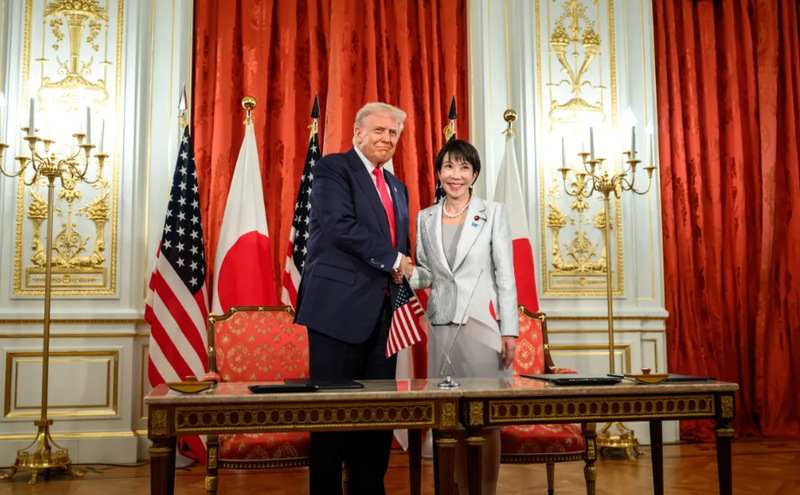
U.S. President Donald Trump has openly declared his support for Japanese Prime Minister Sanae Takayichi just two days before Japan’s general election. Trump has previously intervened in elections in parts of Latin America and Eastern Europe, but only in cases involving leaders with whom he maintained close personal ties. His involvement in an East Asian country’s election is highly unusual, and analysts view the move as a strategic calculation aimed at accelerating the Indo-Pacific strategy centered on containing China.
Trump “Takayichi Is a Wise Leader”
On the 5th (local time), President Trump posted on his social media platform Truth Social, referencing Japan’s House of Representatives election, stating, “Prime Minister Takayichi is a strong and wise leader who has already proven that she truly loves her country.” He added, “I look forward to welcoming Prime Minister Takayichi to the White House,” noting that “when I visited Japan, my entire delegation and I were deeply impressed by her.”
Trump went on to say, “The United States and Japan have worked closely not only on national security but also on trade agreements that greatly benefit both countries,” adding that “Prime Minister Takayichi and her coalition (the LDP–Japan Innovation Party ruling alliance) deserve high praise.” He continued, “As President of the United States, I am honored to express my complete and full support for her and the highly respected coalition she represents,” concluding, “She will not disappoint the Japanese people.”
Trump even went so far as to mention plans to hold a U.S.–Japan summit with Prime Minister Takayichi at the White House on the 19th of next month, using language that effectively treated her reelection as a foregone conclusion. Trump and Takayichi had previously coordinated a March meeting to reaffirm the U.S.–Japan alliance ahead of Trump’s planned April visit to China, but no specific date had ever been disclosed.
Expanding the Role of the U.S.–Japan Alliance Amid China’s Military Buildup
This endorsement came immediately after President Trump held a phone call with Chinese President Xi Jinping. From the perspective of the U.S. conservative establishment, a Takayichi administration is viewed as the optimal partner for making Washington’s East Asia strategy tangible. In particular, Japan’s internal debate over constitutional revision and its trajectory toward increased defense spending align closely with Trump’s long-advocated doctrine of “burden-sharing” in security. Beneath this lies a realist calculation aimed at restraining China’s expansion.
According to a report released last month by the Australian Institute of International Affairs (AIIA), the United States has designated the Indo-Pacific as the central arena of geopolitical competition and regards alliances in the region as the bedrock of security and prosperity. This is interpreted as a firm resolve to maintain a balance of power in response to China’s rapid military expansion and to prevent any single country from establishing regional hegemony. In this context, Japan is seen as a country with an exceptionally high willingness to cooperate with the United States, while posing the lowest risk of entanglement in conflicts Washington does not wish to be drawn into. Japan thus remains an irreplaceable “linchpin” in the U.S. Indo-Pacific strategy.
For Japan as well, strengthening the alliance with the United States is indispensable for achieving greater military autonomy and counterbalancing China. Since taking office, Prime Minister Takayichi has built personal trust with President Trump, responding swiftly to requests for revisions to security-related laws and alliance modernization, while also moving rapidly to conclude and implement tariff agreements. While domestic opposition exists, the prevailing strategic judgment is that Japan cannot afford to sacrifice the core value of the U.S.–Japan alliance by acting contrary to Washington’s “America First” policies.
Indeed, as military tensions among the United States, Russia, and China have intensified, Washington has already concentrated aircraft carrier strike groups around the Japanese archipelago, pushing military cohesion to its highest level. Last month, the United States and Japan reaffirmed their commitment to strengthening deterrence and explored expanded defense cooperation. According to the U.S. Department of Defense, Defense Secretary Pete Hegseth met with Japanese Defense Minister Shinjiro Koizumi in Washington, D.C. on the 15th of last month to confirm the role the U.S.–Japan alliance must play in the Indo-Pacific region. The two sides agreed to conduct advanced joint exercises in the Nansei Islands, stretching from Kyushu toward waters near Taiwan, and to deepen cooperation in defense equipment and technology. They also decided to pursue discussions to significantly expand production of SM-3 Block IIA interceptor missiles.
Single-Party Majority Threshold, Dawn of the ‘Strong Prime Minister’ Era
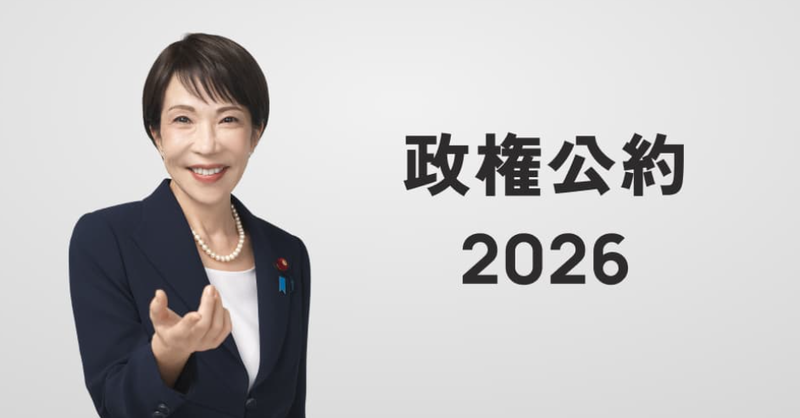
Experts believe President Trump’s public endorsement is likely to have a substantial impact on the election outcome. While Trump has previously expressed support for right-wing candidates in several Latin American presidential races, his overt intervention in the election of Japan—a G7 member and East Asian nation—is regarded as highly exceptional. Prime Minister Takayichi, often described as the “female Shinzo Abe” due to her hardline conservative stance, advocates constitutional revision to transform Japan into a “normal state,” capable of waging war. In this context, Trump’s endorsement is seen as lending additional momentum to Japan’s trajectory.
The Liberal Democratic Party (LDP), led by Takayichi, is aiming to secure a single-party majority in the general election on the 8th, without relying on its coalition partner, the Japan Innovation Party. Late-stage election analyses suggest the party may even surpass this goal, potentially securing a two-thirds majority together with the Innovation Party—enough to initiate constitutional amendments. According to Japanese media projections, the ruling LDP, which previously held 198 seats, is expected to surpass the 233-seat majority threshold and could win more than 300 seats, while the Japan Innovation Party, which previously held 34 seats, is projected to secure around 30 seats.
The LDP and the Innovation Party had already agreed to pursue constitutional revision when they formed their coalition last October, and also committed to reviewing institutional arrangements necessary to submit amendment proposals. Article 9 of Japan’s Constitution, the core of the so-called “peace constitution,” enshrines the permanent renunciation of war and the use of force, prohibits the maintenance of land, sea, and air forces, and denies the right of belligerency. Proposed emergency provisions would allow the government to issue emergency ordinances with the same force as law, without parliamentary approval, in cases of large-scale disasters, armed attacks, or widespread infectious disease outbreaks.
In Japan’s political history, securing a single-party majority grants the prime minister formidable legislative authority and near-exclusive control over the political agenda. In the past, the LDP maintained stability through factional bargaining, but the erosion of its parliamentary dominance has left factional politics insufficient to sustain governance. Should the Takayichi administration secure a majority, the absence of internal checks on conservative drift would likely allow policies to advance with considerable momentum. A political environment capable of responding swiftly to U.S. strategic demands is precisely the condition President Trump seeks.
Siobhán Delaney is a Dublin-based writer for The Economy, focusing on culture, education, and international affairs. With a background in media and communication from University College Dublin, she contributes to cross-regional coverage and translation-based commentary. Her work emphasizes clarity and balance, especially in contexts shaped by cultural difference and policy translation.
Similar Post
















