U.S. Treasury: “China’s Disorderly Trading Is Distorting Gold Prices,” Recurrent China-Driven Volatility Amid Gold Rally

Anne-Marie Nicholson is a fearless reporter covering international markets and global economic shifts. With a background in international relations, she provides a nuanced perspective on trade policies, foreign investments, and macroeconomic developments. Quick-witted and always on the move, she delivers hard-hitting stories that connect the dots in an ever-changing global economy.
Authored On
Modified
Bessent “China’s Trading Disorder, a Speculative Peak”
From Chinese “Auntie” Investors to the State, Broad-Based Gold Buying
China-Origin Capital Distorting Market Mechanisms
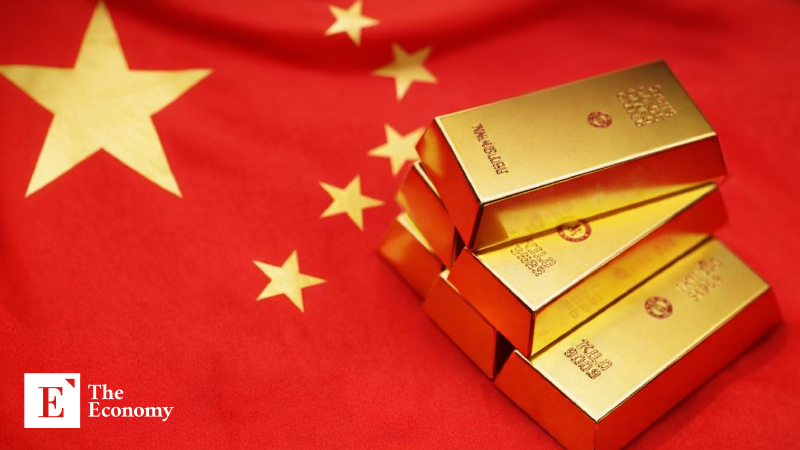
As sharp surges and abrupt sell-offs repeatedly unfold in the global gold market, gold-buying activity by Chinese retail investors and the Chinese government has emerged as a key driver of price volatility. Large-scale capital inflows from China are increasingly being assessed as disrupting supply-demand dynamics across global commodity markets. This trend simultaneously exposes internal imbalances within China’s financial system and amplifies doubts over China’s capacity for responsible stewardship in global markets.
Chinese Households Turn to Gold Over Real Estate and Equities
On the 8th local time, Treasury Secretary Scott Bessent appeared on Fox News’ Sunday Morning Futures, stating that “recent movements in gold prices reflect a situation in China that has slipped somewhat out of control,” adding that “conditions have deteriorated to the point where Chinese authorities felt compelled to tighten margin requirements, and current price action clearly resembles a classic case of speculative overheating.”
Bessent’s remarks followed the abrupt cooling of the international gold market late last month. After repeatedly setting record highs amid a sustained rally, gold prices suddenly reversed sharply, injecting confusion into markets. The Wall Street Journal attributed this gold-buying frenzy in part to China’s so-called “Auntie” investors. With property markets mired in a downturn, deposit rates depressed, and equity markets highly volatile, middle-aged female investors have increasingly turned to gold as a safe-haven asset, amplifying volatility across global metals markets.
According to data from the World Gold Council, Chinese retail investors purchased 432 metric tons of gold last year, a 28% increase from the previous year and equivalent to one-third of total global gold bar and coin purchases. The Wall Street Journal reported that Rose Tian, a 43-year-old teacher in Beijing, visited a major precious metals market ahead of the Lunar New Year holiday to browse gold bracelets, necklaces, and rings. Citing a gradual decline in her income in recent years and rising global uncertainty amid geopolitical tensions, she said she chose gold as a means of preserving wealth despite its volatility.
Investment channels are also diversifying. As purchases of gold exchange-traded funds via mobile platforms such as WeChat and Alipay have become increasingly accessible, Chinese gold ETFs recorded record inflows last year, while gold futures trading volume on the Shanghai Futures Exchange reached an annual high. At the same time, demand for physical gold—including bullion bars and one-gram “gold beans”—has remained steady.
China’s Government Quietly Stockpiling Gold
Beyond retail investors, the Chinese government itself has been rapidly expanding its gold reserves. According to data released by the People’s Bank of China, the central bank’s gold holdings stood at 74.19 million ounces at the end of last month, up 40,000 ounces from the previous month’s 74.15 million ounces. The PBOC had previously purchased gold for 18 consecutive months through April 2024 and has since resumed buying for another 15 straight months from November of that year through last month. Even so, as of the end of last December, China’s gold reserves accounted for only about 9.7% of total foreign exchange reserves including gold, well below the global average of 15%. This gap has fueled market suspicions that China is concealing the true scale of its gold accumulation.
In fact, official disclosures from the State Administration of Foreign Exchange under the PBOC show that China reported total gold purchases of just 25 metric tons last year. Monthly figures were similarly limited, with 2.2 tons in June and 1.9 tons each in July and August, averaging roughly 2 tons per month. However, Société Générale estimates—based on large-bar transaction flows and other market data—suggest China’s actual purchases may be as much as ten times higher, reaching up to 250 tons. Bruce Ikemizu, chairman of the Japan Gold Market Association, remarked that “no one trusts China-related official figures,” estimating China’s true gold holdings at around 5,000 tons.
China is also moving to encourage friendly developing countries to store their gold within China. According to Bloomberg, China has been consulting with neighboring Asian nations to secure custodial arrangements for foreign government gold reserves held domestically. The mechanism by which central banks acquire gold through foreign exchange reserves is not fundamentally different from other gold investors, relying on intermediaries registered with the London Bullion Market Association and the New York Mercantile Exchange.
China established the Shanghai Gold Exchange in 2002 under the leadership of the PBOC and, in pursuit of becoming a global gold trading hub, launched the SGE International Board in 2014 to allow foreign institutional participation. China’s ambition to become a global gold custodian is centered on the SGE. The PBOC is encouraging countries with close ties to China to purchase gold and store it within Chinese borders, specifically in vaults linked to the SGE International Board. Cambodia is reportedly among the countries that recently agreed to store newly purchased gold—settled in yuan—at SGE vault facilities.
Global Gold Market Excessively Exposed to the China Variable
China’s gold-buying surge is heightening uncertainty across global gold markets. Continued purchases by Chinese investors and the state risk distorting market mechanisms and weakening autonomous price discovery. Even the mere possibility that state-level buying could halt or reverse into selling is enough to trigger severe market convulsions. Indeed, last month’s gold crash—the sharpest in 12 and a half years—was also sparked by China. According to Bloomberg, spot gold settled at $4,894.23 per troy ounce on the 30th of last month, plunging 9.0% from the previous session. This marked the largest single-day decline since April 15, 2013, when prices fell 9.1%, itself the steepest drop in 33 years dating back to February 1980.
From $280 in 2002, gold prices traced a gradual upward trajectory until reaching a then-record $1,920.30 in September 2011, before collapsing 9.1% within a year and a half to $1,348. In 2013, safe-haven demand intensified amid Europe’s sovereign debt crisis, while speculation mounted that China would engage in a currency war with the dollar over global reserve currency status, driving gold prices to extreme levels. However, when China’s first-quarter economic growth was announced at 7.7%—well below market expectations of 8%—on April 15 of that year, a sharp correction ensued. Slowing growth across China and other emerging economies dampened expectations for central bank gold purchases, further weighing on prices.
After falling to $1,348 in April 2013, gold prices continued to set lower lows, ending 2013 at $1,201, 2014 at $1,184, and 2015 at $1,061. Prices then resumed an upward climb from 2016, reaching $2,000 by 2023, before surging explosively in 2024 with a 27% gain and in 2025 with a 64% increase. Even this year, prices had risen 25% before the latest crash.
The gold rally since 2024 has been driven by large-scale purchases by central banks, strong inflows into ETFs, three consecutive interest rate cuts by the Federal Reserve, and escalating geopolitical tensions. Last year, investors piled into what was dubbed the “debasement trade,” accelerating the rally. Concerns over erosion of the Fed’s independence, the Trump administration’s tariff war, and successive geopolitical flashpoints involving Iran and Venezuela undermined confidence in dollar-denominated assets.
In recent weeks, the gold rally took on an almost frenzied pace. Bloomberg pointed to massive inflows of speculative Chinese capital as the force propelling this acceleration. Reports that President Donald Trump had nominated Kevin Warsh, a figure regarded as hawkish, as the next Fed chair prompted Chinese investors to rush for profit-taking, triggering the crash. Commenting on the fallout, Alexander Campbell, former head of commodities at Bridgewater Associates, said, “China sold, and now we are dealing with the aftermath.” Experts broadly agree that China must demonstrate management capabilities commensurate with its stature as a responsible actor in global markets. Allowing unchecked internal capital frenzies and exposing institutional vulnerabilities risks further eroding global market confidence in China.
Anne-Marie Nicholson is a fearless reporter covering international markets and global economic shifts. With a background in international relations, she provides a nuanced perspective on trade policies, foreign investments, and macroeconomic developments. Quick-witted and always on the move, she delivers hard-hitting stories that connect the dots in an ever-changing global economy.
Similar Post