China Blocks Offshore Yuan-Linked Tokens, Casting Doubt on Hong Kong’s ‘Coin Hub’ Ambitions

Authored On
Modified
Setback to Currency-Based Expansion of ‘Coin Hub’ Strategy
Open Listings in Name, But a Gap Between Policy and Market Reality
A New Competitive Landscape Among Singapore, Hong Kong, and Dubai
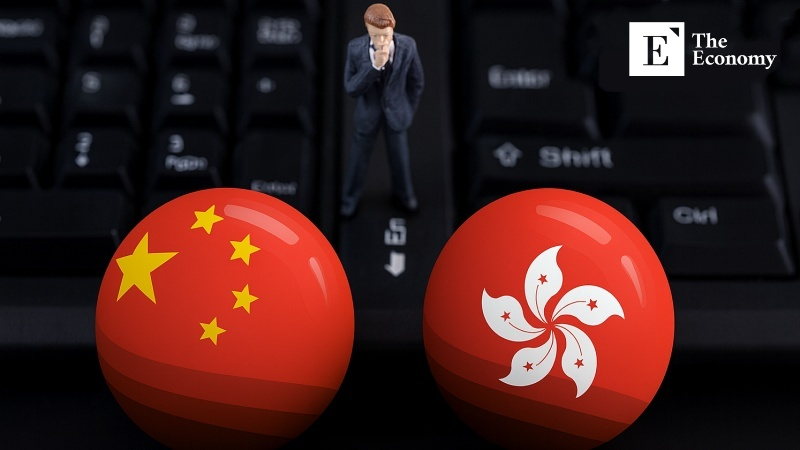
China’s sweeping ban on overseas digital token issuance by domestic companies and on offshore yuan-linked stablecoins has dealt a blow to Hong Kong’s long-standing ambition to position itself as a global “coin hub.” The strategy, which centered on building a global digital asset hub anchored by yuan-linked stablecoins, now risks losing its core monetary pillar. At the same time, the high bar for listings on Hong Kong exchanges and the parallel expansion of Dubai and Singapore through regulated derivatives markets and corporate clustering have further complicated the competitive dynamics among global financial hubs.
A Brake on Hong Kong’s Virtual Asset Policy
The People’s Bank of China announced in an official statement on the 7th that it would “comprehensively prohibit overseas digital token issuance by Chinese companies and the issuance of offshore yuan-linked stablecoins.” It added that the move was intended to “preemptively eliminate threats to monetary sovereignty.” In the wake of the decision, a number of Chinese firms, including Ant Group and JD.com, have suspended plans to issue stablecoins in the Hong Kong market. As recently as January, the central bank had reaffirmed its hardline stance on virtual assets, stating that it would “guard against a resurgence of speculative activity and crack down forcefully on illegal conduct related to cryptocurrencies.”
Beijing’s actions run directly counter to Hong Kong’s efforts to institutionalize a regulated stablecoin framework. To date, Hong Kong has granted licenses to 11 exchanges and approved 62 firms for trading, bringing segments of the virtual asset market within its regulatory perimeter. Beginning in March, authorities are set to start issuing official licenses to stablecoin issuers. While Hong Kong has indicated that it would allow fiat-linked stablecoins provided they meet reserve requirements, anti-money laundering (AML) standards, and investor protection safeguards, the outright prohibition of yuan-linked issuance has narrowed the scope of its currency diversification ambitions.
Even as tensions between China and Hong Kong mount, the global stablecoin market has continued to expand along a different trajectory. Research by market intelligence firm Artemis shows that as of the end of January, global stablecoin supply had surpassed $300 billion, exceeding levels seen during the 2021 bull market. Payment volumes rose 137 percent year over year. Artemis attributed the growth to a sharp increase in business-to-business (B2B) transactions relative to peer-to-peer (P2P) transfers, noting that stablecoins, backed by price stability, are being used more widely in international trade and corporate settlement flows.
Interpretations of China’s policy shift on stablecoins are also emerging. Angela Ang, Asia-Pacific head of policy at blockchain analytics firm TRM Labs, said that “China’s stance has cooled markedly in recent months,” adding that “as the market focuses increasingly on models that function in practice, clouds are gathering over Hong Kong’s ‘coin hub’ blueprint.” With roughly 99 percent of stablecoins currently traded in the market pegged to the U.S. dollar, critics argue that Hong Kong’s currency diversification strategy is unlikely to gain meaningful traction. In the view of many market participants, the city’s coin hub strategy now faces simultaneous pressure on both currency selection and capital inflow dynamics.
Diverging Assessments of the Hub Strategy’s Effectiveness
The planned launch of official licenses for stablecoin issuers in March is already expected to face hurdles. While dozens of companies are reportedly preparing applications, initial approvals are likely to be limited. Detailed scrutiny will extend to issuance structures, liquidity management mechanisms, and internal control systems, as well as potential conflicts of interest between issuers and trading platforms. Although the regulatory framework provides a clear starting point, the path from application to approval emphasizes prudence over speed.
The approach also appears misaligned with other deregulatory measures. Hong Kong is moving to ease restrictions so that licensed virtual asset trading platforms can connect with overseas order books. Previously limited to viewing orders from Hong Kong investors, platforms may soon link with global investor flows. At the same time, authorities have proposed exempting newly issued tokens and Hong Kong Monetary Authority-licensed stablecoins from the 12-month track record requirement for listing on professional investor platforms. Despite these outward signals of enhanced liquidity and listing flexibility, the high threshold for issuance approval continues to dampen incentives for major global exchanges to enter the market.
From the perspective of market participants, the gap between regulatory possibility and practical feasibility has become more pronounced. While exchange-issued tokens are not explicitly banned, they are subject to strict conditions: they must not qualify as securities tokens; they must not involve direct dividend or interest structures tied to exchange revenues; and they must incorporate robust safeguards against market manipulation and conflicts of interest. In addition, clear separation—or strong firewalls—between the issuing entity and the exchange operator is required. Although the regulatory door remains technically open, the intensity of oversight effectively raises the barrier to entry.
Costs and timelines present further considerations. Securing a Hong Kong exchange license requires capital in the tens of millions of U.S. dollars, alongside continuous audit mechanisms, cybersecurity certifications, and board governance requirements. Additional due diligence may also arise during the process of opening bank accounts and entering into custodial agreements. As a result, market observers argue that despite its outward push for greater global liquidity access, Hong Kong has effectively adopted a tightly managed openness model across issuance, listing, and operational stages. With challenges surrounding currency selection and regulatory interpretation coming to the fore, the clarity of Hong Kong’s coin hub vision appears increasingly blurred.

A Regulatory Divide That Shapes Market Outcomes
Unlike Hong Kong, major financial hubs such as Dubai and Singapore have moved swiftly to refine regulatory frameworks before accelerating industry attraction and product expansion, thereby scaling market volume. The Dubai Multi Commodities Centre (DMCC) has established a dedicated “Crypto Centre” within the Jumeirah Lakes Towers free trade zone, the largest in the United Arab Emirates. Approximately 600 firms focused on decentralized finance (DeFi), Layer-2 solutions, over-the-counter (OTC) trading, and the metaverse are currently based there. The center offers integrated services spanning technology development, listing support, talent recruitment, and capital raising, with the long-term objective of expanding the ecosystem through corporate clustering.
The UAE’s regulatory architecture has evolved in parallel with industry development. Under Law No. 4 of 2022, the Virtual Assets Regulatory Authority (VARA) was established, and in the following year a licensing regime for Virtual Asset Service Providers (VASP) was formalized under VARA’s leadership. Sandeep Nailwal, co-founder of Polygon, noted that “Dubai’s tax competitiveness, English-language business environment, and ease of attracting global talent align strongly in favor of business,” adding that the Middle East’s geographic position facilitates service delivery across diverse regions. The combination of corporate clustering, regulatory design, and geographic advantage has translated into tangible market expansion.
Singapore, for its part, has chosen to integrate digital assets into its traditional financial infrastructure. In November last year, the Singapore Exchange (SGX) launched perpetual futures contracts on Bitcoin and Ethereum. As a traditional exchange regulated by the Monetary Authority of Singapore (MAS), SGX’s introduction of perpetual futures is widely viewed as exceptional. Given that more than 95 percent of global perpetual futures trading volume is conducted on unregulated offshore exchanges such as Binance and Bybit, SGX’s entry signals potential expansion into a regulated derivatives hub.
Hong Kong, meanwhile, has pursued a multi-layered policy approach encompassing exchange licensing, retail investor access, and approval of exchange-traded funds (ETFs). Yet analysts broadly contend that the city has achieved only limited progress in fostering industry clustering and expanding regulated derivatives infrastructure. During the same period, Dubai has consolidated roughly 600 firms under its VASP framework, while Singapore has entered a perpetual futures market averaging $187 billion in daily trading volume through a regulated national exchange. Ultimately, differences in regulatory design and prioritization appear to be shaping the trajectory of industry structure and market scale across competing financial hubs.
Similar Post