[China Semiconductors] CXMT Capacity Plateaued Under U.S. Curbs, Impact Contained by PC Demand and HBM Push

Authored On
Modified
EUV Procurement Bottlenecks Constrain Capacity Expansion
CXMT DRAM Output at Half the Level of SK Hynix
Medium- to Long-Term Technology Catch-Up Through HBM Entry

ChangXin Memory Technologies (CXMT), the DRAM manufacturer spearheading China’s indigenous memory drive, appears to have reached a production ceiling in the fourth quarter of last year, with capacity growth now facing structural constraints. While Beijing has accelerated efforts to localize semiconductor equipment in anticipation of tighter U.S. export controls, prevailing assessments suggest that restrictions on advanced chipmaking tools will materially limit new fab expansions. Yet the broader impact of sanctions may remain contained. Tightening supply-demand dynamics in the memory market have prompted global PC makers to review adoption of Chinese DRAM, and CXMT is also seeking entry into the high-bandwidth memory (HBM) segment on the back of robust domestic demand.
Semiconductor Equipment Upgrades Blocked by U.S. Sanctions
According to market research firm Omdia on Feb. 12, CXMT’s average monthly wafer output has reached approximately 240,000 units, marking its peak capacity level. The company’s DRAM production capacity currently stands at roughly half that of SK Hynix, the world’s second-largest player, and slightly over one-third of Samsung Electronics. On an annual basis last year, Samsung Electronics’ DRAM capacity totaled about 7.6 million wafers, compared with 5.97 million for SK Hynix and 3.6 million for Micron.
The principal constraint on CXMT’s expansion stems from tightened U.S. export controls. The Trump administration has broadened restrictions across equipment, components, and technology exports to China, effectively stalling CXMT’s scaling strategy. Advanced DRAM production requires extreme ultraviolet (EUV) lithography systems from the Netherlands-based ASML, yet escalating U.S.-China trade frictions have made access to such equipment increasingly difficult for Chinese firms.
Further headwinds may emerge as Washington moves to tighten restrictions on Chinese semiconductor equipment suppliers. Reuters reported last month that bipartisan lawmakers introduced legislation barring companies receiving subsidies under the CHIPS and Science Act from purchasing Chinese-made equipment for a decade.
Clouded Outlook for CXMT’s Short-Term Supply Expansion Strategy
As China’s sole mass producer of commodity DRAM, CXMT has doubled wafer output over recent years through aggressive capital expenditure, expanding its operational scale. By raising fab utilization rates and adding new production lines, the company significantly increased shipments of commodity products such as DDR4 and DDR5, deepening ties with domestic smartphone and PC manufacturers and eroding Korean suppliers’ share in the low-end segment.
However, if delays in acquiring U.S.-origin equipment prevent CXMT from increasing wafer input as planned, its near-term supply expansion strategy will effectively lose momentum. Industry observers suggest that portions of the originally targeted expansion may be scaled back or deferred. Such adjustments could alleviate what has been viewed as the most significant uncertainty in the global DRAM market: the risk of a surge in Chinese supply.
Despite recovering demand, global memory markets remain sensitive to supply variables. Concerns had mounted that while Samsung Electronics and SK Hynix shift production toward higher-margin products such as HBM and DDR5, additional volumes of low-priced commodity DRAM from Chinese manufacturers could destabilize pricing. A moderation in CXMT’s expansion pace may temper supply growth, reducing downward price pressure and easing market volatility.
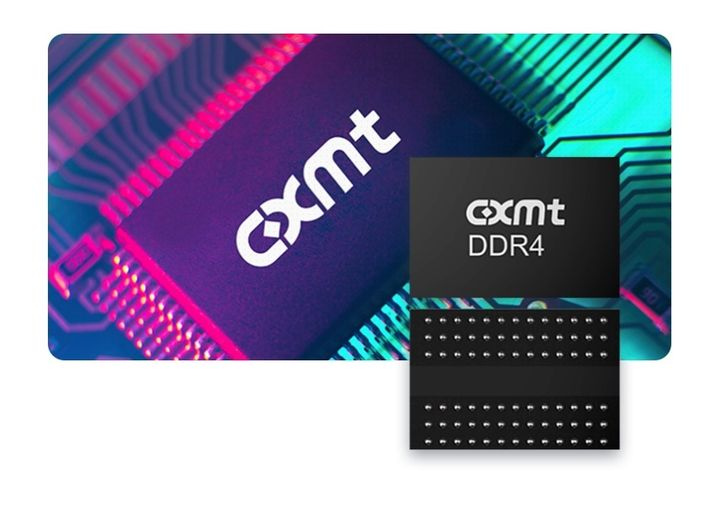
Global PC Makers Review CXMT DRAM as Alternative to Samsung and SK Hynix
A plateau in CXMT’s capacity does not imply market withdrawal. Amid persistent memory tightness, global PC vendors are actively assessing Chinese supply options. Bloomberg reported that HP and Dell, the world’s second- and third-largest PC manufacturers, have begun validating the quality of CXMT DRAM. The two companies are reportedly considering deploying CXMT memory in PCs sold outside the United States, taking into account tariff-related considerations. Taiwanese PC brands including Asus and Acer are also evaluating the use of Chinese memory chips. As AI-driven demand exhausts supply from Samsung Electronics and SK Hynix, manufacturers are turning to previously excluded Chinese alternatives.
Industry participants expect Chinese memory vendors to expand their footprint in lower-margin consumer segments such as legacy PC products. Backed by state support and collaboration with domestic PC manufacturers, Chinese firms have pursued aggressive product development. A sharp rise in legacy memory prices last year further underpinned industry growth. As a result, Chinese suppliers secured market share gains in both DRAM and NAND flash. According to Counterpoint Research, CXMT’s market share reached 5% last year, elevating it to fourth place globally behind Samsung Electronics, SK Hynix, and Micron.
Ambitions in Korea’s Stronghold: HBM
Amid an unprecedented market upcycle, CXMT has intensified technology upgrades, unveiling high-frequency product lines such as DDR5 and LPDDR5X. The company is also reportedly participating in HBM development, a domain long dominated by Korean firms. CXMT plans to expand monthly DRAM capacity to 300,000 wafers this year, allocating approximately 20%, or 60,000 wafers, to HBM3 production.
Korean companies commenced mass production of HBM3 in 2023. The technology gap between Korea and China, which stood at four years in earlier HBM generations, has narrowed to roughly three years in HBM3. Samsung Electronics and SK Hynix are each estimated to allocate around 150,000 wafers monthly for HBM DRAM production. Historically, HBM represented a segment where Chinese semiconductor technology lagged significantly, compared with NAND flash—where the gap is about one year—and DRAM, where it is estimated at two years. However, with China mobilizing national resources to advance AI semiconductors and HBM, the technology divide is narrowing at a faster pace.
According to Reuters, Huawei—constrained by U.S. export controls in procuring HBM—has consistently urged CXMT to accelerate supply. Since the second half of last year, CXMT has provided HBM3 samples to Huawei and other leading Chinese AI chip designers. The company aims to commence mass production this year and achieve HBM3E-level capabilities next year. An industry official noted that Huawei historically relied heavily on mobile DRAM, but surging HBM demand has prompted the company to press CXMT for expedited deliveries. The official added that wafer defect rates during initial HBM3 shipments may keep yields around 50%, though improvement trajectories warrant close monitoring.
Similar Post