Trump’s Pretext for a Venezuela Invasion: ‘Oil’ — The Real Objective: ‘Rare Earths’ — Resource War 2.0 Targeting Decoupling from China

Siobhán Delaney is a Dublin-based writer for The Economy, focusing on culture, education, and international affairs. With a background in media and communication from University College Dublin, she contributes to cross-regional coverage and translation-based commentary. Her work emphasizes clarity and balance, especially in contexts shaped by cultural difference and policy translation.
Authored On
Modified
The Counteroffensive of America’s ‘Resource Security’ Strategy
Vast Deposits of ‘Critical Minerals’ Drawing U.S. Attention
Targeting the Restructuring of China-Dominated Rare Earth Supply Chains
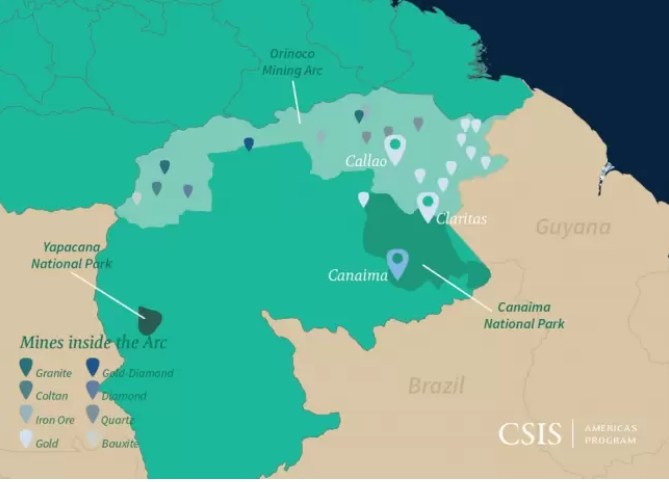
The United States has launched a strategic move that could reshape the global resource supply chain, capitalizing on the political vacuum created by regime change in Venezuela. Beyond oil and gold, Venezuela holds substantial reserves of coltan — a rare-earth-related mineral essential to smartphones and electronic devices. For Washington, where securing rare earth supplies has emerged as a national priority, Venezuela’s geographically proximate deposits represent a resource base too critical to ignore. A resource-driven geopolitical strategy combining the disruption of China’s dominance in rare earth supply chains with Venezuela’s economic reconstruction now appears to be taking shape.
U.S. Interior Secretary Meets Venezuelan Mining Executives
According to foreign media reports including Reuters on March 8 (local time), U.S. Interior Secretary Douglas James Burgum held a closed-door meeting with around 20 global mining industry executives on March 4 at a hotel in Caracas, Venezuela’s capital. Participants included Peabody Energy Chief Executive Jim Grech, Lundin Mining CEO Jack Lundin, Orion CMC co-founder Frank Pannell, Govind Friedland — son of mining magnate Robert Friedland — Paulson & Co. partner Marcelo Kim, and representatives from Trafigura.
During the meeting, Burgum emphasized, “We want to help turn Venezuela’s vast mineral resource potential into reality,” adding that cooperation between governments and corporations could create an economic foundation capable of attracting capital, technology, and skilled labor through strategic partnerships. He also noted that “recent international developments over the past week have once again underscored the strategic necessity of supply chain diversification,” adding that the mining industry likely recognizes Venezuela’s considerable appeal.
Laura Dogu, the U.S. ambassador to Venezuela, also conveyed a positive atmosphere within the Venezuelan government. “Anyone who speaks directly with María Corina Machado, who is leading the transitional government, will see how open Venezuela is today,” Dogu said. She added that while cooperation with Venezuela may not proceed entirely smoothly, “we are here to provide the support the mining industry needs.”
Bilateral relations moved quickly after Burgum’s visit. Two days after the secretary arrived in Venezuela, the United States and Venezuela agreed to restore diplomatic relations — the first such agreement in seven years. Former President Nicolás Maduro had severed diplomatic ties in 2019 after the United States recognized National Assembly leader Juan Guaidó as interim president following Maduro’s disputed reelection. During the visit, Burgum also met with interim President Delcy Rodríguez, where cooperation measures reportedly included expanding access for U.S. companies to Venezuelan mineral resources.a
Redirecting Coltan Flows Away from China
The U.S. government’s latest initiative is widely viewed as the most concrete and substantive economic cooperation measure proposed during the diplomatic normalization process following the removal of former President Maduro in January. The central objective is to weaken China’s resource influence across the “Arco Minero” mining belt in southern Venezuela. President Donald Trump emphasized immediately after U.S. intervention that Washington would “restore the oil rights of American companies,” yet policy analysts in Washington increasingly believe the true focus lies in securing strategic minerals — including rare earth elements essential to artificial intelligence, semiconductors, and defense industries.
Until recently, key minerals produced in Venezuela — including coltan and tungsten — often reached China through various regulatory bypass routes. Last week, Colombian military forces seized a shipment of six tons of metal bars initially declared as tin; subsequent investigation revealed that the cargo was actually a strategic mineral composite destined for China.
Rare earth elements cannot be used industrially immediately after extraction. Raw ore must undergo complex processing steps that remove impurities, separate individual elements, and refine them before conversion into metals or alloys, or into permanent magnets such as neodymium-iron-boron (NdFeB). Only after these processes can they be incorporated into advanced industries including electric vehicle motors, wind turbines, smartphone components, semiconductor and display manufacturing equipment, and military electronic systems.
In the rare earth supply chain, refining, separation, and smelting — often described as the “midstream processing bottleneck” — represent the decisive chokepoint. China has long exerted influence over global supply flows not only through its mining output but also through its overwhelming processing capacity, which allows Beijing to shape the pace, pricing, and volume of supply. Under this structure, even when rare earth ores are mined in the United States, Australia, or Africa, supply frequently remains constrained unless the materials pass through Chinese or China-linked processing networks. Western advanced manufacturing sectors therefore face a persistent limitation: even if raw materials are diversified, the final refined materials still move through China.
Rising Interest in Venezuela’s Massive Rare Earth Potential
Against this backdrop, Venezuela’s mining sector offers Washington an opportunity both to counter China’s grip on rare earth resources and to align with the Trump administration’s foreign policy objective of rebuilding nations through resource investment. Within the administration, discussions are underway to expand mining investment while simultaneously rebuilding industrial infrastructure to accelerate Venezuela’s economic recovery. If large-scale capital inflows and employment generation emerge alongside mining development, the sector could evolve into a cornerstone industry supporting fiscal stability and foreign exchange reserves.
Venezuela’s mining competitiveness rests fundamentally on the scale of its reserves. Iron ore deposits alone are estimated at approximately 14.7 billion tons, ranking among the largest globally. Bauxite — the primary raw material used to produce aluminum — exceeds 300 million tons in reserves, reinforcing the country’s strategic potential as a hub for aerospace and automotive manufacturing supply chains. In addition, the “Mining Arc” region spanning Bolívar and Amazonas states produces large volumes of coltan and gold, key materials used in modern electronic devices. Coltan, composed of tantalum and niobium compounds, is indispensable for smartphones and electric vehicle batteries and is often referred to as “blue gold” because of its high industrial value. Venezuela’s gold production is estimated at roughly 40 to 50 tons annually, representing a critical revenue source supporting the national economy beyond the oil sector.
The United States Geological Survey (USGS) has long underscored the strategic importance of Venezuela’s mineral reserves, including nickel, copper, and coal, which it has listed among key critical minerals. Nickel and copper are metals experiencing rapidly expanding demand amid the global transition toward clean energy technologies. Nickel mines located in the country’s north-central region are believed to contain high-grade ore deposits, enhancing their competitiveness in global markets. As advanced economies accelerate supply chain diversification, Venezuela’s geographic location and resource base increasingly represent a significant diplomatic and economic variable.
Experts are particularly focused on rare earth elements and thorium deposits that have not yet undergone full-scale exploration. Geological assessments have repeatedly suggested that Venezuela’s highland regions may contain substantial rare earth reserves used in advanced semiconductors and military equipment. At the same time, thorium — regarded as a next-generation nuclear energy resource — has also been identified as a potential large-scale deposit, raising its strategic importance within the global energy industry. Should the actual scale of these undeveloped resources be confirmed, Venezuela may emerge not only as an oil powerhouse but also as a central pillar of the global critical minerals supply chain.
Siobhán Delaney is a Dublin-based writer for The Economy, focusing on culture, education, and international affairs. With a background in media and communication from University College Dublin, she contributes to cross-regional coverage and translation-based commentary. Her work emphasizes clarity and balance, especially in contexts shaped by cultural difference and policy translation.
Similar Post
















