"Open Hormuz and End the War First": Trump, Squeezed by Economic and Diplomatic Pressure, Faces New Negotiation Proposal

Authored On
Modified
U.S. economic risks mount as war drags on
Strains emerge in cooperation with European and Asian allies
Iran delivers proposal excluding nuclear program talks from initial negotiations
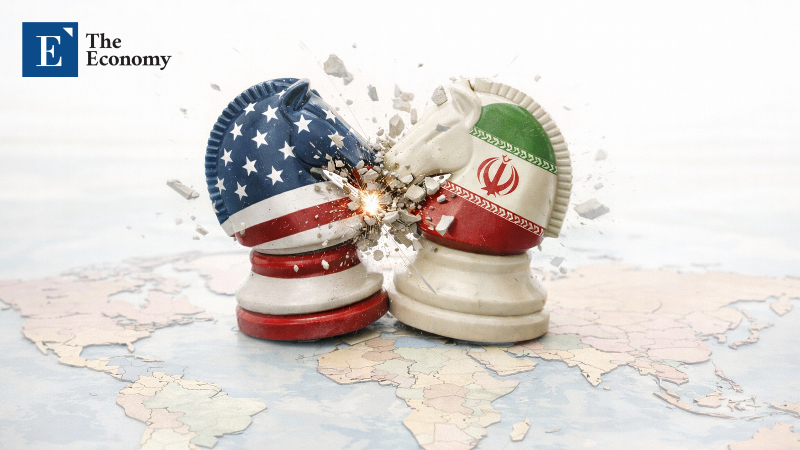
An assessment has emerged that U.S. President Donald Trump’s administration may once again sit down at the negotiating table with Iran. With Tehran proposing a new framework under which nuclear program negotiations would proceed in a separate phase, analysts say Trump may accept the offer in light of the economic and diplomatic risks surrounding the United States. If an end to the war between the two countries materializes under these terms, Washington is unlikely to achieve its fundamental objective of regime change in Iran.
Questions Over U.S. War Sustainability
On the 27th, Henry Ensher, former U.S. deputy assistant secretary of state, said in an interview with Arab private broadcaster Al Jazeera that “the top priority for the U.S. administration is the reopening of the Strait of Hormuz.” His assessment was that nuclear program issues would be categorized as a longer-term agenda item to be discussed on a separate timeline, while the normalization of the maritime trade route, whose economic fallout is immediate, would rise to the top of Washington’s priorities. Regarding concerns that the unconditional reopening of the Strait of Hormuz could be seen as a strategic victory for Iran, he said, “Given the damage currently being inflicted on the U.S. economy, accepting it will be an unavoidable choice for the U.S. government.”
Mohammad Bagher Ghalibaf, speaker of Iran’s parliament, recently expressed a similar view. In a post on X, formerly Twitter, he wrote that Iran holds decisive leverage over energy supply through the Strait of Hormuz, the Bab el-Mandeb Strait and key oil pipelines, while U.S. response options have effectively reached their limits. His point was that Washington has already exhausted most of its available cards, including releases from the Strategic Petroleum Reserve and demand-management measures. He also cited the surge in U.S. energy demand during the summer vacation season. “If they do not intend to cancel Americans’ vacations, they will have to bear the economic cost,” Ghalibaf said, adding that “if the U.S. wants its vacations guaranteed, it must place ‘summer vacation’ as an additional variable on the right side of the equation and calculate the price.”
Assessments that the U.S. war has failed to proceed according to “schedule” are now being raised across the international community. According to the Financial Times, German Chancellor Friedrich Merz said during a visit to a school in the Sauerland region of western Germany on the 28th that “the United States entered this war without any strategy and has no persuasive strategy in negotiations either.” He added that “Iran is responding either by negotiating very skillfully or by not negotiating at all,” and said “a country is being humiliated by Iran’s leadership.” He also voiced concern that the war is affecting global security and supply chains far beyond the Middle East.
Fractures in the U.S.-Led Alliance
The “diplomatic cost” the United States has incurred during the war is also cited as a factor intensifying pressure for a settlement. Traditional cooperation between the U.S. and its European and Asian allies has begun to fracture. Trump previously requested military support from allies in the Strait of Hormuz during the war. But major European and Asian countries drew clear lines against his demand. Britain effectively refused to join the conflict, saying there would be no troop deployment without a legal basis and a clear strategy, while Germany publicly rejected a request to dispatch naval forces, defining the conflict as outside the scope of the North Atlantic Treaty Organization.
France and Spain also effectively dismissed U.S. requests for support by restricting the use of bases and airspace for American operations. In the process, European political circles criticized Washington for launching the war without sufficient consultation with NATO allies, and in some countries, the perception spread that the United States was no longer an ally but a “threat.” South Korea and Australia also refused or took a passive stance toward requests to deploy forces to the Strait of Hormuz, effectively opting out, while Japan avoided military involvement, citing domestic opposition to dispatching the Self-Defense Forces.
The war’s enormous economic shock to Asia and Europe is another problem. Many Asian countries secure energy through the Strait of Hormuz, now blocked by the fallout from the war. The strait is a critical energy transport route through which 20% of the world’s crude oil and more than 20% of its natural gas pass. South Korea and Japan import large volumes of Middle Eastern energy transported through the Strait of Hormuz, while China also procures roughly half of its crude oil through the strait. Net energy importers such as Thailand, the Philippines and Singapore have likewise been pushed into crisis.
The European Union is also highly vulnerable to external shocks, relying on imports from outside the bloc for 58% of its total energy as of 2023. With the energy crisis triggered by Russia’s full-scale invasion of Ukraine in 2022 still not fully resolved, the current war has dealt a major blow to the EU’s energy supply chain. For European countries already struggling with fiscal constraints and limited room for government relief measures, this is a severe setback. The EU has already delivered a direct message to member states to minimize energy subsidies in order to prevent the current situation from escalating into a fiscal crisis.
Growing Prospects for a Negotiated End to the War
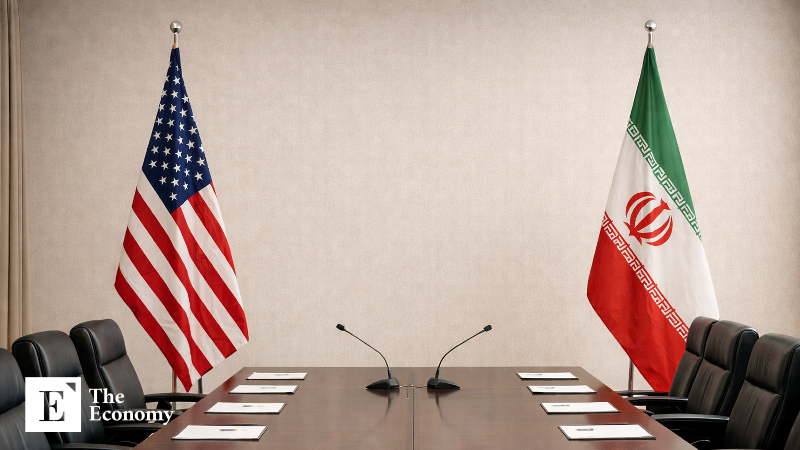
Against this backdrop, Iran is moving to accelerate ceasefire negotiations by presenting a “compromise proposal” to the United States. According to a report by the U.S. online outlet Axios on the 27th, Iran recently delivered a new negotiation proposal to Washington. Its core idea is to first lift the blockade of the Strait of Hormuz and end the war, then address the stalled nuclear program negotiations in a separate phase. Iranian Foreign Minister Abbas Araghchi had earlier told representatives of mediating countries including Pakistan, Egypt, Türkiye and Qatar that no internal consensus had been reached within Iran’s leadership over how to respond to U.S. nuclear demands. Washington is demanding that Iran suspend uranium enrichment for at least 10 years and ship enriched uranium abroad.
Some foreign media outlets have also suggested that the gap between the two countries may be narrower than publicly known. CNN reported on the 27th, citing sources familiar with the mediation process, that intense back-channel diplomacy is continuing between the two sides and that current discussions are focused on a phased procedure. According to the report, the U.S. is holding in-depth internal discussions on reopening the Strait of Hormuz as the first phase of a tentative agreement. This assessment contrasts with recent remarks by U.S. Secretary of State Marco Rubio, who said Iran’s claimed reopening of the strait amounts in practice to “controlled passage,” which Washington cannot accept.
If negotiations to end the war are concluded under these terms, however, the U.S. will withdraw from the Middle East without achieving its fundamental objective. Washington’s military operation against Iran was officially aimed at eliminating nuclear and missile capabilities, but it is widely interpreted as an attempt to remove Ayatollah Ali Khamenei and pursue regime change by weakening the system. Yet even after the outbreak of war, Iran’s power structure has not collapsed and has instead remained intact in a reorganized form, while internal regime cohesion has begun to strengthen. Among some Iranians, the late Khamenei is even being embraced as a symbolic figure and honored like a “martyr.” Once the war ends, Trump will effectively lose the justification to reverse this situation.
Similar Post