Taiwan’s Nanya Emerges as NVIDIA LPDDR5X Supplier—Can It Gain Traction in Advanced Node Competition Dominated by Samsung and SK Hynix

As one of the youngest members of the team, Tyler Hansbrough is a rising star in financial journalism. His fresh perspective and analytical approach bring a modern edge to business reporting. Whether he’s covering stock market trends or dissecting corporate earnings, his sharp insights resonate with the new generation of investors.
Authored On
Modified
NVIDIA moves to diversify supply chain with Taiwan’s Nanya LPDDR5X
Samsung Electronics and SK Hynix accelerate LPDDR6 development, but commercialization remains pending
Competition intensifies in cutting-edge products such as SOCAMM2, dubbed the “second HBM”
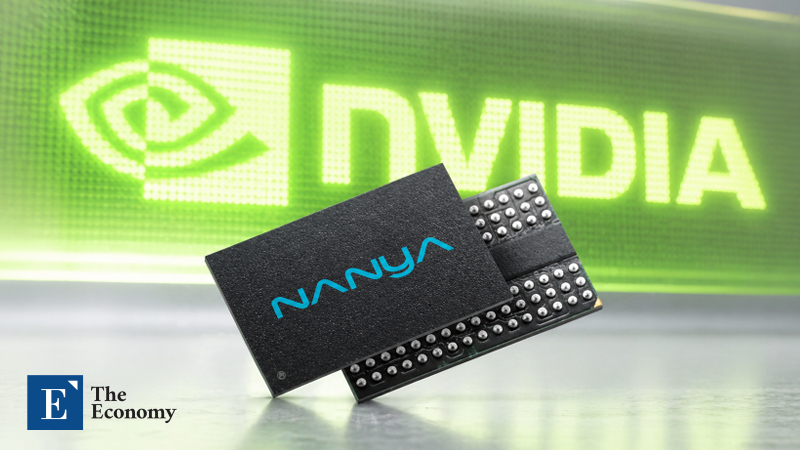
Taiwanese memory semiconductor firm Nanya Technology (hereafter Nanya) has secured a contract to supply low-power DRAM (LPDDR) to NVIDIA. With technical capabilities significantly enhanced through support from TSMC, the world’s largest foundry, Nanya has established a foothold in the core memory supply chain. Market attention is now focused on whether Nanya, having laid the groundwork for expanding its presence, can extend its competitiveness beyond LPDDR5X into next-generation products such as LPDDR6 and SOCAMM2.
Nanya Enters NVIDIA Supply Chain
According to a report by Taiwan’s United Daily News (UDN) on April 29, NVIDIA has recently selected Nanya as a memory supplier for its next-generation AI superchip platform, “Vera Rubin.” The move reflects NVIDIA’s strategy to broaden its memory supply chain. Until now, memory for the Vera Rubin platform has been supplied by the so-called “big three” global memory players—SK Hynix, Samsung Electronics, and Micron—while NVIDIA has been seeking additional suppliers in the LPDDR segment, where diversification potential is greater than in high-bandwidth memory (HBM).
LPDDR, primarily used in smartphones, is a memory product optimized for power efficiency and is increasingly viewed as a solution to the growing energy consumption challenges of AI data centers. Alongside NVIDIA, companies such as Intel and Qualcomm are also shifting server DRAM from conventional double data rate (DDR) to LPDDR-based solutions. However, manufacturing LPDDR for AI accelerators requires considerable technical sophistication. Nanya had previously struggled with LPDDR production, but with TSMC’s recent support in optimizing semiconductor packaging processes, it has achieved a significant improvement in product quality.
Amid these developments, Nanya has rapidly risen from a lower-tier memory supplier to a strategic partner of NVIDIA. The Vera Rubin platform, where Nanya’s memory will be deployed, is understood to incorporate two types of memory. The Rubin GPU will utilize sixth-generation HBM (HBM4), while the Vera CPU will employ LPDDR5X in the form of SOCAMM2 memory modules. Nanya’s supply to NVIDIA will focus on LPDDR5X for the Vera CPU.
Competitive Dynamics in the LPDDR Market
The industry is closely watching potential shifts in the LPDDR market, which has traditionally been dominated by major memory suppliers. Established leaders Samsung Electronics and SK Hynix are currently concentrating on commercializing LPDDR6, optimized for high-performance on-device AI.
Samsung Electronics succeeded in developing LPDDR6 for the first time in the industry late last year. The product operates at approximately 10.7 gigabits per second (Gbps), with expectations of exceeding 14.4Gbps in the future. Increased input/output (I/O) capacity has also expanded bandwidth.
In addition, Samsung’s LPDDR6 features a separated design based on DRAM supply voltage characteristics and incorporates dynamic voltage and frequency scaling (DVFS), enabling flexible power utilization according to system requirements. It also integrates smart power management IC technology to intelligently control internal and external power supply. This architecture allows dynamic power control in response to AI computational loads in real-world operating environments. Under this design, energy efficiency has improved by approximately 21% compared to the previous generation.
SK Hynix announced last month that it had developed a 16-gigabit (Gb) LPDDR6 DRAM based on its most advanced 10-nanometer-class sixth-generation (1c) process. The company’s LPDDR6 significantly enhances both data processing speed and power efficiency compared to LPDDR5X. Specifically, data throughput has increased by 33% due to expanded bandwidth, while operating speeds exceed 10.7Gbps, surpassing the maximum of the previous generation. Power consumption has also been reduced by around 20% through the adoption of sub-channel architecture and DVFS technology.
However, neither company has yet initiated full-scale mass production of LPDDR6. SK Hynix plans to establish mass production capabilities within the first half of the year and begin supplying customers in the second half, currently focusing on process stabilization and production line conversion. Samsung Electronics has entered the performance validation phase by supplying samples to select clients and is likewise expected to commence mass production later this year. With next-generation products not yet commercialized, Nanya is effectively competing on comparable footing with Samsung Electronics and SK Hynix at this stage.
Escalating Competition in SOCAMM2
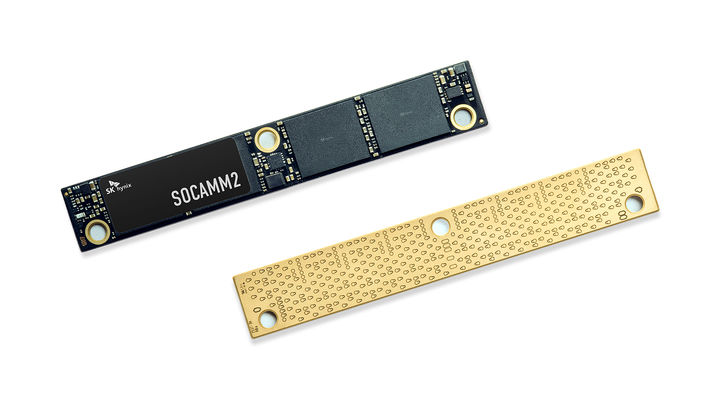
The key question going forward is whether Nanya can demonstrate competitiveness in cutting-edge segments such as SOCAMM2. SOCAMM2 is regarded as an AI server memory solution designed to bridge the gap between HBM and DDR5.
In earlier phases of the AI market, which focused on model training, HBM was indispensable due to its ability to process large volumes of data at high speed. However, the growing prominence of inference AI—centered on rapidly extracting answers from pre-trained models—has altered requirements. In this context, HBM’s high power consumption and heat generation can undermine efficiency. SOCAMM2, offering superior performance to conventional DRAM while delivering better power efficiency and thermal control than HBM, is positioned as an optimal solution.
At present, competition in SOCAMM2 is led by the global memory triopoly. SK Hynix announced on April 20 that it had begun mass production of a 192GB SOCAMM2 product based on LPDDR5X. Built on a 10-nanometer-class 1c process, SK Hynix’s SOCAMM2 is optimized for the Vera Rubin platform, delivering more than twice the bandwidth and over 75% improved energy efficiency compared to conventional RDIMM modules.
Micron, which initiated early development of SOCAMM with NVIDIA, supplied samples of a 256GB product to customers last month. In the same period, Samsung Electronics began mass production of SOCAMM2 for NVIDIA using its 10-nanometer-class fifth-generation (1b) DRAM, and this month halted orders for certain low-power mobile DRAM products such as LPDDR4 and LPDDR4X. By concentrating on high-value-added products based on LPDDR5X, including SOCAMM2, the company has accelerated the restructuring of its memory portfolio.
As one of the youngest members of the team, Tyler Hansbrough is a rising star in financial journalism. His fresh perspective and analytical approach bring a modern edge to business reporting. Whether he’s covering stock market trends or dissecting corporate earnings, his sharp insights resonate with the new generation of investors.
- Previous "Naval Blockade as a Critical Blow" As Ceasefire Talks Stall, U.S. Secures ‘Temporal Advantage’ While Iran Buckles Under Economic Strain
- Next "Pivoting Toward High Value and Premium Segments" — Samsung Electronics Reshapes Home Appliance Strategy, Can It Challenge Europe’s Established Brands?
Similar Post