Norway Puts Brakes on Nuclear Power Debate, Nordic Energy Strategy Tested Amid German-Driven Energy Risks

As one of the youngest members of the team, Tyler Hansbrough is a rising star in financial journalism. His fresh perspective and analytical approach bring a modern edge to business reporting. Whether he’s covering stock market trends or dissecting corporate earnings, his sharp insights resonate with the new generation of investors.
Authored On
Modified
"Clear Upward Cost Trajectory" Norway Reluctant on Nuclear Adoption
Nordic Power Grid Strained by Surging German Electricity Demand
Uncertainty Over SMR Maturity, Institutional Alternatives Needed
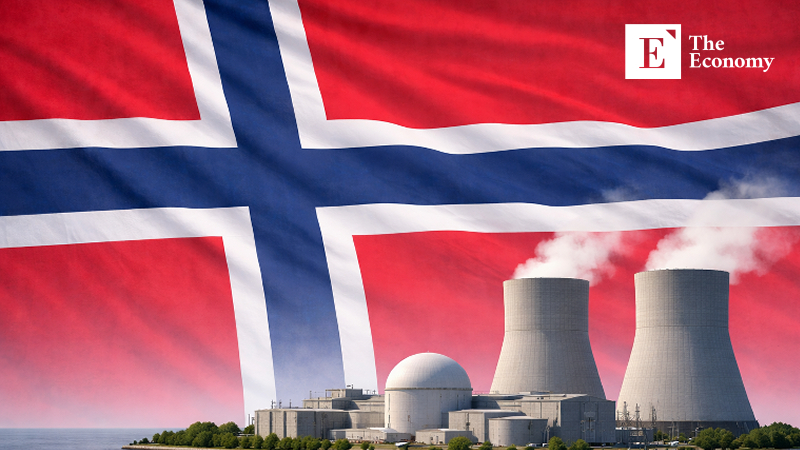
The Norwegian government has begun to adopt a cautious stance on the introduction of nuclear power. The move reflects a growing recognition that nuclear construction projects across Europe have been plagued by persistent delays and escalating costs. Nevertheless, as Germany’s transition toward renewable energy and its expanding energy imports significantly intensify pressure on the Nordic power grid, efforts to secure energy supply stability are expected to continue. Some analysts suggest that small modular reactors (SMRs) and institutional reforms could emerge as potential solutions to the energy crisis.
Norwegian Government Steps Back from Nuclear Power
According to a report by Polish economic outlet Bankier on April 12, the Norwegian government recently released an energy report that effectively put the brakes on domestic discussions over adopting nuclear power. Its assessment was that large-scale nuclear construction projects across Europe had turned into fiscal sinkholes because of cost escalation and construction delays. One prominent example cited was Finland’s Olkiluoto 3 reactor. Construction on Olkiluoto 3 began in 2005, with operations originally targeted for 2010 and a budget of $3.52 billion. But a buildup of setbacks, including technical defects and tighter safety standards, delayed actual startup by 13 years and drove construction costs up to $12.90 billion.
France’s Flamanville 3 reactor, which broke ground in 2007, has followed a similar trajectory. The project was initially slated for completion in 2012, with a budget of $351.69 million. But repeated design changes and construction errors pushed the expected completion date back to 2024, while total spending surged to about $15.24 billion. In the case of the United Kingdom’s Hinkley Point C project, the budget, which stood at $24.62 billion when construction began in 2016, is now projected to expand to as much as $53.93 billion. Its completion date has also been pushed back from last year to 2030–2031.
Against that backdrop, the Norwegian government has indicated that it will place greater emphasis on practical measures to bolster energy security rather than pursue the uncertain option of nuclear power. Given that the country already possesses a power grid anchored by abundant hydropower resources, Oslo appears to see little social or economic rationale for pouring astronomical sums into a nuclear buildout. Among the highest-priority tasks identified for the years ahead are the modernization of hydropower plants, the expansion of the national transmission grid, and improvements in energy efficiency.
Germany Draws Power Out of the Nordics
Even so, industry observers argue that the debate is unlikely to disappear entirely in Norway and the broader Nordic region. Germany’s renewable energy transition is weighing heavily on the Nordic power grid as a whole. Europe previously maintained a stable energy mix through a complementary power structure built around coal, nuclear power, and hydropower. Coal in Germany and Poland, nuclear generation in France, and hydropower in the Nordic region were linked through a single grid that allowed electricity to flow across borders, with cheap Russian natural gas serving as an additional buffer.
But that structure began to fracture as Germany shifted its energy mix toward renewables. The intermittency inherent in solar and wind generation, compounded by weather-related disruptions such as Dunkelflaute, a prolonged period of dark skies and weak winds, sharply increased Germany’s dependence on imported electricity. Demand generated in Germany spilled into the Nordic region, which had functioned as a “battery” by storing surplus electricity through hydropower reservoirs. As of 2024, the volume of electricity flowing from Norway to continental Europe was equivalent to the output of two nuclear reactors. Nordic wholesale electricity prices consequently climbed in short order. To respond to German demand and stabilize energy prices, the expansion of additional baseload generation, including nuclear power, appears increasingly unavoidable.
The problem is that most Nordic countries are in no position to aggressively push ahead with capital-intensive infrastructure investment. Despite their high income levels, these economies have seen their financial capacity eroded by slower growth, household-sector fragility, and instability in property markets. In Sweden, the real estate market has contracted sharply in the wake of higher interest rates, bringing household debt burdens into focus. Finland is grappling with stagnation bordering on recession. Norway, meanwhile, has entered a dual-track pattern in which public finances remain solid on the back of energy exports even as domestic demand weakens. With high rates and elevated inflation squeezing both consumption and investment, and limited population size capping domestic expansion, the region’s room to maneuver has narrowed.
Need for Additional Remedies Comes Into Focus
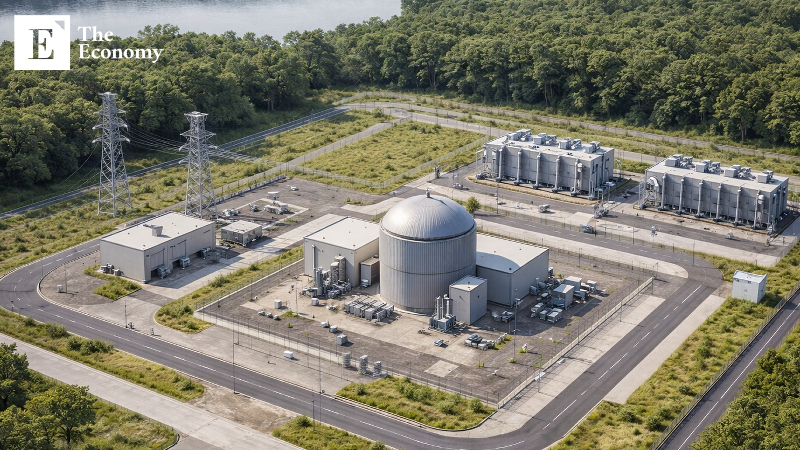
In this context, SMRs are being cited as one possible answer to the energy crunch. Compared with large conventional reactors, SMRs require less upfront capital and allow power capacity to be expanded in phases in line with demand. Sweden, for instance, has drawn up a plan to secure the equivalent of 10 new reactors, including SMRs, by 2045, while the Norwegian government approved a project in February to build an SMR complex with capacity of up to 1.5 gigawatts in the Aure-Heim industrial zone. Recently, however, the view has been spreading within Norway that SMRs amount to an uncertain gamble in terms of both technological maturity and commercial viability.
Some observers therefore argue that Nordic countries should look beyond nuclear power for alternatives. The recommendation is that they align themselves with the European Union’s broader effort to diversify energy procurement channels in response to Middle East tensions. The EU has recently eased methane regulations applied to imported oil and gas. Under the current methane rules, producers operating within the bloc face strict monitoring, reporting, and remediation obligations. By introducing greater flexibility into the framework, the EU has now allowed importers to meet the standard without tracking emissions data down to the level of each individual cargo. Countries exporting energy to the bloc need only demonstrate that a certain share of their total national output complies with the threshold.
The need for institutional countermeasures is also being raised. A relevant precedent lies in the regulatory reforms pursued by the EU and European countries after the outbreak of the war in Ukraine in 2022. At the time, the EU revised the Energy Performance of Buildings Directive to legislate a roadmap calling for the full phaseout of fossil-fuel boilers by 2040 and the conversion of all buildings into zero-emission buildings by 2050. Germany capped heating temperatures at 53.6 to 66.2 degrees Fahrenheit depending on workplace type and provided subsidies covering up to 70% of the cost of switching to heat pumps. Denmark decided to phase out residential gas heating entirely by 2035 and, in 2023 alone, newly connected 40,000 households to district energy networks. Three years later, gas consumption across the EU had fallen 17% from the average of the previous five years.
As one of the youngest members of the team, Tyler Hansbrough is a rising star in financial journalism. His fresh perspective and analytical approach bring a modern edge to business reporting. Whether he’s covering stock market trends or dissecting corporate earnings, his sharp insights resonate with the new generation of investors.
Similar Post