[U.S.-Iran War] U.S. Launches Maritime Counter-Blockade Against Iran, Prolonged Negotiation Deadlock Over Nuclear Program Disputes

Matthew Reuter is a senior economic correspondent at The Economy, where he covers global financial markets, emerging technologies, and cross-border trade dynamics. With over a decade of experience reporting from major financial hubs—including London, New York, and Hong Kong—Matthew has developed a reputation for breaking complex economic stories into sharp, accessible narratives. Before joining The Economy, he worked at a leading European financial daily, where his investigative reporting on post-crisis banking reforms earned him recognition from the European Press Association. A graduate of the London School of Economics, Matthew holds dual degrees in economics and international relations. He is particularly interested in how data science and AI are reshaping market analysis and policymaking, often blending quantitative insights into his articles. Outside journalism, Matthew frequently moderates panels at global finance summits and guest lectures on financial journalism at top universities.
Authored On
Modified
U.S. Implements Counter-Blockade Measures in Iranian Ports and Coastal Areas
Islamabad Talks Collapse, Core Cause Lies in Diverging Positions on Nuclear Weapons
Polarized Demands from Both Sides Render Binary Approach Ineffective
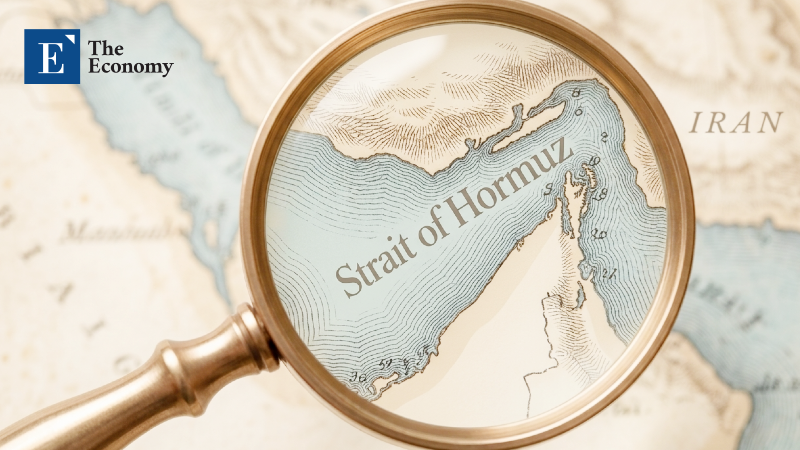
The United States has begun fully implementing a maritime blockade against Iran. With bilateral negotiations collapsing over disagreements related to the nuclear program, the move is interpreted as an effort to strengthen leverage by intensifying economic and military pressure on Tehran. While backchannel negotiations are reportedly ongoing, experts warn that the entrenched differences over core issues make it highly likely that discussions will once again face significant obstacles.
U.S. Seals Off Iranian Ports and Coastal Zones
On April 13 (local time), President Donald Trump told reporters at the White House, “As of 10 a.m., we have initiated a maritime blockade against Iran.” The measure aims to exert additional pressure by cutting off Iranian oil export vessels and blocking the inflow of war supplies into the country. According to The Wall Street Journal (WSJ), the U.S. military deployed more than 15 warships to the Strait of Hormuz for the operation. Since April 11, Aegis destroyers including the USS Frank E. Petersen and USS Michael Murphy had already been operating in the area.
The blockade targets all vessels entering or leaving Iranian ports and coastal regions, regardless of nationality. U.S. Central Command warned that “any vessel entering or departing the blockade zone without U.S. authorization will be subject to interception, diversion, or seizure.” President Trump also posted on his social media platform Truth Social that “158 Iranian naval vessels have already been neutralized” and added that “any remaining fast boats approaching the blockade zone will be eliminated immediately.” However, vessels from third countries may still pass through the Strait of Hormuz if they utilize ports outside Iran.
Iran responded immediately with strong opposition. Mohammad Bagher Ghalibaf, Speaker of the Iranian Parliament, warned President Trump that “if you fight, we will fight,” signaling a hardline stance, while the Islamic Revolutionary Guard Corps (IRGC) also indicated the possibility of military retaliation. As military tensions between the two sides visibly escalate, some analysts argue that the U.S. blockade is a strategic tool aimed at enhancing bargaining power. Facing stalled negotiations, Washington appears to have adopted a hardline approach despite the risk of triggering global energy and logistics disruptions. The blockade is assessed as a measure that could simultaneously drive up costs and suppress demand by exacerbating instability in energy supply chains.
Standoff Over Nuclear Program
Prior to these developments, the two countries concluded a 21-hour “marathon negotiation” in Islamabad, Pakistan, on April 11 without any meaningful outcome. On April 12, Vice President J.D. Vance told reporters, “We had several substantive discussions with Iran, but we are returning to the United States without reaching an agreement,” adding, “This is far worse news for Iran than it is for the United States.” Esmail Baghaei, spokesperson for Iran’s Foreign Ministry, also stated the same day that “the two sides reached mutual understanding on several issues, but differences remained on two to three major points, resulting in the failure to reach an agreement.”
The collapse of negotiations stemmed from disagreements over the nuclear program. Vice President Vance explained, “Put simply, we must secure a clear commitment that Iran will not pursue nuclear weapons and will not seek the means to rapidly acquire them,” adding that “this was the core objective the president sought to achieve in these talks, but we have yet to see such willingness.” According to a report by Axios on April 13 citing U.S. government sources, Washington proposed that Iran agree to halt uranium enrichment for 20 years. This represents a relatively more conciliatory stance compared to the Trump administration’s previously stated principle of a complete ban on enrichment. However, Iran countered with a proposal for a limited suspension lasting only a single-digit number of years.
The handling of Iran’s existing stockpile of highly enriched uranium also emerged as a key point of contention. According to Axios, Israeli Prime Minister Benjamin Netanyahu stated after the collapse of talks, “Vice President Vance called me on his way back to the United States,” adding that “he said the main issue is removing all enriched material from Iran and ensuring that enrichment does not take place for years, possibly decades.” In fact, the United States reportedly demanded the complete removal of existing highly enriched uranium stockpiles during the negotiations. Iran, in contrast, proposed diluting the uranium to low-enriched levels under international supervision.
Uncertain Outlook for Negotiations
Following the failed attempt to reach an agreement, the two sides are reportedly pursuing renewed negotiations through backchannels. On April 13, CNN reported, citing sources familiar with the matter, that officials from the Trump administration are discussing the possibility of holding a second face-to-face meeting before the expiration of the two-week ceasefire period. The administration continues to signal its willingness to pursue a diplomatic resolution, and there remains a possibility that the ceasefire could be extended depending on the progress of negotiations.
On the same day, Turkish Foreign Minister Hakan Fidan also stated that the United States and Iran are continuing efforts toward a ceasefire despite the breakdown of high-level talks. According to AFP, Fidan said in an interview with Turkey’s state-run Anadolu Agency that he had been in contact with the negotiating parties and emphasized that “both sides are sincere about achieving a ceasefire.” Turkey, along with Pakistan and Egypt, has been actively engaged in diplomatic efforts to mediate the conflict. He added, “If the issue of uranium enrichment is pushed toward an ‘all or nothing’ extreme, serious obstacles will arise,” expressing hope that mediation efforts would help overcome the impasse.
However, it remains uncertain whether the United States and Iran can bridge their differences. The gap between their respective demands is substantial. Iran had previously put forward 10 conditions ahead of negotiations, including maintaining control over the Strait of Hormuz and securing recognition of its right to uranium enrichment. The United States, meanwhile, presented demands calling for the dismantling of Iran’s nuclear capabilities, a ban on uranium enrichment within Iranian territory, and the reopening of the Strait of Hormuz. In this regard, a foreign policy expert noted, “Iran views its nuclear program as a matter of regime survival and sovereignty, making it difficult to abandon,” adding that “the United States, however, perceives it as an issue of Middle Eastern security and international order, making Iran’s position difficult to accept.” The expert further stated, “As long as both sides insist on fully enforcing their core demands through a binary approach, progress in negotiations will remain unlikely.”
Matthew Reuter is a senior economic correspondent at The Economy, where he covers global financial markets, emerging technologies, and cross-border trade dynamics. With over a decade of experience reporting from major financial hubs—including London, New York, and Hong Kong—Matthew has developed a reputation for breaking complex economic stories into sharp, accessible narratives. Before joining The Economy, he worked at a leading European financial daily, where his investigative reporting on post-crisis banking reforms earned him recognition from the European Press Association. A graduate of the London School of Economics, Matthew holds dual degrees in economics and international relations. He is particularly interested in how data science and AI are reshaping market analysis and policymaking, often blending quantitative insights into his articles. Outside journalism, Matthew frequently moderates panels at global finance summits and guest lectures on financial journalism at top universities.
Similar Post