Dubai’s Capital and Consumption Drain Away in Tandem, Iran War Shatters ‘Golden City’ Prestige

Anne-Marie Nicholson is a fearless reporter covering international markets and global economic shifts. With a background in international relations, she provides a nuanced perspective on trade policies, foreign investments, and macroeconomic developments. Quick-witted and always on the move, she delivers hard-hitting stories that connect the dots in an ever-changing global economy.
Authored On
Modified
Mass Exodus of Foreign Tourists Following Iranian Strikes
Empty Shopping Malls and Hotels, Luxury Sector Falters
Geopolitical Vulnerability Triggers Signs of Capital Market Breakdown
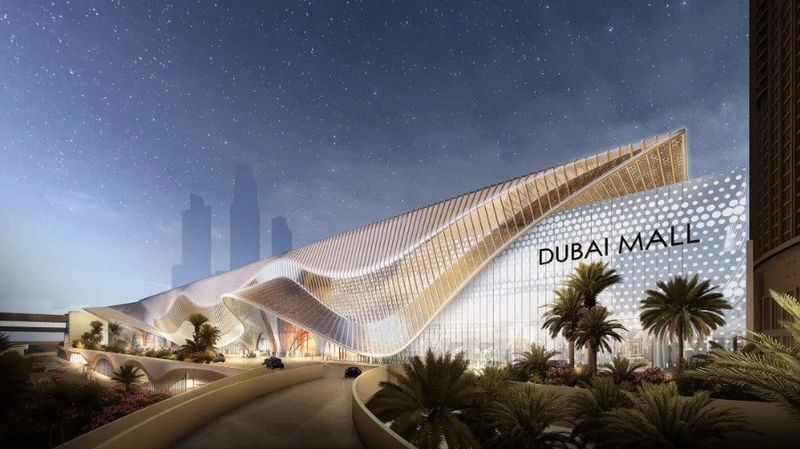
Dubai, once a magnet for the world’s wealthy, is rapidly losing its luster. Mounting anxiety that the emirate is not immune to the shadow of war has prompted a wave of foreign high-net-worth individuals to depart, putting Dubai’s long-cultivated image as a “billionaires’ refuge” under severe strain. Unlike other Gulf cities endowed with vast oil reserves, Dubai’s economy is heavily dependent on high-income consumers. Their departure inevitably inflicts direct damage across the broader economy.
War Spillover Hits Dubai’s Tourism and Luxury Sectors
According to the Financial Times (FT) on April 15 (local time), following Iran’s retaliatory strikes on Gulf infrastructure in response to U.S. and Israeli air attacks, Dubai’s shopping malls, hotels, and other high-traffic venues have been left eerily deserted. Visitor numbers at the Dubai Mall, which typically attracts over 100 million visitors annually, declined sharply during the three weeks following the outbreak of the Iran war. Foot traffic at flagship retailer Bloomingdale’s dropped 45% month-on-month, while visitor numbers at Harvey Nichols in the nearby Mall of the Emirates fell 57%, shrinking by more than half.
The exodus of the wealthy and the disappearance of tourists have also dealt a severe blow to luxury car dealerships. Ferrari and Stellantis’ Maserati recently reopened showrooms but have temporarily suspended deliveries, while First Motors—a Dubai-based dealer handling high-end vehicles priced from $250,000 to $14,000,000, including Ferrari and Bugatti models—reported a roughly 30% decline in sales following reopening.
As commercial districts deteriorate, global luxury brands are also sustaining losses. Dubai’s consumption base is composed of affluent residents and tourists. As of last year, one in nine Dubai residents purchased luxury goods quarterly, a level of purchasing power surpassing that of New York, London, Paris, and Singapore. Tourists have also been a key driver of luxury consumption, with Dubai recently surpassing 20 million annual visitors amid rapid growth. However, since the Iranian strikes, luxury sales in Dubai have fallen to roughly half of pre-war levels. Disruptions in logistics caused by the blockade of the Strait of Hormuz have further weighed on sales. European luxury firms are now forced to reroute shipments through ports in Oman and Saudi Arabia, resulting in delivery delays of up to 20 days compared with normal conditions and war-related surcharges of as much as $5,000 per container.
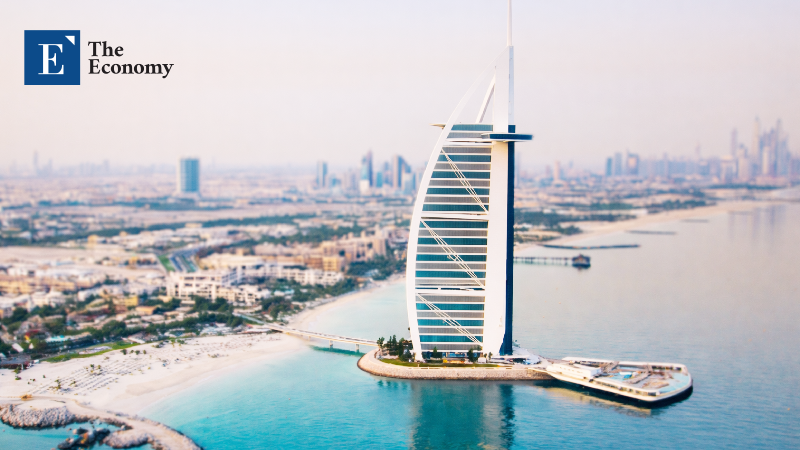
The hotel industry faces a similarly severe downturn. Even ultra-luxury properties, including the Fairmont Hotel on Dubai’s iconic Palm Jumeirah, have been significantly affected. According to data analytics firm Lighthouse Intelligence, occupancy rates across Dubai accommodations have plunged from a seasonal average of 90% to just 26% as of early this month. Room rates for April and May have also fallen more than 20% compared with the week prior to the conflict. In response, Royal Mirage, one of Dubai’s flagship luxury resorts, plans to periodically close sections of the property during periods of low occupancy to improve operational efficiency and conduct maintenance. The Burj Al Arab, Dubai’s landmark hotel, is also set to suspend operations for 18 months to undergo a major renovation.
Financial Hub Reputation Under Strain, Gold and Real Estate Markets Hit
The fallout from the Iran war has extended beyond the real economy to strike Dubai’s capital markets. Over the past month, investor sentiment in the Dubai and Abu Dhabi stock markets has sharply deteriorated, wiping out $120 billion in total market capitalization. This signals that global investors are reassessing UAE assets from safe havens to high-risk exposures.
Shares of Emaar Properties, the developer behind the Burj Khalifa—the world’s tallest building—have plunged more than 25% from their peak, laying bare the growing sense of crisis in the construction and real estate sectors. Market participants warn that even major developers have proven unable to evade geopolitical risks, with speculation emerging over potential suspensions of large-scale projects currently underway.
This uncertainty has triggered a wave of capital flight among foreign investors. According to Reuters and other outlets, many investors are engaging in so-called “panic selling,” offloading assets at discounts of 10–15% below market prices amid concerns over potential asset freezes. This is widely interpreted as a sign of rapidly weakening fundamentals in Dubai’s asset markets.
Dubai’s real estate sector, which had enjoyed a decade-long boom fueled by foreign capital inflows, is now facing intense downward pressure. The Daily Mail reported that transaction volumes plunged 51% last month due to the Iran war. Some projections suggest that property prices could fall by nearly 20% in the near term. More critical than price declines, however, is the emerging liquidity crunch. Unsold properties tie up investment capital, preventing reinvestment into new developments and triggering a vicious cycle. Within expatriate investor communities, concerns are mounting that the downturn could persist for months, if not years, prompting a growing number of investors to defer real estate transactions.
Erosion of the ‘Dubai Myth,’ Acceleration of Wealthy Exodus
These developments threaten to unravel Dubai’s long-standing efforts to attract foreign capital. Iran’s strikes have significantly undermined the emirate’s carefully cultivated image as a “safe city.” Despite being located in a volatile Middle East, Dubai had successfully positioned itself as a global financial and tourism hub insulated from regional conflicts.
In recent years, Dubai has eased visa regulations and relaxed property ownership restrictions to attract foreign businesses and residents. As a result, the population grew 5.6% year-on-year to 3.9 million last year, marking the fastest growth since 2019. Oil accounted for less than 2% of Dubai’s GDP, with the economy instead driven by trade, tourism, premium real estate, and financial services.
The financial sector also expanded rapidly on the back of foreign inflows. In the first half of last year alone, more than 1,000 new firms registered in the Dubai International Financial Centre (DIFC), a roughly 30% increase from the previous year. DIFC currently hosts 290 banks, 102 hedge funds, 500 asset management firms, and 1,289 family office-related entities. JPMorgan Chase, the largest U.S. bank, also expanded its Dubai operations last year. Global tech giants have likewise established a presence, with 18 data centers operated by multinational corporations in the emirate.
Dubai’s growth has been anchored in its image as a hub of skyscrapers, luxury tourism, and global finance. This model has been emulated by other Gulf states, including Saudi Arabia and Qatar, as they seek to diversify away from oil dependency through Western-oriented economic frameworks. However, the current war has exposed Dubai’s vulnerabilities, fracturing its reputation as a “golden city.” Bernard Hudson, former CIA counterterrorism chief, remarked, “The core of the UAE’s success was the belief that this place was not part of the Middle East. But this war has reminded everyone that the region remains unstable.”
Nevertheless, Dubai retains key advantages, including low taxes, its status as a financial hub, and a robust tourism sector. These attributes continue to hold appeal, provided geopolitical stability is restored. One economic expert noted, “Dubai has long operated around high-net-worth individuals (HNW), so their departure was, to some extent, an expected outcome. However, given that core incentives such as tax exemptions and investment infrastructure remain intact, it is premature to interpret the current situation as a full-scale collapse. As the war approaches its endgame, the pace at which capital returns will be the decisive factor shaping Dubai’s recovery trajectory.”
Anne-Marie Nicholson is a fearless reporter covering international markets and global economic shifts. With a background in international relations, she provides a nuanced perspective on trade policies, foreign investments, and macroeconomic developments. Quick-witted and always on the move, she delivers hard-hitting stories that connect the dots in an ever-changing global economy.
Similar Post