“Trump Losing Friends and Gaining Only Adversaries” U.S.-Europe Ties on a Downward Spiral, With the 77-Year Atlantic Alliance Also Heading for Rupture

Authored On
Modified
Britain declines to join not only Washington’s troop deployment request but also the counter-blockade of the strait
Even Italian Prime Minister Giorgia Meloni, once seen as a pro-Trump figure, unleashes fierce criticism of Trump
Momentum builds behind the idea of a ‘NATO without the United States,’ gaining traction as Germany shifts its stance
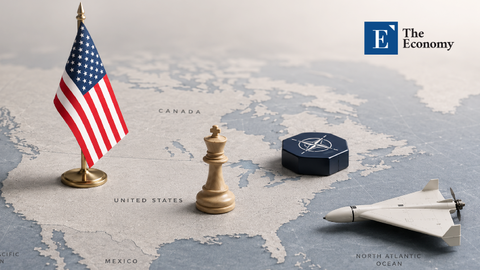
The fissures between the United States and Europe that surfaced in the wake of the Iran war are widening across the board, rapidly destabilizing the alliance. As resentment accumulates over U.S. President Donald Trump’s unilateral pressure tactics and policy unpredictability, the leaders of major powers including Britain, Italy, and France are moving in unison to voice open criticism. With the Atlantic alliance that has endured for 77 years since the end of World War II now confronting a profound inflection point, Europe’s accelerating push for greater autonomy is expected to bring inevitable changes to the global balance of power.
Cracks in the U.S.-UK Alliance
According to Bloomberg on April 15, Trump said in an interview with Sky News that the tariff agreement with Britain “could be changed at any time.” “We gave them a good trade deal. Better terms than necessary,” Trump said. “That deal can change at any time.” The remarks were interpreted as signaling the possibility of revisiting the existing trade agreement. Trump also sharpened his criticism of Britain’s energy and immigration policies. Referring to restrictions on North Sea oil development and immigration policy, he said, “If both of those are bad, you can’t succeed.”
Trump’s latest remarks came as tensions between the United States and Britain were already mounting. On April 12, Trump announced a plan for the complete closure of the Strait of Hormuz on his social media platform Truth Social, but the British government drew a firm line, saying it would not be involved in the blockade operation. On the same day, the British government said in a statement, “We continue to support the opening of the Strait of Hormuz and freedom of navigation, both of which are urgently needed for global economic stability and domestic cost-of-living stability.” In connection with this, The Guardian reported that “within the British government, concerns had been raised that dispatching warships at Trump’s request could further escalate the crisis, and that participation in mine-clearing operations was clearly a different matter from joining a blockade of the strait.”
After Britain declared it would not participate in the blockade of the Strait of Hormuz, Trump criticized Prime Minister Keir Starmer on Fox News by likening him to Neville Chamberlain, the British wartime leader widely regarded as the emblem of appeasement toward Adolf Hitler. Criticizing Starmer’s suggestion that military equipment would be sent only after the war ended, Trump said, “You need equipment before a war starts or during a war,” adding, “That’s a Chamberlain-style statement.” Trump also described relations with Britain as “sad,” and said Starmer was “making tragic mistakes in policy.”
Starmer has been at odds with Trump after refusing, in the early stages of the Iran war, to allow U.S. forces to use British military bases and then responding tepidly to Washington’s request for British troop deployment to the Strait of Hormuz. On April 9, he escalated his criticism by saying Trump’s conduct was “sickening.” During a visit to the Gulf region at the time, Starmer appeared on an ITV podcast and said, “I’m sick of the fact that households and businesses across the country have to watch their energy bills rise and fall because of the actions of Putin [Russian President Vladimir Putin] or Trump.” The remarks came in an interview conducted after the United States and Iran entered a fragile two-week ceasefire. Starmer stressed that the Middle East crisis was still clearly affecting the British economy. He also took issue with Trump’s April 7 remark about “destroying civilization” while pressuring Iran into negotiations, saying, “It’s not language I would use.”
A Chain Reaction of European Defections
Not only Britain’s leader but also Italian Prime Minister Giorgia Meloni has delivered pointed criticism of Trump. On April 14, after a conference related to the wine industry, Meloni told reporters, “It would be deeply unsettling if a society expected a religious leader to act according to the words of a political leader.” She added, “I stand in solidarity with the Pope.” The previous day as well, Meloni had condemned Trump’s criticism of the Pope as “unacceptable.” She then stressed that “it is right and normal for the Pope to call for peace and condemn all forms of war.” As the leader of Italy, which encloses Vatican City, the seat of Catholicism, she effectively chose to side with the Pope even at the cost of discomfort in relations with Trump.
Meloni had been regarded as the European leader closest to Trump. A conservative politician, she personally attended Trump’s inauguration in January last year. But after the Iran war, cracks began to appear in the relationship between Trump and Meloni after Italy refused to allow the U.S. military to use its air base in Sicily. On March 11 last month, Meloni strongly rebuked the United States, saying, “The U.S. and Israeli attack on Iran fell outside the bounds of international law.”
Amid these developments, even Hungarian Prime Minister Viktor Orbán, once dubbed “Europe’s Trump,” was forced from office after losing the general election on April 12, costing Trump yet another ally in Europe. Trump publicly endorsed his “close friend” Orbán on Truth Social and even sent Vice President J D Vance to Hungary to bolster support, but Orbán was decisively defeated at the polls. Péter Magyar, leader of Hungary’s victorious opposition Tisza party, said, “I will not call President Trump directly, but if the White House calls, I will take the call,” signaling an intention to distance himself from Orbán’s pro-Trump posture. Relations with France’s leader are also worsening steadily. On April 1, Trump publicly mocked French President Emmanuel Macron, who did not support the Iran war, saying he was “abused by his wife,” and Macron dismissed the remark as “not worth a response.”
“We Can No Longer Trust the United States” — A European Security Blueprint Gains Urgency
Against this backdrop, discussions within Europe over building an independent security architecture that excludes the United States are also moving into earnest form. Until now, major European powers including Britain, France, and Germany had judged the U.S. role within the North Atlantic Treaty Organization (NATO) to remain indispensable and had therefore focused more heavily on managing Trump’s sensitivities. But the Iran war triggered a dramatic reversal in 분위기. After European countries refused to become involved in the war amid controversy over violations of international law, Trump intensified pressure by even raising the prospect of withdrawing from NATO.
According to people familiar with the matter, contingency planning designed to ensure Europe could defend itself in the event of a U.S. withdrawal from NATO has gained momentum as Germany, long opposed to the idea, changed its position. For decades, Germany resisted France-led calls to strengthen Europe’s own defense capabilities, but after Chancellor Friedrich Merz took office, concerns over the reliability of the United States as an ally grew, driving a shift in Berlin’s stance. The change was fueled by a belief that Trump was effectively prepared to abandon Ukraine in its war with Russia, as well as deepening concern that Washington was conflating victim and aggressor in the war and that any clear value-based foundation guiding U.S. policy within NATO had disappeared. Germany’s participation suggests the effort could be far more substantive than previously expected. Germany has greater fiscal capacity than either Britain or France and also possesses core military assets needed for specific missions.
The contingency plan, often described as a “European NATO,” centers on Europe assuming a larger share of the alliance’s command-and-control role and supplementing U.S. military assets with European forces’ own capabilities. The objective is to preserve deterrence against Russia, operational continuity, and the credibility of nuclear deterrence even if the United States, as Trump has publicly threatened, withdraws troops stationed in Europe or refuses to honor NATO’s collective defense clause. First conceived last year, the plan gathered speed after Trump revealed ambitions to annex Greenland, an autonomous territory of Denmark, and has become an even more urgent issue as U.S.-Europe tensions over the Iran war have intensified.
Europe is now moving more clearly toward an independent course differentiated from that of the United States. Macron and Starmer will jointly host an international video conference on April 17 aimed at restoring navigation through the Strait of Hormuz. The United States was not invited. The French presidency said the meeting would target “countries willing to contribute to a purely defensive mission” and would discuss concrete measures to restore freedom of navigation in Hormuz when the security situation allows. Downing Street likewise explained that it would serve as “an opportunity to advance a coordinated and independent multinational plan to protect international shipping after the end of the conflict.”
The operational structure of the plan is organized in three stages. The first is to secure an emergency logistics corridor to allow hundreds of vessels trapped in the Persian Gulf since the outbreak of war to exit. The second is a large-scale mine-clearing operation to completely remove the mines Iran laid in the early phase of the war. The final stage is to establish an environment of confidence by regularly deploying frigates and destroyers so that shipping companies can use the route with assurance. According to military experts, Europe overwhelmingly surpasses the United States in mine-clearing capabilities. The United States has retired most of its mine countermeasure vessels, while European countries operate more than 150 mine-clearing ships. Germany in particular is cited as a core force for the operation, with 12 vessels specialized in mine detection and clearance homeported in Kiel, as well as surveillance aircraft deployed in Djibouti in Africa.
Similar Post