Wealthy Exit Dubai for ‘New Tax Havens,’ Reallocating to Switzerland in the West and Hong Kong in Asia

Authored On
Modified
Global ultra-high-net-worth individuals accelerate exodus from the Middle East
Reverse exodus unfolds as Dubai capital markets take a hit
Switzerland and Hong Kong gain prominence on low taxes and geopolitical stability
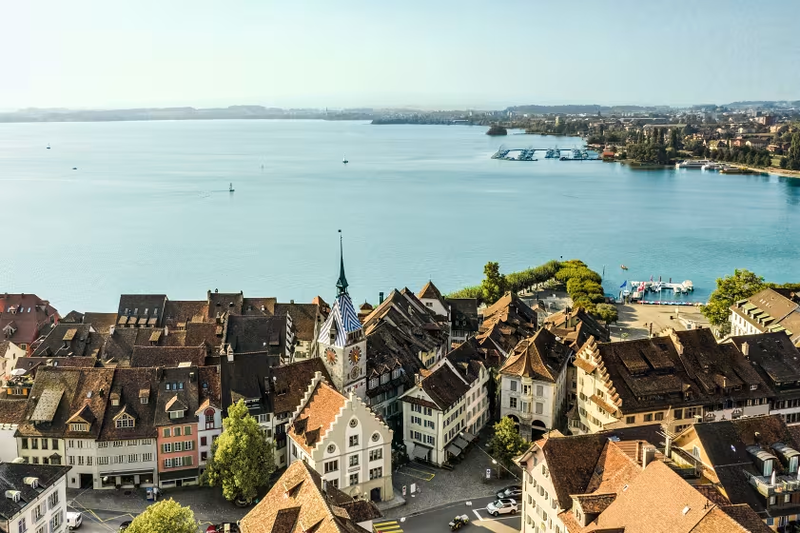
As geopolitical instability intensifies בעקבות the Iran war, ultra-high-net-worth (HNW) individuals worldwide are relocating away from the Middle East. In particular, wealth that had accumulated in Dubai is increasingly dispersing to Switzerland and Hong Kong to mitigate geopolitical risk. Western capital is gravitating toward Zug, Switzerland, known for its political neutrality and financial stability, while Asian capital is shifting toward Hong Kong, favored for its liquidity and market accessibility, signaling an accelerating global capital reallocation.
Zug Emerges as a Beneficiary of the Iran War
According to the Financial Times (FT) on April 16 (local time), Western wealthy individuals previously residing in Dubai are increasingly turning their attention to Zug. Over the past decade, Dubai had established itself as a premier destination for global elites and financial capital, but the outbreak of war has abruptly dismantled its image as a “safe haven detached from conflict.” The Fairmont Hotel on Palm Jumeirah, a symbol of Dubai, suffered blast damage from Iranian attacks, while debris from Iranian drones sparked fires at the Burj Al Arab. Dubai International Airport was also struck by missiles.
As a result, Dubai’s capital markets have taken a direct hit. The Dubai Financial Market (DFM) real estate index plunged 20% in just five trading days, erasing all gains for the year. Although 9,800 millionaires relocated to Dubai last year alone, bringing $63 billion in assets, the war has triggered a reverse exodus, with private jets fully booked and corporations evacuating staff.
One of the destinations for this capital is Zug. While Dubai marketed safety, Switzerland offers centuries of proven neutrality—an advantage that becomes decisive in times of war. Heinz Tännler, finance director of Zug’s city administration, stated, “Interest in Zug from wealthy individuals and corporations has increased since the outbreak of war between the U.S.-Israel and Iran,” adding, “While the war is unfortunate, Zug is realistically benefiting from the situation.”
Surging demand is rapidly overheating the local housing market. With limited supply, properties entering the market are being snapped up almost immediately. A financial industry professional noted that dozens of people recently lined up for a rental apartment viewing, some of whom had arrived from Dubai that very day. Engel & Völkers, a real estate firm in Zug, also reported increased inquiries from residents in Dubai holding Italian, French, Swiss, and British nationalities following the Middle East conflict. The financial sector is also witnessing shifts. A Swiss private banker with a branch in Zug said, “Since the outbreak of war, support for relocating client relationship managers from U.S. banks to Zug has quadrupled.”
Low Taxes and Business-Friendly Policies Drive Appeal
Switzerland is widely recognized as a tax haven, and Zug stands out as one of its most attractive jurisdictions. Located about 20 miles south of Zurich, Zug is a small city within one of Switzerland’s 26 cantons, covering 239 square kilometers and home to approximately 135,000 residents. One in four residents is a foreign national, and the region is known for its high standard of living and business-friendly environment. Low tax rates, pro-business administrative policies, and strong accessibility to Zurich have drawn both corporations and wealthy individuals. Zug ranks among the lowest in corporate and personal income taxes among Swiss cantons. The effective corporate tax rate stands at approximately 11–12%, below the Swiss average of 15–16%, while personal income taxes are also among the lowest nationwide.
Historically, Zug was a poor rural area centered around fishing on Lake Zug. Its name originates from the German word meaning “to pull a fishing net.” Until the 1960s, average income levels in Zug lagged behind the Swiss average. However, the canton government’s aggressive reduction in corporate tax rates gradually attracted companies and high-income residents, fueling rapid expansion from the 1970s onward. Despite its disadvantageous location for large-scale manufacturing, Zug adopted a contrarian strategy—attracting a large number of smaller firms rather than relying on major industrial plants.
This strategy dates back to 1947, when the canton revised legislation to lower corporate taxes. Switzerland’s unique corporate tax system—structured as “8% + α”—enabled this shift. The 8% portion is paid to the federal government and is uniform across all cantons, while the additional “α” component is determined independently by each canton. As a result, corporate tax rates vary widely across Switzerland’s 26 cantons. Major urban centers like Zurich and Geneva typically impose rates above 20%, whereas smaller or less advantaged regions maintain significantly lower rates.
This framework has drawn multinational corporations such as commodity trading giant Glencore to relocate headquarters to Zug. From just 3,900 companies employing 35,000 people in 1975, Zug has seen an influx of over 21,000 companies over the past decade, bringing the total to more than 40,000. Employment has surged by 20% over six years, while unemployment in Zug remains at 1.9%, compared to 9.4% across European Union (EU) countries excluding Switzerland.

Asian Wealth Redirects Toward Hong Kong
While Western capital flows into Switzerland, Asian wealth is increasingly shifting from the Middle East to Hong Kong. According to Bloomberg, affluent Asian investors are rapidly moving liquid assets into Hong Kong as a safe haven. This trend is revitalizing Hong Kong’s asset management sector, which had been in decline.
Hong Kong was once Asia’s premier international financial hub. With free capital movement, low taxes, and a stable rule of law, it attracted global capital and served as a gateway between China and the world, standing alongside New York and London as a global financial center. Its dominance in asset management and IPO markets was firmly established. However, the 2014 Umbrella Movement and the 2019 mass protests exposed vulnerabilities in its democratic framework, while subsequent tightening of control eroded international confidence, impacting financial markets and weakening its standing.
Capital outflows became a reality after 2019. Global financial professionals and wealthy individuals relocated to destinations such as Dubai, and some corporations also shifted their bases. However, the Iran war has prompted many to leave the Middle East in search of alternative safe havens, bringing renewed attention to Hong Kong’s combination of stability and growth potential. In fact, investment inquiries from major Asian investors into Hong Kong equities and bonds, as well as family offices managing ultra-high-net-worth individuals, have increased by more than 50% compared to normal levels. Trading volumes on the Hong Kong Stock Exchange have also surged following the outbreak of war.
As capital flows into Hong Kong, banks are expanding aggressively. UBS, Asia’s largest private bank, plans to hire around 50 additional private bankers in Hong Kong this year alone. BNP Paribas is set to increase its workforce by up to 20%, while DBS of Singapore and China Construction Bank are also undertaking large-scale hiring. The surge in demand has intensified labor shortages. According to Bloomberg, demand for asset management professionals in Hong Kong is expected to exceed supply by more than 20% this year. Some veteran bankers are reportedly being offered salary increases of up to 25% when switching jobs.
Hong Kong’s once-frozen capital markets are also entering a clear recovery phase. More than 300 companies have already filed for listing. PwC estimates that roughly half of them will go public in 2026, raising up to $45 billion. Amy Lo, co-head of Asia wealth management at UBS, stated, “The strength of the IPO market will serve as a powerful engine driving new capital inflows.” Local financial institutions expect the share of foreign capital in Hong Kong’s offshore assets to rise to 63% within the next five years.
Similar Post