South Korea, Brazil, and India Target Nuclear-Powered Submarine Market, Expanding Defense Business Amid Global Arms Race

Matthew Reuter is a senior economic correspondent at The Economy, where he covers global financial markets, emerging technologies, and cross-border trade dynamics. With over a decade of experience reporting from major financial hubs—including London, New York, and Hong Kong—Matthew has developed a reputation for breaking complex economic stories into sharp, accessible narratives. Before joining The Economy, he worked at a leading European financial daily, where his investigative reporting on post-crisis banking reforms earned him recognition from the European Press Association. A graduate of the London School of Economics, Matthew holds dual degrees in economics and international relations. He is particularly interested in how data science and AI are reshaping market analysis and policymaking, often blending quantitative insights into his articles. Outside journalism, Matthew frequently moderates panels at global finance summits and guest lectures on financial journalism at top universities.
Authored On
Modified
Brazil Expands to Three Nuclear Submarines, Strengthening South Atlantic Maritime Control
Accelerating Entry into Defense Industry, Building Profit Foundations in Global Arms Market
Enhanced Industrial-Military Synergies, Simultaneous Rise in National Strategic Competitiveness
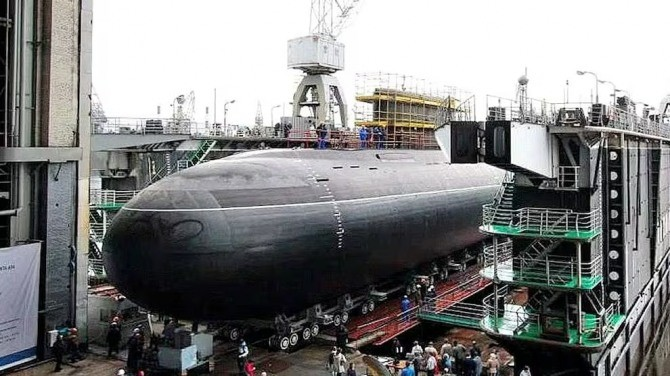
Brazil, long regarded as the “sleeping lion” of the South Atlantic, has embarked on a full-scale naval expansion strategy centered on establishing a three-vessel fleet of nuclear-powered submarines (SSNs). The plan aims to compress deployment time to operational theaters from nearly two weeks with conventional diesel submarines to just four days, effectively bringing its 8,000-kilometer coastline within the operational reach of nuclear propulsion. This initiative reflects a dual strategic intent: securing control over South Atlantic energy resources and maritime routes, while simultaneously laying the groundwork for revenue generation in the global arms market.
Brazil Develops Indigenous 6,000-Ton Model with French Technology
According to Argentina’s economic daily Cronista on the 19th (local time), Brazil’s Navy Directorate-General for Nuclear and Technological Development recently announced in a report that it will expand its ongoing nuclear submarine program from one vessel to three. The core advantage of nuclear submarines lies in the “destruction of response time.” While Brazil’s six diesel-electric submarines currently require about 15 days to deploy from southern bases to northeastern waters, nuclear submarines—with virtually unlimited range—can traverse the same distance in just three to four days. A three-vessel fleet also enables the “golden rotation” of one submarine on deployment, one in training or standby, and one under maintenance. This configuration serves as the key to ensuring uninterrupted, year-round surveillance of “Amazônia Azul,” Brazil’s maritime domain.
This decision is expected to accelerate construction of Brazil’s first nuclear submarine, Álvaro Alberto (SN-10), whose completion had been delayed from 2024 to 2037 due to funding constraints. The project, led by state-owned defense firm ICN (Itaguaí Construções Navais), is widely regarded as a culmination of Brazil’s technological capabilities developed in cooperation with France. Brazil first initiated its nuclear submarine program in 1979, including efforts to develop a small modular reactor (SMR) suitable for submarine deployment, but progress stalled due to financial limitations. Momentum resumed following a 2008 defense cooperation agreement with France, with French defense company Naval playing a key role in advancing the project.
According to the Brazilian Navy, the specifications of Álvaro Alberto are formidable. With a displacement of 6,000 tons and a length of 100 meters, it is equipped with a 48-megawatt pressurized water reactor. It can operate submerged at speeds of up to 25 knots (approximately 46 km/h) and sustain operations indefinitely without refueling, enabling prolonged deep-sea stealth missions that evade enemy detection. Nuclear submarines offer virtually unlimited submerged endurance and, due to the high output of nuclear propulsion, can accommodate large missile and torpedo systems, as well as advanced sensors and defensive systems. They enable extended underwater operations and provide a credible second-strike nuclear deterrent, capable of responding to submarine-launched ballistic missile (SLBM) threats and delivering retaliatory strikes from the seabed in crisis scenarios. In global strategic competition, nuclear submarines function as “invisible second-strike forces,” driving qualitative advancements in naval power projection and deterrence.
If successful, Brazil would become the first non-nuclear-armed nation to possess nuclear-powered submarines, and the first in the Southern Hemisphere to do so, surpassing Australia. As of last year, only the United States (66), Russia (31), China (12), the United Kingdom (10), France (9), and India (2) have deployed nuclear submarines, with Australia pursuing acquisition under the AUKUS agreement. These nations alone possess the capability to utilize strategic weapons globally and distribute nuclear deterrence. Notably, the United States, Russia, and China operate both strategic ballistic missile submarines (SSBNs) and attack submarines (SSNs), while the United Kingdom and France maintain fleets of two to ten vessels.
Industrial Impact of Nuclear Submarines
Brazil’s decision is closely tied to the protection of its offshore oil fields. The Brazilian Navy justifies the acquisition of nuclear submarines based on the need to secure its 7,400-kilometer maritime boundary and deepwater oil reserves along the Atlantic coast. Rapid force projection is deemed essential to defend vast fossil fuel and natural gas deposits, as well as subsea resources near the Amazon basin, from external threats. In 2010, Brazil also extended its exclusive economic zone (EEZ) beyond the internationally defined 200 nautical miles from its coastline.
However, defense analysts point to a broader motive: entry into the global defense industry. The initiative reflects a calculated effort to reinforce military self-reliance while maximizing the economic spillover effects of the defense sector. According to the Stockholm International Peace Research Institute (SIPRI), global military expenditure reached a record high in 2025, with more than 100 countries increasing defense budgets. As this expansion phase persists, nations are incentivized to transition from arms importers to exporters by strengthening domestic industrial bases. Brazil’s strategy of integrating aerospace, naval systems, surveillance, and nuclear technology into a unified industrial portfolio underscores its ambition to cultivate defense as a strategic export sector.
The data supports this trajectory. Brazil’s Ministry of Defense reported that export approvals for defense products and services reached $1.31 billion in the first half of last year, equivalent to 73.6% of the 2024 full-year record of $1.78 billion. Annual approvals during the same period hit a record $3.1 billion, marking a year-on-year increase exceeding 100%. Brazil’s defense industry already maintains export networks across 140 to 148 countries, contributing 3.58% of GDP and supporting 2.9 million jobs. Nuclear submarines represent the pinnacle of this industrial base. As export performance accelerates, the development of nuclear propulsion platforms is expected to serve as a catalyst for enhancing global competitiveness across submarines, reactors, shipbuilding, materials, and maintenance ecosystems.
In practical terms, nuclear submarine development creates growth opportunities for advanced technology firms. In the defense sector, demand is likely to rise for detection systems, weapons management such as torpedoes, and software platforms supporting tactical navigation and combat operations. In shipbuilding, demand will expand for hull and compartment designs suited for deep-sea and long-range operations, as well as maintenance, repair, and overhaul (MRO) services. Technology spillovers between defense and civilian industries are also expected to increase. High-output power systems and SMR technologies may transition into civilian applications, expanding into energy, offshore plants, smart manufacturing, and eco-friendly vessels. Additionally, the initiative is expected to influence the development of the nuclear industry, including military SMRs and radiation safety management.
From a military perspective, the implications are equally significant. Nuclear submarines fundamentally alter the quality of deterrence. Their speed and stealth enable strategic dominance even in anti-access/area denial (A2/AD) environments, directly enhancing diplomatic and security leverage. This creates a framework in which industry and security capabilities advance simultaneously. The scalability of nuclear propulsion technology has already been demonstrated. The United States, Russia, and China have applied nuclear propulsion to icebreakers, polar exploration vessels, and Arctic energy platforms. Russia, in particular, operates the world’s only commercial fleet of nuclear-powered icebreakers, effectively dominating Arctic shipping routes. Its Arktika-class icebreakers and nuclear-powered LNG vessels are considered strategic assets within its energy supply chain.
South Korea and India Enter Market, Opening Defense Contract Opportunities
South Korea and India are also entering the nuclear submarine market within the same strategic context. South Korea’s pursuit of nuclear submarines is not a recent development. It traces back to the “Y-Project” of the 1970s and the “Project 362” of the early 2000s, representing a decades-long national endeavor marked by repeated attempts and setbacks. Since North Korea’s withdrawal from the Nuclear Non-Proliferation Treaty (NPT) in 1993, South Korea has pursued nuclear submarine capabilities for nearly 30 years. The launch of the second Trump administration and its new National Defense Strategy (NDS), which assigns South Korea primary responsibility for deterring North Korea while limiting U.S. military support, has accelerated the imperative for independent strategic assets.
A breakthrough emerged at last year’s Korea-U.S. summit, where agreements were reached on construction approval and nuclear fuel supply, placing South Korea’s nuclear submarine program on a decisive trajectory. The government is currently pursuing plans to build at least four 5,000-ton-class nuclear submarines by the mid-2030s. This initiative serves as a countermeasure to North Korea’s accelerated efforts to develop nuclear submarines with second-strike capabilities, reportedly supported by Russian technology. South Korea already possesses key capabilities, including hull design and combat systems. The Project 362 unit, established under the Roh Moo-hyun administration in 2003, completed a basic reactor design for a 4,000-ton-class nuclear submarine.
India is also accelerating its nuclear submarine deployment. According to defense outlet Defense Industry, India launched its third SSBN, INS Aridhaman, on the 3rd of this month. The vessel has a displacement of approximately 6,000 tons and is equipped with four missile launch tubes. It features a longer hull than its predecessors, enhancing its SLBM operational capability. The nuclear triad refers to the simultaneous possession of three delivery systems: land-based ballistic missiles, nuclear-capable aircraft, and submarine-launched ballistic missiles.
For India, which faces ongoing tensions with China over the South China Sea, the strategic value of nuclear submarines lies in survivability. While land-based facilities and air bases are vulnerable to preemptive nuclear strikes, nuclear submarines operating stealthily in deep waters are virtually undetectable and untargetable. This forms the essence of second-strike capability. Historically, Russian-made weapons have formed the backbone of India’s air force and submarine fleet. However, India is now shifting its strategic alignment toward expanded military cooperation with France and Germany, a move expected to open substantial defense business opportunities for the United States, France, and Germany.
Matthew Reuter is a senior economic correspondent at The Economy, where he covers global financial markets, emerging technologies, and cross-border trade dynamics. With over a decade of experience reporting from major financial hubs—including London, New York, and Hong Kong—Matthew has developed a reputation for breaking complex economic stories into sharp, accessible narratives. Before joining The Economy, he worked at a leading European financial daily, where his investigative reporting on post-crisis banking reforms earned him recognition from the European Press Association. A graduate of the London School of Economics, Matthew holds dual degrees in economics and international relations. He is particularly interested in how data science and AI are reshaping market analysis and policymaking, often blending quantitative insights into his articles. Outside journalism, Matthew frequently moderates panels at global finance summits and guest lectures on financial journalism at top universities.
Similar Post
















