"Clear Technological Gap" China Struggles with HBM3 Mass Production, Growth Shifts to Legacy Market Abandoned by SK hynix and Samsung Electronics

Aoife Brennan is a contributing writer for The Economy, with a focus on education, youth, and societal change. Based in Limerick, she holds a degree in political communication from Queen’s University Belfast. Aoife’s work draws connections between cultural narratives and public discourse in Europe and Asia.
Authored On
Modified
Technological setbacks hit CXMT as HBM3 mass production falters
China expected to expand influence in legacy nodes above 28nm
SK hynix and Samsung pivot away from legacy toward next-generation technologies

China’s memory semiconductor firm ChangXin Memory Technologies (CXMT) is encountering significant difficulties in mass-producing high-bandwidth memory (HBM). Persistent issues with yield rates and equipment procurement have repeatedly delayed production timelines, while emerging thermal management challenges have further impeded commercialization. Market observers increasingly expect Chinese semiconductor companies, including CXMT, to remain concentrated in the legacy semiconductor segment, a space gradually vacated by leading players such as SK hynix and Samsung Electronics.
CXMT HBM3 Production Delayed Again
According to IT media outlet ComputerBase on the 21st (local time), CXMT has postponed its target timeline for fourth-generation HBM (HBM3) mass production to beyond next year. The company began full-scale HBM development approximately three years ago and has since sharply expanded related investments in alignment with China’s strategic push for artificial intelligence (AI) semiconductor self-sufficiency. With U.S. sanctions restricting access to Nvidia GPUs and HBM products from Samsung Electronics and SK hynix, CXMT moved to establish an independent supply chain. Notably, since last year, the firm has allocated part of its production capacity to HBM3 processes and has deployed billions of dollars raised through its initial public offering (IPO) toward expanding next-generation DRAM and HBM production lines, significantly increasing capital expenditures.
CXMT’s initial roadmap targeted HBM3 mass production by 2025 and fifth-generation HBM (HBM3E) by 2027. However, low yields and delays in equipment deployment disrupted this schedule. The most recent target had been set for the first half of this year. The core issue lies in CXMT’s continued struggles to achieve stable mass production. Industry sources indicate that HBM3 chips produced by CXMT suffer from excessive heat generation, preventing consistent operating speeds. This issue extends beyond initial defects and directly impacts long-term durability, resembling challenges Samsung Electronics faced during the early adoption of HBM. At that time, Samsung required more than a year and a half to resolve thermal control issues.
The technological gap with leading players remains substantial. Nvidia’s Hopper GPUs began leading the market with HBM3 adoption in 2022. Four years later, major memory manufacturers have already accelerated HBM3E production and are transitioning toward sixth-generation HBM (HBM4), while next-generation AI data center chips such as Nvidia’s Vera Rubin and AMD’s MI400 are increasingly demanding HBM4. China’s inability to stabilize HBM3 production highlights its significant lag in advanced-node competition. Additional hurdles include securing yields in advanced processes, mastering packaging technologies, and building market credibility.
Legacy Market Shifting Toward China
Analysts expect Chinese semiconductor firms to remain focused on the legacy market for the foreseeable future. Chinese foundries have concentrated on expanding production in nodes above 28 nanometers, securing a portion of global demand. Major consumer electronics companies—including HP, Dell, Asus, and Acer—have begun incorporating Chinese-made memory semiconductors into procurement lists, reflecting strategic efforts to diversify supply chains and reduce costs.
Amid this trend, China’s semiconductor exports reached a record $201.9 billion last year, while its semiconductor trade deficit declined to $222.4 billion, down 20% from $278.7 billion in 2021. Individual companies have also demonstrated notable growth. According to market research firms Omdia and Counterpoint Research, Chinese NAND flash manufacturer YMTC increased its global shipment share to 13% in the third quarter of last year. CXMT has likewise expanded its global market share to approximately 4–5%, surpassing Taiwan’s Nanya to secure a position among the world’s top four. However, the combined market share of the top three players—Samsung Electronics, SK hynix, and Micron—still exceeds 90%, underscoring the significant gap that remains.
The influence of Chinese firms in the legacy market is expected to strengthen further. As AI-driven demand surges, profitability in HBM and advanced DRAM has risen sharply, prompting Samsung Electronics and SK hynix to reduce their legacy production and restructure toward leading-edge processes. Samsung is pursuing a strategy to lower its legacy share to single digits while converting production lines to advanced products. SK hynix is similarly reallocating manufacturing capacity toward next-generation memory such as HBM4, entering a natural phase of legacy process reduction.
Korean Memory Industry Accelerates CXL Development Competition
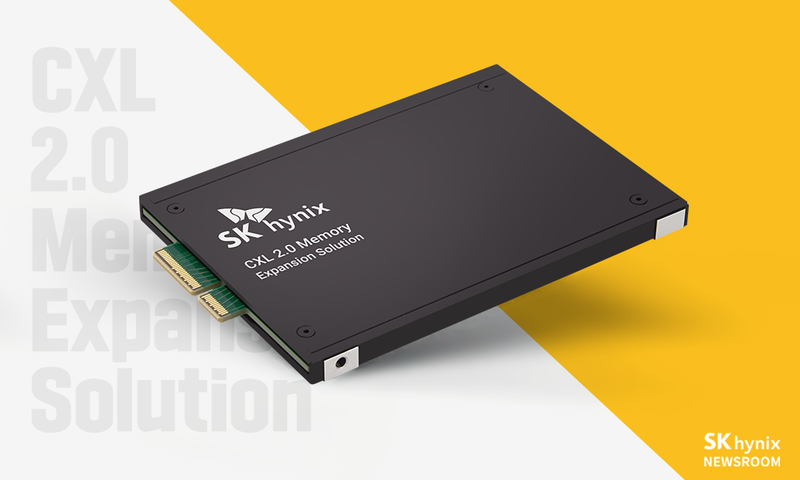
Having scaled back legacy operations, Samsung Electronics and SK hynix are intensifying efforts in next-generation technologies. A prime example is Compute Express Link (CXL), widely regarded as a successor to HBM. CXL is an interconnect technology that enables memory expansion and sharing at the system level. While HBM maximizes bandwidth adjacent to accelerators, CXL focuses on overcoming memory capacity limitations and enhancing resource utilization efficiency in subsequent stages. Through CXL, memory capacity attached to central processing units (CPUs) and GPUs can be expanded to the terabyte (TB) scale.
Samsung Electronics became the first in the industry to unveil CXL-based DRAM technology in May 2021 and secured technological leadership by releasing a 128GB product supporting CXL 2.0 in 2023. The company has recently advanced to customer validation for a 256GB product, approaching commercialization, and has developed the ‘CMM-D 3.1’ CXL module supporting up to 1TB capacity and bandwidth of 72GB per second. Beyond hardware, Samsung is also providing software that enables memory pooling—logically integrating and dynamically allocating memory and computing resources across multiple servers—strengthening readiness for real-world data center deployment.
SK hynix is focusing on narrowing the gap with Samsung by accelerating development and customer validation of CXL 2.0-based memory modules (CMM-DDR5). Following certification of its 96GB product, the company is conducting validation for a 128GB product with server clients while advancing in-house development of CXL controllers and memory solutions. Within the semiconductor industry, Samsung Electronics and SK hynix are widely regarded as holding a commanding lead compared with China, where CXL development remains in early stages, and the United States, where commercialization progress has been relatively slower.
Aoife Brennan is a contributing writer for The Economy, with a focus on education, youth, and societal change. Based in Limerick, she holds a degree in political communication from Queen’s University Belfast. Aoife’s work draws connections between cultural narratives and public discourse in Europe and Asia.
- Previous Japan Elevates Metal and Plastic Recycling to a National Priority, Seeking a Complete Break from Dependence on China Through “Urban Mining”
- Next “Six-Minute Near-Full Charge” — China’s CATL Unleashes a Technological Offensive Beyond the Limits of LFP, Leaving South Korea’s Three Battery Makers Searching for a Route Through Solid-State Batteries
Similar Post