Japan Lifts Ban on ‘Lethal Weapons Exports,’ Steps Up Arms Sales to the Philippines and Australia

Anne-Marie Nicholson is a fearless reporter covering international markets and global economic shifts. With a background in international relations, she provides a nuanced perspective on trade policies, foreign investments, and macroeconomic developments. Quick-witted and always on the move, she delivers hard-hitting stories that connect the dots in an ever-changing global economy.
Authored On
Modified
Export decisions to be made solely through NSC review without parliamentary approval
Jointly developed weapons also eligible for third-country export, with exemptions for conflict states under consideration
Acceleration of a defense network centered on Australia, the Philippines and Taiwan
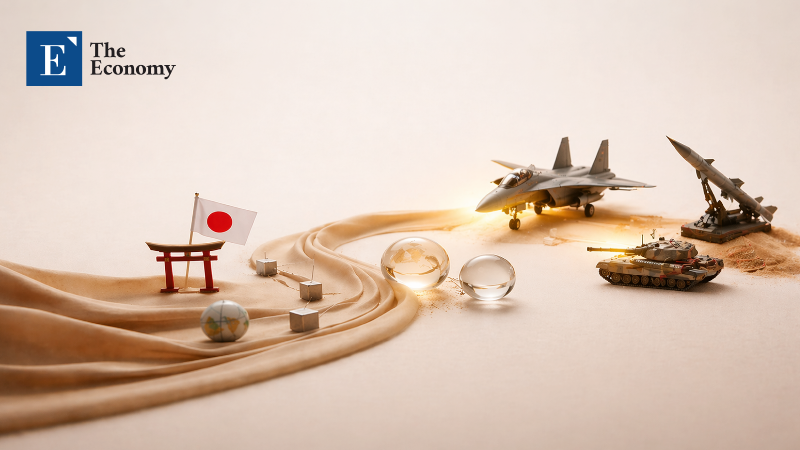
The cabinet of Japanese Prime Minister Sanae Takaichi has revised the operational guidelines for the “Three Principles on Transfer of Defense Equipment,” effectively removing the constraints that had long limited exports of lethal weapons. In effect, Japan has signaled its intent to become what could be described as a “war-capable nation.” The latest decision is underpinned by a broader strategy to contain China’s military expansion and maximize the operational effectiveness of the U.S.-Japan alliance. Using the policy shift as a springboard, Japan is expected to intensify active arms sales to key Indo-Pacific states such as the Philippines and Australia, while further accelerating its military alignment with Taiwan.
The Takaichi Cabinet’s Militarization Drive
On the 21st, Takaichi wrote on social media platform X that “the Three Principles on Transfer of Defense Equipment and their operational guidelines have been revised,” adding that “until now, overseas transfers of finished Japanese military products were limited to the so-called ‘five categories’—rescue, transport, warning, surveillance and minesweeping—but with this revision, in principle, the transfer of all defense equipment will become possible.” Earlier that morning, the Japanese government convened a cabinet meeting and a National Security Council (NSC) session, formally deciding to revise the Three Principles on Transfer of Defense Equipment and abolish the five-category framework.
Under the revised principles, the Japanese government will now classify exportable defense equipment into “weapons” with lethal capability—such as fighter jets, destroyers, submarines and missiles—and “non-weapons” without lethal capability, such as radar systems for warning and control. In the case of weapons, exports will be permitted to 17 countries that have concluded defense equipment transfer agreements with Japan. With the abolition of the five-category restriction, the barriers effectively preventing exports of lethal weapons to those countries have in substance been removed. If countries currently in negotiations over defense equipment transfer agreements are included, the number of states eligible to receive Japanese weapons is expected to rise to 20.
For non-weapons, the restrictive provision itself has been scrapped, making exports possible to all countries. Restrictions on outward direct investment related to defense equipment have also been eased, opening the door to equity investments in overseas defense industries as well as cross-border mergers and acquisitions. The Japanese government plans in the near future to establish a coordinating body composed of bureau director-level officials from relevant ministries, including the Ministry of Defense and the Ministry of Economy, Trade and Industry, in order to strengthen its command structure for promoting arms exports. Takaichi said, “As the security environment becomes increasingly severe, no country can protect its peace and safety alone, and partner countries with mutual dependence in defense equipment are needed,” while also asserting that “expectations regarding defense equipment, which Japan has maintained under its exclusively defense-oriented principle, are being conveyed from surrounding countries.”
The Takaichi government is also pushing for a constitutional amendment that would explicitly enshrine the Self-Defense Forces in Article 9 of the Constitution. At the Liberal Democratic Party convention held on the 12th of this month, Takaichi declared, “Why should the Self-Defense Forces not be written into the Constitution?” and stressed that “constitutional revision is, naturally, necessary.” In addition, the Takaichi government is moving quickly on the creation of a “National Intelligence Agency,” effectively a Japanese counterpart to the U.S. Central Intelligence Agency. Japanese public opinion appears broadly favorable toward constitutional revision. In a poll by the conservative Sankei Shimbun of 1,006 respondents, 59.3% supported explicitly writing the Self-Defense Forces into the Constitution, exceeding the 31.3% who opposed it.
The Justification: Containing China and Strengthening the U.S.-Japan Alliance
Japan’s ban on weapons exports had been the product of political decisions accumulated over decades in the postwar era. In April 1967, then-Prime Minister Eisaku Sato announced the Three Principles on Arms Exports, barring exports of Japanese weapons to states party to international conflicts or countries prohibited from receiving arms under United Nations Security Council resolutions, in an effort to reflect domestic pacifist sentiment and restore international trust. In 1976, Prime Minister Takeo Miki declared that “in accordance with the spirit of the Constitution and the Foreign Exchange Control Law, arms exports will be handled with prudence,” effectively transforming the Three Principles on Arms Exports into a de facto blanket ban that endured for decades.
The lock began to loosen in the 21st century. In April 2014, Prime Minister Shinzo Abe replaced the Three Principles on Arms Exports with the “Three Principles on Transfer of Defense Equipment,” arguing that the previous framework “no longer matched Japan’s new security environment,” and opened a path for arms exports in cases involving peaceful purposes or international joint development and production with countries cooperating with Japan on security matters. At that time, it also became possible to conditionally export defense equipment falling under the five categories—rescue, transport, warning, surveillance and minesweeping—when intended for peace contributions or international cooperation. In 2023, the Fumio Kishida administration carried out an additional revision expanding the scope of licensed and technology exports, though it still stopped short of allowing exports of finished lethal weapons. The Takaichi cabinet’s latest move amounts to the removal of the final seal.
Japan’s decision to lift the ban on lethal weapons exports forms part of a larger strategic blueprint aimed at strengthening its defense capabilities and securing friendly partners. Since the 2010s, as China has expanded its presence across the South China Sea and East China Sea, tensions have also intensified over the Senkaku Islands, known in China as the Diaoyu Islands, which are under Japan’s effective control. In particular, after Takaichi’s remarks in November last year about “intervening in a Taiwan contingency,” bilateral relations deteriorated sharply, followed in succession by the transit of the Taiwan Strait on the 17th by the Japanese Maritime Self-Defense Force destroyer Ikazuchi and the passage on the 21st through waters southwest of Japan’s Kyushu by China’s Luyang III-class guided-missile destroyer and Jiangkai II-class frigate.
The policy direction of Donald Trump’s government has also exerted a significant influence. As the United States emphasizes to its allies the need for a “fair share of collective defense,” it has been demanding more from Japan than the traditional division of roles defined as the “spear” of the United States and the “shield” of Japan. One Japanese Defense Ministry official said, “The United States wants Japan not merely to pay more money, but to become a defense industrial partner that can make up for America’s production shortfalls and a partner capable of participating in real operations,” adding, “It is also sending the message that countries must defend themselves. Japan’s military buildup is only a matter of time.”
Arms Sales to the Philippines, Australia and New Zealand
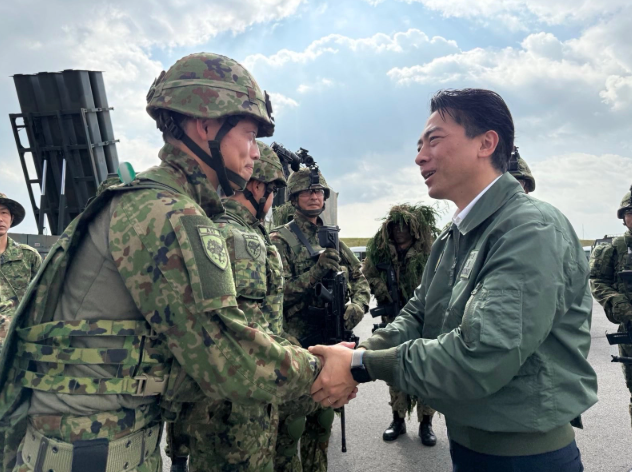
Following the latest move, the country most likely to become the first recipient of Japanese weapons exports is Australia. On the 18th, Japanese Defense Minister Shinjiro Koizumi and Australian Deputy Prime Minister and Defense Minister Richard Marles held talks and reaffirmed their commitment to bilateral defense cooperation. The contract has been concluded between the Australian government and Japanese companies, including Mitsubishi Heavy Industries, and under the deal the Maritime Self-Defense Force’s latest Mogami-class frigates are scheduled to be delivered to Australia starting in 2029. The total contracted volume stands at 11 vessels, with the initial three to be built in Japan and the remainder to be produced in Australia. Australia had already selected Japan in August last year as the preferred negotiating party for its new naval vessel acquisition program.
The Philippines is also reviewing the import of Japanese weapons. Manila has shown interest in acquiring the Japanese Maritime Self-Defense Force’s used Abukuma-class destroyer escorts and the Ground Self-Defense Force’s Type 03 medium-range surface-to-air missile system. Once Japan permitted arms exports, the Philippines immediately welcomed the move. In a statement issued on the 21st, Philippine Defense Secretary Gilberto Teodoro said the measure would allow the Philippines to “secure defense materiel of the highest quality and maintainability,” adding that “defense cooperation with Japan has entered a new era.” From Japan’s perspective, arms exports to the Philippines would also help solidify an anti-China front in the South China Sea, where China and the Philippines are locked in territorial disputes. Koizumi, who is scheduled to visit the Philippines and Indonesia early next month, also told reporters on the 21st that he “would like to further strengthen top-level sales efforts directed at each country.”
Military alignment with Taiwan is also expected to deepen further. Taiwanese media outlets, including the China Times, reported on the 22nd, citing anonymous sources, that “the Taiwanese military is considering a joint development model with the Japanese Maritime Self-Defense Force’s latest Mogami-class frigate, which is to be delivered to the Australian navy in 2029, in mind.” Indeed, a source at Taiwan’s defense think tank, the Institute for National Defense and Security Research, said that three consortiums had participated in the bid, each consisting of Taiwanese companies partnered with firms from the United States, Britain and Japan.
Beyond that, Takaichi held a phone conversation on the 22nd with New Zealand Prime Minister Christopher Luxon, during which the two leaders discussed weapons exports and related matters. New Zealand has reportedly shown interest in the latest Mogami-class frigates that Japan has agreed to supply to Australia, and according to a Foreign Ministry official, the subject was also raised during the phone call that day. The United States likewise welcomed Japan’s approval of weapons exports. Since last year, Washington has been working with Japan on joint production arrangements aimed at localizing operational deployment capabilities in Northeast Asia. This underscores both Japan’s shift toward becoming a major military power and the United States’ intensifying efforts to cultivate proxy warfighting states. The United States is currently receiving weapons export requests from allies and partner nations, but its production capacity is falling short of that demand.
Anne-Marie Nicholson is a fearless reporter covering international markets and global economic shifts. With a background in international relations, she provides a nuanced perspective on trade policies, foreign investments, and macroeconomic developments. Quick-witted and always on the move, she delivers hard-hitting stories that connect the dots in an ever-changing global economy.
Similar Post
















