“Western Pacific as a Treasure Trove”: Japan Accelerates Deep-Sea Rare Earth Development, Signals Potential Cooperation With U.S.

Authored On
Modified
“Reducing Dependence on China”: Japan Speeds Up Deep-Sea Rare Earth Mining
South Korea Also Finds Deposits in Nearby Waters; Exploration Pace to Determine Control
Takaichi Formally Outlines Cooperation Plan With U.S.
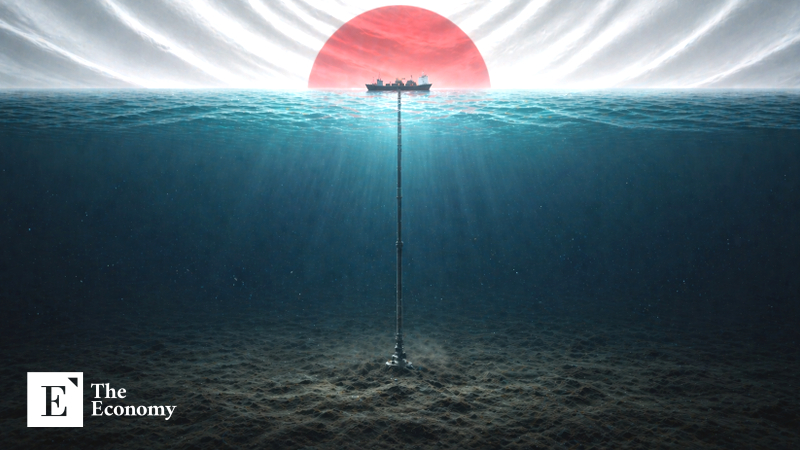
Japan is accelerating rare earth mining in the deep waters of the western Pacific. As China’s repeated weaponization of rare earths intensifies supply-chain risks, Tokyo is moving aggressively to diversify procurement channels and build its own production capacity. The push is viewed as a strategic move that factors in the potential for additional deposits and the nature of resources in the high seas. Japan is also considering cooperation with the United States to offset the high costs inherent in deep-sea rare earth development.
Japan’s Focus on Deep-Sea Rare Earths
According to WIRED, a U.S. technology and science outlet, on the 17th, the deep-sea drilling vessel Chikyu, operated by the Japan Agency for Marine-Earth Science and Technology under Japan’s Ministry of Education, Culture, Sports, Science and Technology, succeeded in February in retrieving rare earth-bearing mud from a depth of 5,700 meters within the exclusive economic zone near Minamitorishima. The vessel used a “riser system,” inspired by offshore oil and natural gas drilling, by connecting a giant pipe to the seabed and pumping the mud up to the ship. The Japanese government spent $2.6 billion to develop mud-crushing equipment and specialized pipes for the project.
Earlier in 2013, a research team led by the University of Tokyo reported the discovery of mud containing high concentrations of rare earth elements, including dysprosium, neodymium and terbium, around Minamitorishima. Estimated reserves amount to at least 16 million tons, placing the site at the world’s third-largest level by country-based reserves after China with 44 million tons and Brazil with 21 million tons. Building on the successful test extraction, the Japanese government plans to begin lifting up to 350 tons of mud layers per day from February next year and complete a report around spring 2028 analyzing the commercial viability of Minamitorishima rare earths based on actual seabed mining costs.
Japan’s development of rare earths near Minamitorishima is widely interpreted as a strategy to counter China’s resource weaponization. China restricted rare earth exports in April last year in retaliation for U.S. tariffs. In November of the same year, after Japanese Prime Minister Sanae Takaichi suggested possible intervention in a Taiwan contingency, Beijing further escalated pressure by blocking exports to Japan of products with both civilian and military applications. The situation resembles the 2010 Senkaku Islands dispute in the East China Sea, when China restricted rare earth exports to Japan for nearly two months.
The Potential Embedded in Deep-Sea Rare Earths
Japan is paying particular attention to deep-sea rare earths because the possibility of additional deposits in nearby waters cannot be ruled out. Recently, South Korean researchers also confirmed high-grade rare earth deposits in the western Pacific. In January, the Korea Institute of Geoscience and Mineral Resources said it had discovered high-concentration rare earth deposits during its first open-ocean survey in the western Pacific using the state-of-the-art geophysical research vessel Tamhae 3. The institute said it collected rare earths with concentrations of up to 3,100 ppm and an average of more than 2,000 ppm through piston coring at a depth of 5,800 meters. Piston coring is a method that uses the vacuum suction force of a piston to collect seabed sediments without deformation.
The nature of the high seas, which account for two-thirds of the world’s oceans, is also cited as a reason to accelerate technology development. In principle, the high seas do not fall under the jurisdiction of any single country, but deep-sea resources are managed by the International Seabed Authority as the “common heritage of mankind.” The system gives priority in deep-sea resource development to countries that move first to conduct exploration and secure data. Ultimately, control over deep-sea rare earths will depend on how quickly countries can secure exploration and mining technologies.
The fact that deep-sea mining can offset the disadvantages of conventional land-based mining is also attracting attention. Land-based rare earth mining is classified as a highly polluting industry. Rare earths exist in ore form with multiple elements mixed together, and chemical separation using strong acids such as sulfuric and hydrochloric acid is essential after mining. The problem is that this process generates large volumes of wastewater and residue. Some ores also contain radioactive materials such as thorium and uranium, causing soil and groundwater contamination. Deep-sea rare earths, by contrast, are mainly found in mud form and are collected by suctioning and recovering surface seabed sediments rather than blasting rock or excavating mines. This means environmental damage specific to land mining, such as large-scale deforestation, surface collapse and groundwater contamination, does not occur. Some analyses also suggest that deep-sea mud contains lower concentrations of radioactive materials than land-based rare earths, reducing risks during the refining process.
Expanded Scope for U.S.-Japan Cooperation
Japan is also pursuing the possibility of developing deep-sea rare earths together with the United States. Deep-sea rare earth development requires enormous costs for exploration and mining equipment development and operation, while its economic feasibility remains unproven at this early stage. That means the cost risk is too large for Japan to shoulder alone. The United States and Japan are allies that have treated critical mineral security as a major agenda item through summits and economic security dialogues in recent years. In that process, rare earths have been repeatedly cited as strategic resources for reducing dependence on China, while supply-chain diversification and stability have been set as shared objectives.
Recently, this cooperation framework has gradually begun to take shape. A representative example is the memorandum of understanding signed following the U.S.-Japan summit in October last year. Under the MOU, the two countries agreed to expand cooperation across all stages, including mineral extraction, refining and processing, and to support public and private investment in related projects. They also agreed to pursue information sharing and policy coordination to respond to supply-chain disruptions and to develop resources in third countries and secure additional supply chains for the stable procurement of strategic minerals.
Still, formal discussions between the two countries on deep-sea rare earth cooperation are relatively recent. Last month, Japanese Prime Minister Sanae Takaichi said in parliamentary remarks that Japan “plans to discuss cooperation with the United States on deep-sea rare earth development near Minamitorishima,” adding that “resource development cooperation was discussed during the summit last October, and concrete consultations on marine mineral resource development have since been under way.” While media outlets and experts had long raised the possibility that the two countries could join hands on deep-sea rare earths, this marks the first time the Japanese government has publicly identified the issue as a cooperation agenda.
Similar Post